Low, Mid and Hybrid Hockey Stick Kick Points
A hockey stick’s kick point is where its shaft bends most under load. Low kick points release shots quickly, mid kick points suit a longer loading motion, and hybrid designs combine features of both.
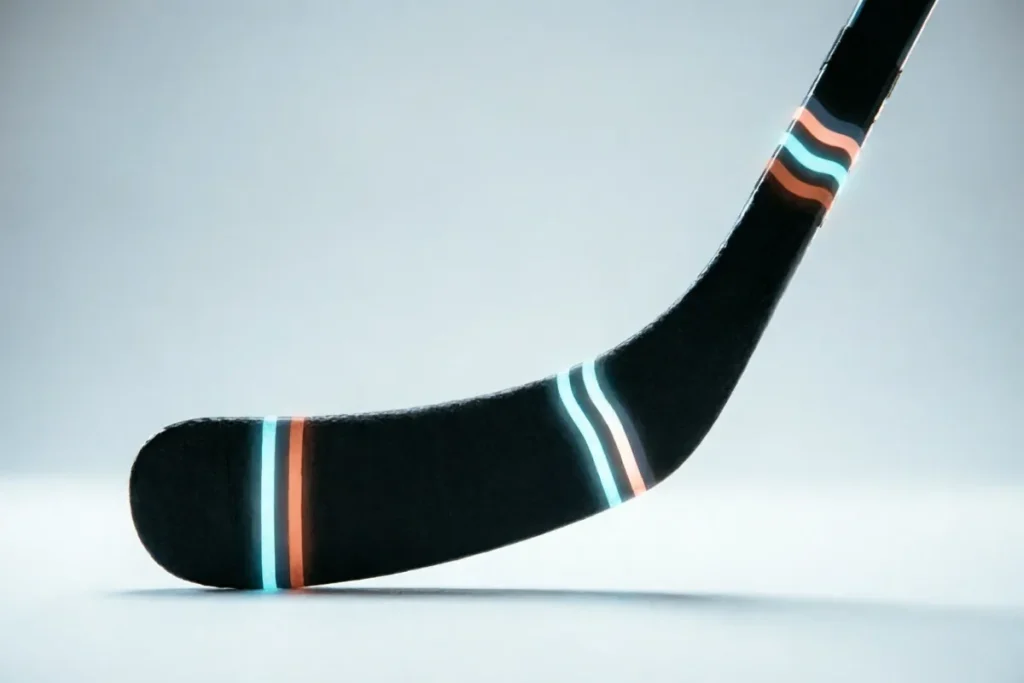
The difference affects how a shot feels and how quickly the blade releases the puck—not whether one stick is universally better. Your shooting motion and the time you have to load the shaft matter when choosing among low, mid and hybrid hockey stick kick points.
| Kick-point type | Loading zone | Shot pattern it suits |
|---|---|---|
| Low | Lower shaft near the blade | Quick wrist and snap shots |
| Mid | Middle of the shaft | Slap shots and heavy one-timers |
| Hybrid (variable) | Blends low and mid characteristics | Players who use different shooting styles |
Which stick model shows a low-kick design?
CCM Ribcor is a low-kick-point stick line, and ABSHockey identifies the Trigger 10 Pro as its current flagship.
A low kick point describes where the shaft loads as you shoot: lower down, near the blade. That loading zone supports a quick release on wrist and snap shots, particularly when you have little room to set up in a tight situation.
The CCM Ribcor name gives you a specific model family to consider, but the kick-point category is not a promise about your results. Your release also depends on how you handle the stick and take the shot; another player using the Trigger 10 Pro may shoot differently.
How it compares with other kick points
- Low: CCM Ribcor, with Trigger 10 Pro as its current flagship; the shaft loads near the blade.
- Hybrid (Mid-Low): Combines low- and mid-kick characteristics.
- Mid (Mid-High): Loads in the middle of the shaft.
- High: A separate kick-point category from low.
When choosing a CCM Ribcor, treat its low-kick design as a fit for a quick-release preference, then try the stick with your own wrist and snap shots.
How do low, mid and hybrid sticks load and release energy?
Low, mid and hybrid hockey sticks differ in where the shaft bends under load: low kick flexes near the blade for a fast release, mid kick loads around the shaft’s middle for power, and hybrid blends both patterns.
Loading zone
A low-kick stick bends in the lower shaft, close to the blade. That flex helps you release wrist and snap shots quickly, particularly when you have little time or space.
A mid-kick stick loads around the middle of the shaft. Its loading pattern supports slap shots and heavy one-timers, where a forceful shot matters more than an especially quick release.
ABSHockey describes hybrid kick points as Mid-Low and mid kick points as Mid-High. Those labels place hybrid between low and mid, and mid above hybrid; they describe kick-point categories rather than a different way to take a shot.
Shot pattern
- Low kick: The lower-shaft flex suits players who rely on quick wrist and snap shots.
- Mid kick: The middle-shaft load supports slap shots and heavy one-timers.
- Hybrid or variable kick: The design combines low- and mid-kick characteristics for players who use different shooting styles.
A hybrid stick is a practical fit if your shots vary: it blends the quick-release feel associated with low kick and the loading pattern associated with mid kick. The trade-off is that it is a blended design, not a choice focused solely on either end of the range.
Which kick point fits your usual shot mechanics?
A low kick point usually fits a forward or quick shooter who relies on snap and wrist shots in tight situations; a mid kick point usually fits a player whose main shot is a slap shot or heavy one-timer, while a hybrid suits someone who uses both approaches.
The kick point is where the shaft bends and loads as you shoot. A low kick loads nearer the blade, supporting a quick release; a mid kick loads around the middle of the shaft and is commonly matched with heavier shots. Choose by the shot you take most often and how you load the stick, not by position alone.
- Low kick: Choose it if you often need to get a snap or wrist shot away quickly in tight space. It is commonly matched with forwards and other quick shooters.
- Mid kick: Consider it if slap shots and heavy one-timers are central to your game. Its middle-shaft loading is commonly associated with those power-focused shots.
- Hybrid kick: Consider it if you switch between quick releases and heavier shots. Its variable design blends low- and mid-kick characteristics.
To compare sticks, take your usual shot and notice where your hands are and how the shaft bends during the loading motion. If quick wrist shots dominate, start with a low-kick design; if you repeatedly load up for slap shots or one-timers, compare mid-kick options. A hybrid is a reasonable match when neither shot type clearly dominates.
Position can help narrow the choice, but it is a weaker guide than your actual shooting habits. If possible, test the stick with the shot you rely on most.
When can a kick-point choice fail to fit?
A kick point can fail to fit when its loading pattern does not match the shots you take most often; position alone does not make a low kick right for every forward or a mid kick right for every defenseman.
A low kick loads near the blade, which helps the shaft release quickly for wrist and snap shots. That quick release may be a poor match if your regular shot is a power-oriented slap shot: the two shots ask the shaft to load and release differently. A mid kick loads in the middle of the shaft and suits slap shots and heavy one-timers, but it is not automatically the better choice for every defenseman.
Match the kick point to your regular shots
- Quick wrist and snap shots: A low kick supports a quick release, especially when you need to get the puck away in tight.
- Slap shots and one-timers: A mid kick loads farther up the shaft and is designed for power-oriented shots.
- A mix of shot types: A hybrid kick blends low- and mid-kick characteristics, offering versatility without making it a universal upgrade over either option.
Before choosing, consider which shots you actually use most: quick wrist and snap shots, slap shots and one-timers, or a mix. A hybrid may suit varied shooting, while a low or mid kick can be a closer match when one type of release dominates.
What does a kick-point label tell you—and what does it not?
A kick-point label tells you where the shaft is designed to load and release energy; it does not, by itself, determine which hockey stick suits you.
Low, mid and hybrid describe different shaft-loading patterns, not guaranteed outcomes. A low kick point loads near the blade for a quick release; a mid kick point loads in the shaft’s middle; a hybrid combines characteristics of both. Those distinctions can help you compare sticks against the shots you take, but the label alone cannot tell you how a stick will feel in your hands.
SOYUZ is a member of the IIHF Supplier Pool 2026–2030. That is supplier-pool status, not a kick-point classification: it does not identify a stick’s loading pattern or establish which model fits your shooting mechanics.
Use the label with your shot mechanics
- Snap and wrist shots: consider whether a low kick point’s quick-release design matches the way you load and release the shaft.
- Slap shots and one-timers: compare a mid kick point with the shaft loading you use to generate power.
- Different shooting styles: a hybrid kick point combines low- and mid-kick characteristics, but the label is not a performance guarantee.
Before choosing, check the specific model’s kick-point description and judge it against the hand position and shot mechanics you rely on—not the label alone.
Frequently asked questions
What is a hockey stick kick point?
Is low kick better for wrist shots?
Who should choose a mid-kick stick?
What does hybrid kick mean?
Sources
- referencehockey.com — “Hockey Stick Kick Points Explained: Low, Mid & Hybrid”
- Twig Hockey Company — “Hockey Stick Kick Points Explained”
- CHS Custom Hockey Sticks — “Hockey Stick Kick Point Guide | Hockey Stick Guide”
- TheHockeyShop.com — “Hockey Stick Basics: Guide to Kick Points”
- weststarathletics.com — “What Hockey Stick Kick Point is the Best?”