Figure Skates vs Hockey Skates for Basic Stops
Both figure skates and hockey skates can make basic stops, but they feel different underfoot: figure skates have toe picks, while hockey skates do not. For beginners, the right choice is usually the skate that fits your intended sport and lets you practise stopping with control.
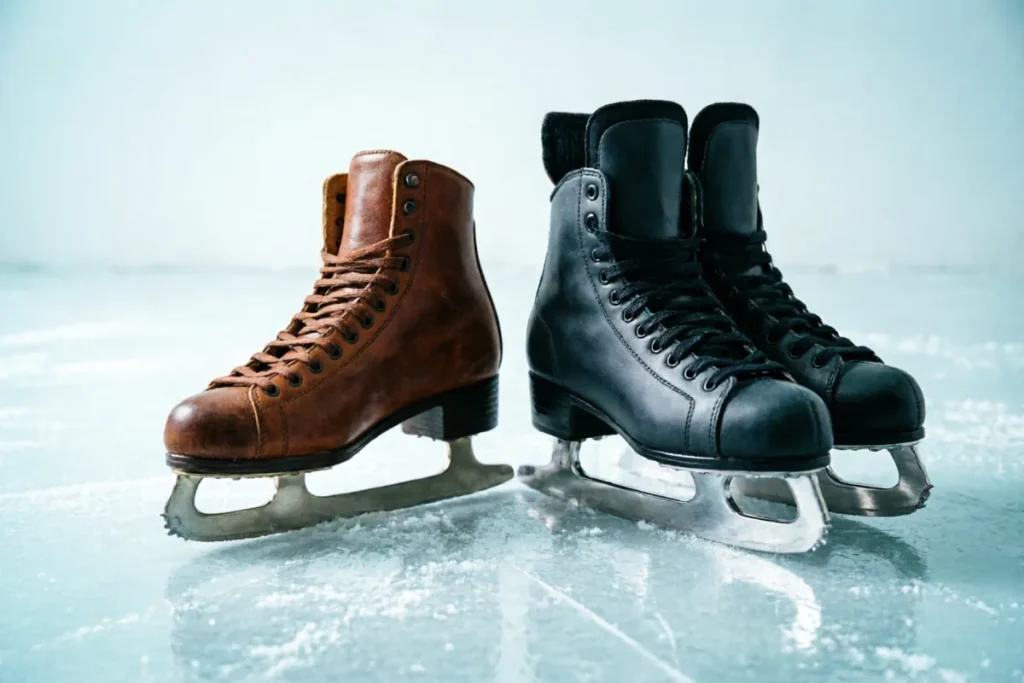
A basic stop depends on edging the blade and shifting your weight, not on the toe pick. Figure skates’ longer blades and toe picks change how they feel; hockey skates have a shorter blade profile built for quick movement. Neither design makes stopping automatic.
This guide compares figure skates vs hockey skates for basic stops, including what to expect from each and how to practise safely. Whichever you choose, start slowly on clear ice and learn the stopping technique before adding speed.
| Criterion | Figure skates | Hockey skates |
|---|---|---|
| Blade profile | Longer blade | Shorter, more rigid blade with a flatter profile |
| Front of blade | Toe pick; keep it out of stopping | No toe pick |
| Stopping focus | Suitable when learning for figure skating | Suited to quick stops and tight turns |
| Best fit | Figure-skating goals | Hockey movement and fast stopping |
What changes when you stop on figure skates versus hockey skates?
Figure skates and hockey skates differ in how their blades support stopping: figure skates have a longer blade that can make initial balance feel easier, while hockey skates are built for quick stops and tight turns.
- Figure skates: The toe pick sits at the front of the blade and is used for figure-skating elements, not as a stopping edge. Keep it out of the ice when practising a stop; the stopping action comes from the blade’s edge.
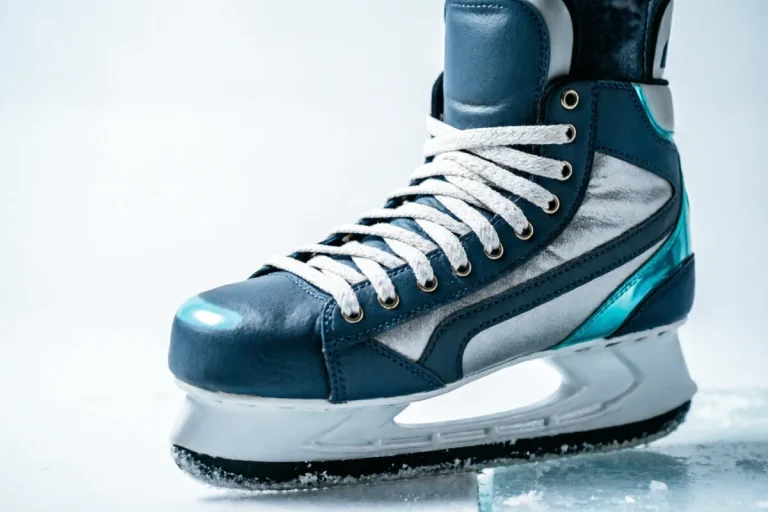
- Hockey skates: Their shorter, more rigid blade has a flatter profile, which suits quick stops and tight turns.
Both types let beginners practise balance, posture, stroking and stopping. If you plan to learn a particular sport, practising in its skates helps you get used to the blade and its intended movements.
Ice conditions matter, too
At Ice Factory of Central Florida, the rink area averages between 40-60 degrees year round. Wear layers you can move in, and pay attention to how the ice feels as you practise edging and stops.
Which skate is better for learning a basic stop?
Figure skates are the better choice when you are learning to stop for figure skating; hockey skates are better when your goal is fast stops and tight turns in hockey.
A basic hockey stop uses the blade edge to scrape ice sideways. It is not done by pressing a figure skate’s toe pick into the ice: the toe pick is for figure-skating skills such as jumps and spins, not for making this stop.
- Figure skating: Learn on figure skates so the boot and blade you practise with match the equipment used for later figure-skating skills.
- Hockey: Choose hockey skates for fast stops and tight turns. Their blade is designed for quick changes of direction.
- Fit and control: Practise in the skate that lets you bend your knees and hold an edge. If you cannot get into a stable skating position, the skate is not helping you learn the stop.
For a beginner still choosing a sport, comfort and edge control are more useful tests than trying to make one skate serve both goals. Use the skates you can control, then practise the stop that belongs to your sport.
How should you build stopping skills?
Build stopping skills by learning balance, posture and forward stroking before attempting to stop at speed. These fundamentals apply whether you wear figure skates or hockey skates; practise each part under control before combining it into a stop.
A Learn to Skate programme gives beginners a structured place to work on those basics. Flyers Training Center describes Learn to Skate as a starting point for developing fundamental skating skills and on-ice confidence.
Practise at a pace you can control
UTC Ice says skaters advance based on ability, not time, and can move at their own pace. Use that progression to build control before increasing speed; a stop practised slowly is easier to assess than one attempted before your balance is steady.
Practise stopping during a lesson or in a controlled area, following the rink’s rules and your instructor’s guidance. If you are unsure where stopping drills are allowed, ask before you begin.
When can the skate choice or technique work against you?
A figure skate can work against you when its toe pick catches the ice because you reach forward with the front of the blade instead of controlling speed with the blade edge. The pick is there for figure-skating movements, not as a braking point.
- Figure skates: Their toe picks and longer blades may suit balance and figure-skating skills, but they are a poor match for hockey-focused stops and quick turns.
- Hockey skates: Their design is suited to quick stops and tight turns, so they fit those demands better.
- Longer blade: It may help you balance, but that alone does not show that a figure skate is better for learning every kind of stop.
Ice conditions change the feel
Ice temperature can affect how the surface feels under either skate. Ice Factory of Central Florida says its rink area averages between 40-60 degrees year round. That describes the rink area, not a guaranteed ice-surface temperature, so your edge response may still vary with conditions.
If the toe pick keeps catching while you practise a stop, focus on using the blade edge rather than reaching forward with the front of the skate.
How do you choose between the two?
Choose figure skates if your goal is figure skating and you want to develop the edge work, jumps and spins that its blade is designed to support; choose hockey skates if you want hockey movement, including rapid acceleration, quick turns and fast stops.
- Figure skates: Their toe picks support jumps and spins, so they suit a path into figure skating. Learn to use the blade’s edges for stopping rather than relying on the toe picks.
- Hockey skates: Their shorter, more rigid blade supports quick turns, acceleration and fast stops. Choose them when hockey movement is your priority.
- No settled sport: Try both types only in a setting where each is permitted. Compare fit, balance and confidence with an instructor, rather than deciding from an unsupervised first glide.
A first glide is not a reliable test of stopping ability. One blade may feel easier at first, but stopping control is a separate skill that requires practice on the skates you plan to use.
During a supervised trial, ask the instructor to help you assess fit and basic stopping control on each pair; follow the session’s rules about permitted skate types.
Frequently asked questions
Can you learn to stop in figure skates?
Are hockey skates easier for a hockey stop?
Do figure skates make beginners more stable?
Should beginners learn in the skates they plan to use?
Key takeaways
- Figure skates’ longer blades can help with initial balance; their toe picks are not stopping edges.
- Hockey skates suit hockey-focused fast stops and tight turns.
- Practise stopping after balance, posture and forward stroking.
- Pick skates for the sport you intend to pursue, not only for the first glide.
Sources
- iceskatingpassion.com — “Hockey skates vs Figure skates – what to choose?”
- prostockhockey.com — “Hockey Skates vs. Figure Skates: Which Are Best for You? – Pro Stock Hockey”
- fhfsc.ca — “First time ice skating: 10 tips for beginners :: Forest Hill Figure Skating Club”
- potsdamfsc.org — “Potsdam Figure Skating Club – FAQ's”
- ice.riedellskates.com — “The Complete Ice Skates Buying Guide”