Hockey Skate Steel: Sharpening vs. Profiling
Sharpening changes the edge on hockey skate steel; profiling changes the blade’s shape and the way it meets the ice.
The numbers
Steel removed per sharpening with proper equipment and technique, as stated by Rinkhive
Typical hardness range given by Rinkhive for stock stainless-steel blades
Hardness range Rinkhive says carbon-steel blades often achieve
They affect different parts of the skate’s performance, so one is not a substitute for the other. Understanding the distinction helps you identify whether a blade needs a fresh edge or a different profile.
| Service or setting | What changes | Best fit | Trade-off |
|---|---|---|---|
| Deeper hollow | More bite at the edges | Slipping or a need for stronger grip | More drag and resistance |
| Shallower hollow | Less resistance at the edges | More glide | Less bite |
| Flatter profile | Blade curve along its length | Stability and top speed | Slower turns |
| More rounded profile | Blade curve along its length | Quicker pivots and direction changes | Less straight-line speed and stability |
What does sharpening change, and what does profiling change?
Sharpening changes how the blade edges grip the ice; profiling changes the blade’s curve along its length. They affect different parts of the steel: sharpening forms the hollow between the edges, while profiling reshapes the blade’s front-to-back contour.
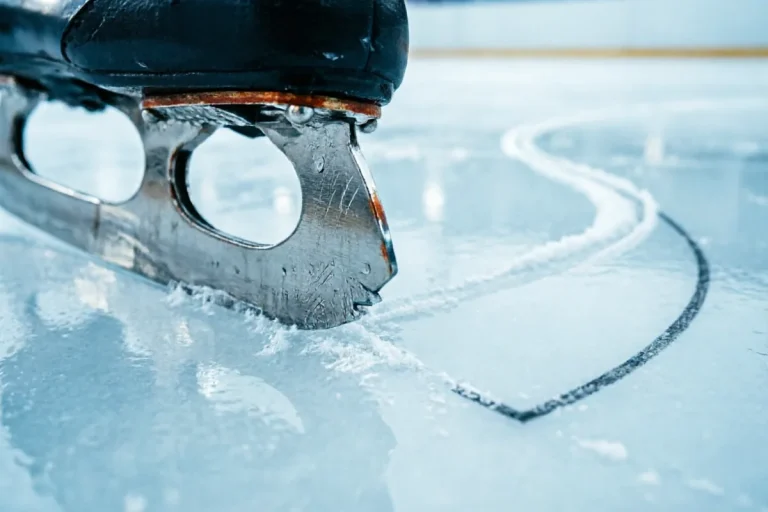
- Sharpening: Grinding a hollow into the blade bottom creates two edges. The hollow’s radius controls the trade-off between bite and glide: a smaller radius means a deeper hollow, more grip and more drag; a larger radius means a shallower hollow, more glide and less resistance.
- Profiling: Changing the curve along the blade’s length affects how the steel meets the ice through a stride and turn. A flatter profile offers more stability and top speed but slower turns. A more rounded profile allows quicker pivots and direction changes, with less straight-line speed and stability.
These adjustments are not substitutes for each other. If your skates feel short on grip, changing the hollow addresses edge bite; if you want to alter how the blade’s length contacts the ice, profiling is the relevant adjustment. The right balance depends on your skating style and preference.
Which service should you choose for slipping, slow turns, or an awkward stance?
Choose sharpening when the blade slips or straight-line glide feels resistant; choose profiling when turns feel slow or your stance lacks stability.
Match the complaint to the blade change.
- Slipping on pushes or turns: Ask for a deeper hollow. Sharpening changes the hollow beneath the blade, and a deeper cut gives the edges more bite. It can also add drag.
- Drag during straight-line skating: Ask about a shallower hollow. Its reduced friction can make gliding easier, but you give up some edge bite.
- Slow turns or direction changes: Ask about a more rounded lengthwise profile. The blade’s curve along its length affects how quickly it pivots; a rounder profile supports quicker turns but can reduce straight-line speed and stability.
- Awkward stance or a need for more straight-line stability: Discuss the lengthwise profile before changing hollow depth. A flatter profile provides more stability, while hollow depth changes grip and glide rather than the blade’s lengthwise curve.
Hollow depth and lengthwise profile address different complaints. Describe what happens on the ice and ask the skate technician to assess the relevant adjustment before changing both.
How do flatter and more rounded profiles compare?
A flatter hockey skate profile prioritises straight-line stability and top speed, while a more rounded profile makes pivots, turns and direction changes quicker but sacrifices some speed and stability on a straight line.
- Flatter profile: Choose it when holding a stable line and skating fast in a straight line matter more than turning quickly.
- More rounded profile: Choose it when rapid pivots, turns and changes of direction matter more than straight-line speed and stability.
Profiling changes the blade’s curve along its length; sharpening changes the hollow across the blade. They address different parts of how a skate moves on the ice, so choosing a profile is not the same as choosing how much edge grip you want.
Match the profile to your skating
Your skating style and preference determine where the trade-off makes sense. A player who spends more time accelerating in a straight line may favour the flatter option; one who changes direction often may prefer the rounded option. Neither profile is the right balance for every player, so consider which movement you value more when choosing.
When can sharpening make the problem worse?
Sharpening can make a hockey skate feel worse when the new hollow adds more drag than the player needs, or reduces edge bite needed for turns.
Avoid changing hollow and profile together
A deeper hollow increases grip, but it also creates more resistance against the ice. If the skate already feels sluggish, sharpening to a deeper hollow can make that sensation worse. A shallower hollow reduces resistance and supports more glide, but may leave you wanting more bite when turning.
- Deeper hollow: more grip, with more drag; it may aggravate a sluggish feel.
- Shallower hollow: less resistance, but potentially less bite for turns.
- Profiling: consider it when the problem is stance or turning rather than edge bite; profiling changes the blade’s lengthwise curve, not the hollow.
Test one change at a time
Change one factor at a time and assess the skate on the ice. If you alter the hollow and profile together, it is harder to tell which change affected your turns, glide or stance. Discuss profiling with a skate technician if the issue seems to come from the blade’s lengthwise curve rather than its edges.
Sharpening also removes steel. Rinkhive says each sharpening removes 0.001 to 0.003 inches of steel with proper equipment and technique, so repeated sharpening is not a cost-free way to test settings. Have the hollow adjusted deliberately rather than treating another sharpening as a harmless trial.
What else affects how long an edge lasts?
Blade material affects how long a sharpened edge lasts: Rinkhive gives typical stock stainless-steel blade hardness as 52-56 on the Rockwell scale, while carbon-steel blades often rate 58-64 and hold an edge longer.
This comparison concerns material hardness and edge retention, not the hollow or profile. A deeper hollow changes grip and drag; profiling changes the blade’s lengthwise curve and how it turns. Neither adjustment changes the steel’s hardness.
If your edge seems to disappear quickly, ask the skate service provider to check the blade material as well as how often you sharpen. That helps separate material-related edge wear from a sharpening choice that may not suit your skating.
Frequently asked questions
Does a deeper hollow make hockey skates turn faster?
Should I choose sharpening or profiling if I feel unstable?
Can a shallower hollow improve glide?
Does profiling replace sharpening?
Key takeaways
- Slipping points first to the hollow: a deeper cut adds bite and drag.
- Slow turns may point to profile: a rounded curve supports quicker direction changes.
- A flatter profile favors stability and top speed over quick turns.
- Sharpening removes steel; Rinkhive gives 0.001 to 0.003 inches per sharpening with proper equipment and technique.
- Rinkhive’s material comparison separates typical stock stainless steel at 52-56 Rockwell from carbon steel often at 58-64.
Sources
- Better Hockey US — “Hockey Skate Sharpening Guide: Hollow & Profile | Better Hockey”
- BAUER — “Hockey Skate Sharpening Guide”
- ourkidsplayhockey.com — “Youth Hockey Skate Sharpening Guide with Russ Layton”
- Sparx Hockey — “Skate Sharpening Chart – Radius of Hollow”
- thehockeyshop.com — “Hockey Skate Sharpening: Precision for Peak Performance”