How Skate Blade Hollow Changes Grip and Glide
A skate blade’s hollow affects how firmly its edges grip the ice and how easily the blade glides. A deeper hollow usually gives more bite; a shallower hollow usually reduces resistance.
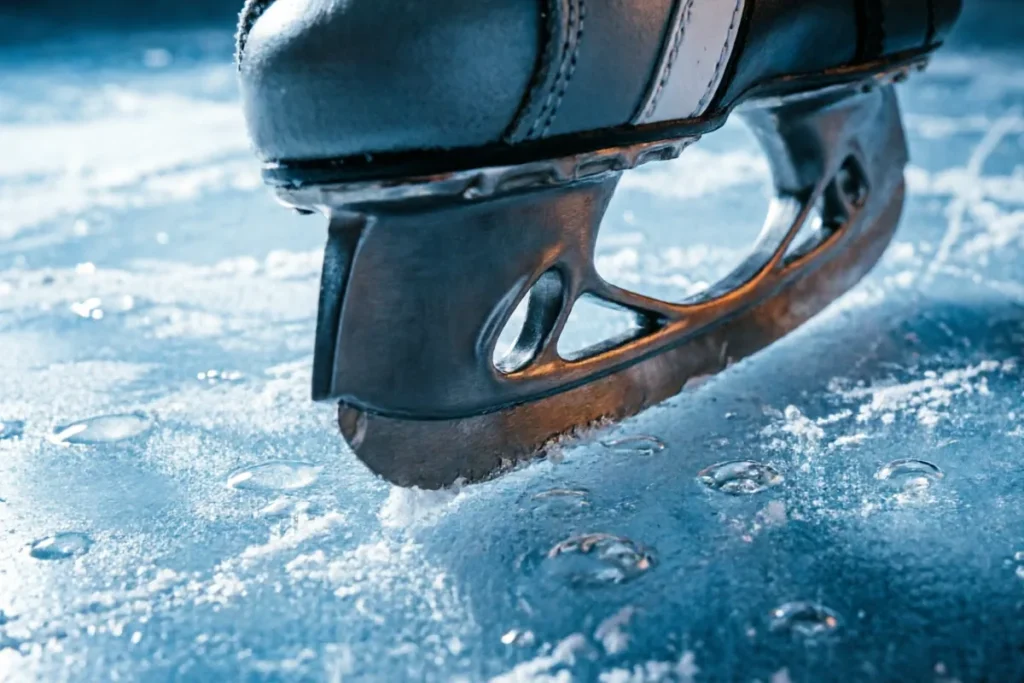
The hollow is the concave groove ground into the underside of the blade, leaving two edges to engage with the ice. The balance is not universal: your weight, skating style and the ice surface all influence how a given hollow feels.
Understanding how skate blade hollow changes grip and glide can help you choose a profile without treating one setting as best for everyone. This guide explains the trade-off and what to consider when adjusting your blades.
| Hollow | Bite and control | Glide and resistance |
|---|---|---|
| 3/8” | More bite for stops and tight turns | More drag, less glide |
| 7/16” | More grip and edge hold | More resistance |
| 5/8” | Less bite than a deeper hollow | More glide, less resistance |
| 3/4” | Less bite for turns and stops | More glide, less drag |
What does hollow depth change on the ice?
Hollow depth changes how strongly a skate blade’s two edges engage the ice: a deeper groove gives more bite, while a shallower groove gives more glide. The groove cut into the blade is called the radius of hollow, or ROH; it affects how much grip the edges provide.
- 3/8” or 7/16”: These deeper hollows give more grip for acceleration, tighter turns and stopping. The trade-off is added drag, so each push meets more resistance.
- 5/8” or 3/4”: These shallower hollows reduce resistance and provide more glide. They offer less bite for quick direction changes and stops.
Choosing a starting point
The figures are starting points, not universal settings. The same ROH can feel different on another player’s skates or on a different ice surface, because both affect how the edges engage.
If you change hollow, compare how the blade grips during a turn and stop with how freely it glides between pushes. Those two checks make the trade-off clear.
How do body weight and skating style affect the choice?
Body weight and skating style both affect how a skate blade hollow feels: heavier players may find a deep cut too grabby, while lighter players may need extra bite for secure edges.
- Heavier players: Greater pressure can push the blade edges more firmly into the ice. If a deep hollow feels difficult to release or creates too much drag, a shallower hollow may provide a better balance of grip and glide.
- Lighter players: If a shallow hollow does not hold well through stops and turns, a deeper hollow can add the edge bite they need.
- Quick, tight skating: Players who make abrupt stops, tight turns and quick accelerations often favour more bite, accepting that it can mean more friction and less glide.
- Long, fast strides: Players who prioritise speed over sharp changes of direction may prefer a shallower hollow, which offers more glide but less stopping power.
Test a change on the ice
Change one variable at a time when adjusting your radius of hollow (ROH), the hollow ground into the blade. Keep your skating conditions as consistent as you can, then assess the same movements: starts, stops and turns. That makes it easier to tell whether the new hollow gives you useful edge hold or simply adds unwanted drag.
How should ice conditions change your hollow?
Match your hollow to the ice you skate on most: softer ice can make a deep hollow feel like it is digging in, while harder ice may need a deeper hollow for reliable edge hold.
- Softer ice: If the blade feels resistant or sinks into the surface, a shallower hollow can reduce drag and make gliding feel easier.
- Harder ice: A deeper hollow can provide more bite, helping your edges hold through turns and stops.
These are starting points, not fixed rules. Ice feel varies between rinks and can change during a session, so judge the hollow by how your own skates glide and hold their edges on the surfaces you use.
When rink conditions vary
Test your current hollow on your usual ice before changing it. Notice whether the main problem is excess resistance on softer ice or insufficient grip on harder ice; changing the hollow trades some glide for bite, or the reverse.
If you skate on both soft and hard ice, ask your sharpening provider for a setting that stays manageable across those surfaces. A teammate’s preference is a useful comparison, but their hollow may not feel the same under your skating or on your regular rink ice.
When can more bite make skating worse?
A hollow can make skating worse when its bite creates more drag than your skating needs: a deep hollow increases friction, so each stride takes more effort and sustained skating can feel harder.
Too much bite can also make transitions feel abrupt and interrupt a smooth glide. The opposite trade-off matters too: with too much glide, stops and turns may feel insecure because the blade has less grip on the ice.
Check the sharpening before changing your setup
If a freshly sharpened blade feels unexpectedly grabby or slippery, first check that the hollow you requested matches the hollow ground into the blade. A mismatch can explain the change in feel without requiring a different setup.
Change only one variable at a time. Hollow depth affects grip and glide; blade profiling changes the blade’s shape along its length. If both are altered together, it becomes harder to tell which adjustment caused the new feel. Keep the profile unchanged when testing a different hollow, then assess stops, turns and sustained skating before making another adjustment.
What should you check when choosing a sharpening service?
Before booking a skate sharpening, ask the provider which radius of hollow (ROH) it will grind and confirm that both skates will receive the same hollow.
Tell the sharpener what you want to change: more stopping bite, less drag or a steadier turn. A deeper hollow generally adds grip and friction, while a shallower one generally reduces resistance and offers more glide; “standard sharpening” does not tell you which trade-off you will get.
- ROH: Get the exact hollow the shop plans to grind, rather than relying on an unexplained label such as “standard.”
- Pair consistency: Confirm that both skates will be sharpened to the same hollow.
- Service details: Check the sharpening provider’s own service details before booking. Hockey Monkey® and Hockeymonkey.com® are operated by and are trademarks of MonkeySports, Inc.
Test the sharpening on the ice
After sharpening, test both edges on the ice and compare how your starts, stops and turns feel. If one edge feels different, or the new hollow changes grip or glide more than you intended, describe that result to the sharpener before requesting another change.
How can you compare common hollow choices?
Compare skate blade hollows as a feel guide: a deeper hollow gives more bite but less glide, while a shallower hollow gives easier glide but less bite.
- Deeper hollow: A 3/8-inch or 7/16-inch hollow offers more grip for stopping and turning, with more drag as the trade-off.
- Shallower hollow: A 5/8-inch or 3/4-inch hollow reduces resistance and supports glide, but provides less bite for turns and stops.
Those examples are starting points, not universal settings. The hollow that feels right depends on your body weight, skating style and the ice conditions; softer ice may call for a shallower hollow, while harder ice may suit a deeper one. A choice that works for one skater may not work for you.
Change one thing at a time
If you are unsure what hollow is on your skates, ask the sharpening provider to confirm it before changing anything. Then make a small, single adjustment so you can tell whether the new balance of grip and glide suits your skating.
Keep a note of the hollow and the conditions in which it felt right, including how the ice felt. That gives you a clear comparison point when you next ask for a sharpening.
Frequently asked questions
What is ROH on hockey skates?
Does a deeper hollow make you faster?
Should a heavier player use a shallower hollow?
Should you change hollow depth when the ice changes?
Key takeaways
- A 3/8” or 7/16” hollow prioritises bite; a 5/8” or 3/4” hollow prioritises glide.
- Body weight changes how firmly a blade engages the ice, but does not determine a player’s hollow by itself.
- Softer ice can favour less bite; harder ice can make extra bite useful.
- Change one sharpening variable at a time and test starts, stops and turns.
Sources
- shinnyusa.com — “A Basic Understanding of Skate Blade Depth – Shinny”
- echockeyandskating.com — “How to Choose the Right Skate Sharpening for Your Playing Style”
- abyha.org — “The Cutting Edge to Skate Sharpening”
- ramonedge.com — “Hockey Skate Sharpening: Choosing the Right Hollow”
- Ice Warehouse — “How to Select the Correct Skate Sharpening”