Stainless vs Carbon Steel Skate Blades
Stainless steel skate blades need less care against rust, while carbon steel blades are easier to sharpen but require more drying and maintenance.
The numbers
Hardness often reached by carbon steel blades
Sharpening interval stated for stainless steel blades in the titanium comparison
Sharpening interval stated for titanium blades in the comparison
The choice is not simply about which blade is “better”: performance depends on the blade’s construction, sharpening and how you care for it. Stainless steel is not rust-proof, and carbon steel is not automatically sharper. Here’s what the difference means when you skate, sharpen and store your blades.
| Criterion | Stainless steel | Carbon steel |
|---|---|---|
| Corrosion resistance | Resists rust effectively | More vulnerable to rust |
| Edge retention | Standard stainless may dull sooner | Can maintain an edge longer |
| Maintenance | Lower moisture-related upkeep | Needs prompt drying |
| Purchase cost | Typically higher | Typically lower than stainless |
- 211mm – 322mm Blade lengths listed by Ice Warehouse
What separates stainless steel from carbon steel blades?
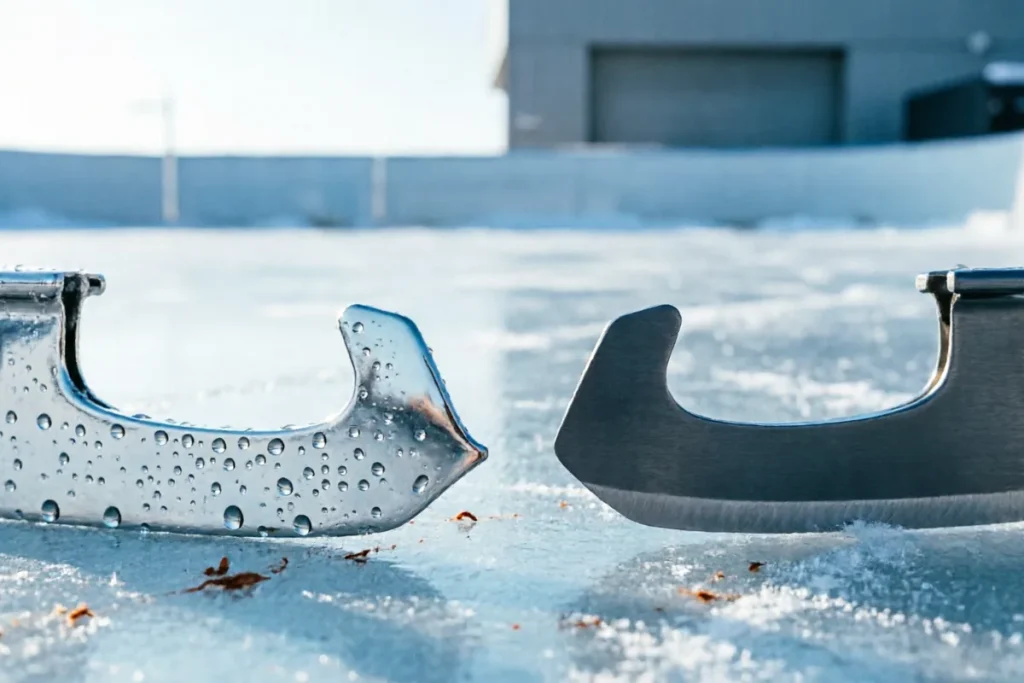
Stainless steel blades use chromium-alloyed steel, commonly grade 420 or 440, to resist corrosion; carbon steel is less corrosion-resistant and needs prompt drying after skating.
- Corrosion: Chromium helps stainless steel resist rust, making it a lower-maintenance choice in humid conditions. Carbon steel needs to be dried promptly after each session.
- Hardness and edge retention: Carbon steel blades often reach 58–64 on the Rockwell scale, and that hardness can help an edge last longer. Stainless steel is generally softer, but modern 440-grade steel has narrowed the edge-retention gap with high-carbon steel.
How does each steel affect rust risk and daily care?
Stainless steel is the more forgiving skate-blade choice in humid conditions because it resists rust more effectively than carbon steel, but both blades need drying after use.
- Stainless steel: Wipe the blade dry after skating. Its corrosion resistance reduces rust risk; it does not make the steel immune to corrosion.
- Carbon steel: A dry cloth and dry storage address the main moisture-related risk. Dry the blade before putting it away.
Use blade guards when walking off the ice, then remove them for storage. Leaving guards on can trap moisture against either blade, so let the steel dry before packing it away.
How often do stainless steel blades need sharpening?
Stainless steel blades require sharpening every 12–15 hours, compared with titanium blades every 8–10 hours.
That comparison is with titanium, not carbon steel, so it does not establish how often stainless steel should be sharpened relative to carbon steel. Sharpening frequency depends on how you use your skates and the edge you need.
Have a skate technician check the edge when grip or control changes. A change in feel is a reason to have it assessed, not a fixed sharpening schedule for every skater.
Which blade material is likely to cost more over time?
Stainless steel skate blades are likely to cost more upfront, while carbon steel may cost more over time if its edge needs sharpening more often.
- Stainless steel: Higher material and manufacturing costs typically raise the purchase price. Its resistance to rust also means less corrosion-related upkeep, which is useful if you cannot dry your skates immediately after skating.
- Carbon steel: It may hold an edge longer than standard stainless steel, potentially reducing sharpening frequency. That advantage can narrow the difference in ownership costs.
The total depends on the exact blade and local sharpening charges. Compare those prices directly; steel type alone cannot tell you which option will cost less.
Does blade material affect sizing or skate compatibility?
Blade material does not determine skate sizing or holder compatibility; the runner’s length and mounting system do. Ice Warehouse lists blade lengths from 211mm – 322mm, with some sizing systems running from Jr 1 – Sr 12.
Those sizing ranges apply independently of whether the runner is stainless or carbon steel. For a concrete example, Ice Warehouse pairs the CCM JetSpeed FT4 Pro Skate with a CCM SpeedBlade XS Holder; check the holder on your skate and the blade maker’s compatibility chart before ordering replacement steel.
When is stainless steel not the better choice?
Carbon steel can be the better choice when edge retention matters more than rust resistance, though the result depends on the blade and how it is sharpened.
Stainless steel resists corrosion, but it can still dull or suffer edge damage. It still needs routine sharpening and care; rust resistance does not keep an edge sharp.
- Edge retention: Carbon steel may hold an edge longer than standard stainless steel. Do not infer how often stainless needs sharpening from a comparison with titanium; that is a different benchmark.
- Cost and upkeep: Stainless steel typically costs more, and lower maintenance does not guarantee that the extra purchase price will be recovered. How often you skate and how you dry and care for your blades affect the balance.
What should you check before choosing a blade?
Before choosing a blade, weigh rust resistance and moisture care against edge retention, then check the exact steel grade, holder fit and total cost.
- Steel grade: Stainless steel is a practical choice if you want stronger rust resistance and simpler care after skating, especially in humid conditions. Carbon steel may suit you better when keeping an edge longer is the deciding factor. Check the blade’s stated grade: 440 stainless has narrowed the hardness gap with high-carbon steel.
- Fit and cost: Confirm that the replacement blade fits your skate’s holder. Compare the full blade price with the sharpening costs you expect over time, rather than judging by purchase price alone.
A skate technician can assess the edge on your current blade and explain how a replacement will fit your setup. Ask them to check both before you buy.
Sources
- goldenskate.com — “Difference between stainless and carbon steel in skating?”
- gear.rinkhive.com — “Science of Hockey Skate Blades: Steel, Profiles & Sharpening”
- Cutting Edge Skates — “Blade Materials Explained”
- allblackhockeysticks.com — “Types of Skate Steel and What They Do”
- skatewithaimee.com — “What Are Ice Skating Blades Made Of?”