Penalty Shot vs. Shootout: When Each Decides a Game
A penalty shot is awarded for a specific foul during play; a shootout breaks a tie after regulation and any required overtime. One addresses an infraction, the other decides a still-deadlocked game.
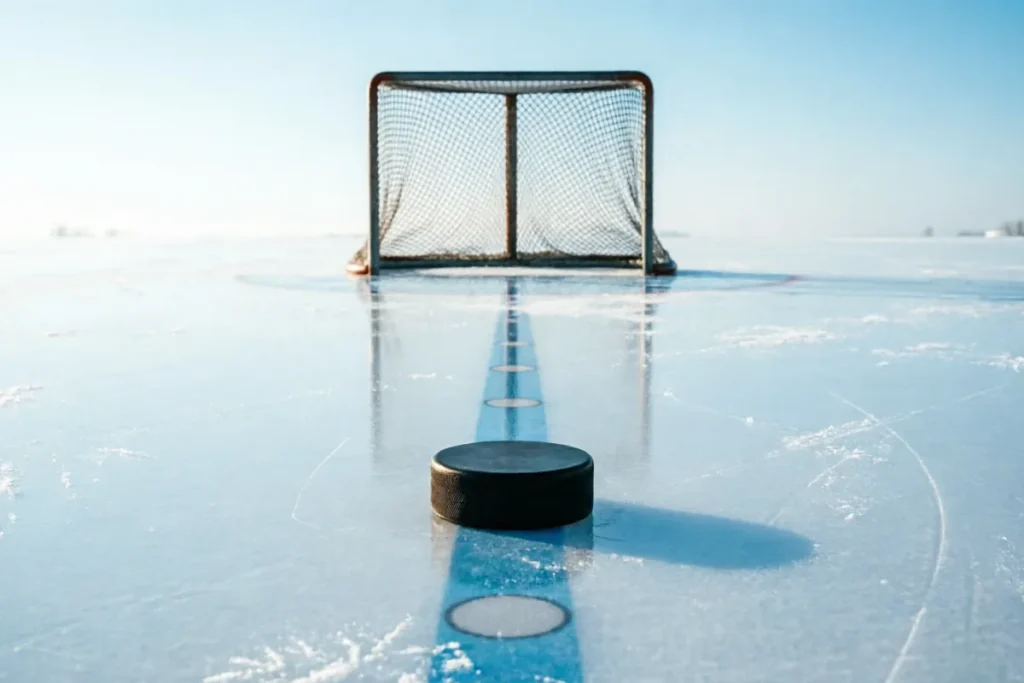
Both put a skater one-on-one with the goalie, but the rules and stakes differ. A penalty shot can happen during a game, while a shootout is a tiebreaker used only when the competition’s format calls for it. Knowing the difference explains when each can decide the result.
| Feature | Penalty shot | Shootout |
|---|---|---|
| Trigger | Foul removes a clear scoring opportunity | Score remains tied after regulation and overtime |
| Purpose | Restore an individual scoring chance | Decide a tied game |
| NHL rule | Rule 24.2 | Rule 84.4 refers attempts to Rule 24 |
| Game result | A goal is scored during play | The tie-break determines the winner |
When is a penalty shot awarded?
An NHL penalty shot is awarded when an opposing player’s foul takes away a clear scoring opportunity, commonly on a breakaway. It restores the chance the foul denied; it is not a tie-break procedure.
The decision depends on what happened: whether the foul prevented a clear chance to score. A game does not need to be tied for a penalty shot to be awarded. The relevant question is the lost opportunity, not the score.
How it differs from a shootout
An NHL shootout is used to decide a game that remains tied after regulation and overtime. A penalty shot during play instead responds to a specific foul. The same kind of attempt can appear in both situations, but the reason for taking it is different.
The NHL Official Rules 2025–2026 set out the penalty-shot procedure in Rule 24.2. For a disputed play, check the rule and the circumstances of the foul: a breakaway alone does not settle whether the award is warranted; the lost scoring opportunity does.
How does an NHL shootout attempt work?
An NHL shootout decides a tied game after regulation and overtime have ended: each team sends three players in turn, and the team that scores more on those attempts wins.
The shootout is a game-deciding procedure, not a penalty awarded because a player committed a foul. That distinction separates it from a penalty shot during play, which is awarded after a foul takes away a clear scoring opportunity.
How the attempts are decided
- Each team selects three players to take turns attempting shots against the opposing goaltender.
- After those initial attempts, the team with more shootout goals wins.
- If the teams are still tied, attempts continue in sudden death: one team must score while the other fails to score in the corresponding turn.
In the NHL, Rule 84.4 sends shootout attempts to the penalty-shot procedure in Rule 24. The attempt therefore uses that rule’s penalty-shot procedure, even though the shootout itself is not a penalty for a foul.
What happens to penalties when regulation ends?
When an NHL game is tied at the end of regulation, it goes to overtime before a shootout can decide it.
Penalties that are still running when regulation ends affect that overtime. The NHL’s 2025–2026 rules handle them under Rule 84.3 and Tables 15 and 16. For example, a five-on-three situation at the end of regulation means overtime starts five-on-three; the teams do not first reset to even strength.
Check the penalty’s carryover
The penalty state can therefore shape play during overtime, before a shootout is possible. A shootout comes only if the game remains tied after overtime. For a specific penalty, consult the current NHL rulebook’s Rule 84.3 and Tables 15 and 16 to check the exact overtime sequence and how that penalty carries over.
How does each result affect the game?
A successful penalty shot adds a goal to the score during play; a shootout result breaks a tie after overtime and determines the winner.
- Penalty shot during play: The referee awards it when a foul erases a clear scoring chance, such as a breakaway opportunity. If the attempt scores, the goal counts in the game score and play continues, unless that goal ends the game under the applicable situation.
- Shootout after overtime: When overtime ends with the score tied, teams take turns using the penalty-shot procedure to decide the winner. A shootout goal counts in the tie-break, not as an ordinary goal scored during play.
Two different questions
A penalty shot asks whether a foul took away a clear chance to score. A shootout asks which team wins when overtime ends and the game remains tied. The attempts can look alike, but their place in the game—and the effect of a goal—are different.
Which NHL rulebook applies, and where can confusion arise?
The National Hockey League Official Rules 2025–2026 govern the NHL explanation here, especially Rules 24.2, 84.3 and 84.4; other competitions may use different overtime and shootout rules.
A penalty shot and a shootout attempt can follow the same procedure: a skater takes the puck toward the opposing goaltender and tries to score. Their triggers and purposes differ. A penalty shot responds to a foul that takes away a scoring opportunity; a shootout attempt is part of the procedure for deciding a game that remains tied after overtime.
Which rulebook to check
The NHL Official Video Rulebook still linked the 2025–26 edition as its current downloadable book when checked on 27 August 2026. For NHL situations, consult that edition’s Rules 24.2, 84.3 and 84.4 rather than treating every penalty shot as a shootout attempt.
Outside the NHL, check the competition’s official rules before applying this explanation. Overtime format and shootout procedure can vary by league, so the NHL rulebook alone cannot settle how another competition handles a tied game.
Frequently asked questions
Is a penalty shot the same thing as a shootout?
Does an NHL shootout use penalty-shot rules?
Can an NHL game go straight from regulation to a shootout?
What if a shootout is still tied after the first round of attempts?
Sources
- hockeymonkey.com — “Guide to the Hockey Shootout: Rules, Procedures & Records”
- Ice Hockey 101 – Chicago Wolves — “Ice Hockey Rules Explained”
- hockeybydesign.com — “What is a Shootout in Hockey – Why is it Important?”
- Hockey Rules — “NHL Overtime and Shootout Rules”