How Often Should You Sharpen Hockey Skates?
Most hockey skaters should sharpen their skates every 10 to 15 hours on the ice. Sharpen sooner if the edges lose grip or you notice slipping during turns and stops.
The numbers
Tydan’s suggested sharpening interval
Pro Stock Hockey’s rule of thumb for ice time
Skater’s Edge’s general sharpening interval
That interval is a starting point, not a fixed schedule: ice conditions, skating style and personal preference all affect how quickly blades need attention. Check your edges regularly, and ask a skate technician to assess them if you are unsure.
| Guidance | Suggested interval | Context |
|---|---|---|
| Tydan | 8 to 12 hours | Varies by player and skating style |
| Bauer | 2 to 3 hours | Competitive players |
| Warrior Ice Arena | 10-20 hours | General guide |
| Warrior Ice Arena | 5-10 hours | Regular hockey or competitive skating |
| Pro Stock Hockey | 15 to 20 hours | Rule of thumb |
| Skater’s Edge | 20-40 skating hours | General guidance |
- 5-10 Warrior Ice Arena’s interval for regular hockey or competitive skating, in hours
Why is sharpening only when the skates feel dull a mistake?
Waiting until hockey skates feel unmistakably dull can leave nicks and defects affecting your on-ice performance. Regular checks help you spot blade damage before turns, stops or starts become less reliable.
What to check on the blade
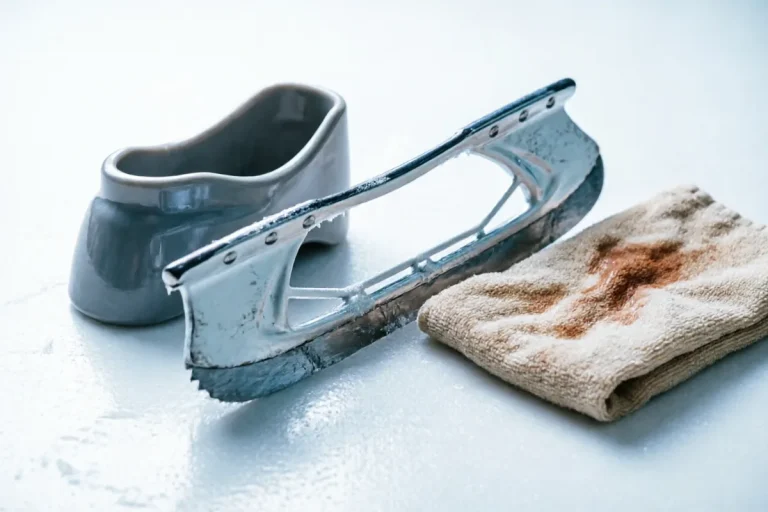
Bauer’s sharpening guide recommends gently running a finger along the blade edge to feel for small nicks and defects. Handle the blade carefully while checking it.
- Small nicks or defects: note where they appear; sharpening grinds blade flaws away.
- Turns, stops and starts: check whether these movements feel less reliable after a session.
- Visible damage: use it as a reason to assess the blade, not as proof that it always needs a full sharpening.
Check the edge after each session and keep track of when your skating begins to feel less dependable. That record gives you a practical signal alongside what you can feel on the blade; there is no need to wait for a dramatic loss of grip.
How does skating time change the sharpening interval?
Use hours as a baseline, not a guarantee
The sharpening interval depends on how much time you spend on the ice and how your skate edges perform; count skating hours, not calendar days.
Published guidance gives different starting points, rather than one schedule that fits every player:
- Tydan: every 8 to 12 hours.
- Pro Stock Hockey: every 15 to 20 hours.
- Skater’s Edge: every 20-40 skating hours.
- Warrior Ice Arena: every 10-20 hours as a general guide, or every 5-10 hours for regular hockey or competitive skating.
- Bauer: every 2 to 3 hours for competitive players.
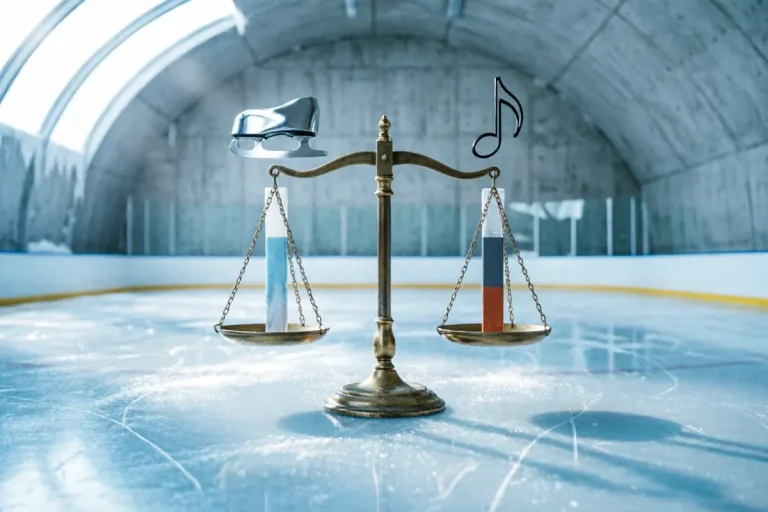
These recommendations vary substantially, so use the range that best matches your skating frequency and level as a prompt to inspect—not an automatic deadline.
If you skate or play often, check your edges more frequently. Nicks and defects, or a decline in how your skates perform on the ice, are reasons to consider sharpening; let the blade’s condition guide the decision.
Why can the same sharpening interval feel different on different ice?
The same skate-sharpening interval can feel different on different ice because temperature and surface conditions change how the blade grips and glides.
Wissota describes 17 to 23 degrees as “hard hockey ice”; 25 to 26 degrees is considered good figure skate ice. Wissota also says most rink managers aim for an ice temperature of approximately 25 degrees Fahrenheit. These conditions can change the blade’s feel even when your edges have not changed.
When you move to a different rink, assess how the blades respond on that surface before adjusting your sharpening routine. Notice whether the edges still hold during turns and whether the skates feel secure when stopping; if the feel differs, give yourself time to compare before deciding that the sharpening interval needs to change.
How can you avoid sharpening too often?
To avoid sharpening hockey skates too often, judge each sharpening by edge condition and on-ice response rather than by a fixed calendar schedule. Some players sharpen before every game, but that is a personal routine, not a requirement for every blade.
Repeated sharpening without checking performance can mean unnecessary trips to the shop and removes blade material. Before booking a sharpening, check whether the edge still holds and whether the blade has defects that affect how the skates respond. Small nicks or other flaws can be felt along the blade edge.
Track use and check the edge
- Record ice time: Keep a simple log of hours on the ice and the date of each sharpening.
- Check the blade: Compare the edge condition over time, noting nicks or other meaningful defects.
- Assess performance: Pay attention to whether the skates still respond as you expect while skating.
If the edge still holds and there are no meaningful defects, don’t sharpen just because a set number of days has passed. Use your record to spot how your own blades wear, then reassess when their condition or response changes.
When is sharpening not the real problem?
A blade that feels wrong may need a different hollow, not another sharpening. The hollow is the concave groove between the blade’s two edges; its radius affects how the skate grips and glides on the ice.
Check the hollow as well as the edge.
Wissota’s “general purpose” radius-by-weight chart gives these starting points:
- Very light skaters: 3/8″
- Light skaters: 1/2″
- Average skaters: 5/8″
- Heavy skaters: 3/4″
- Goalies: 1 – 1 1/4″
Those categories are a guide, not a prescription. Your preferred feel and skating needs may call for a different hollow, so another grind is not automatically the answer when the blade feels off.
Before requesting another sharpening, ask the sharpener to confirm the hollow and inspect the blade. This is especially useful when sharpening has not restored the expected feel: check whether the hollow suits you and whether the blade needs attention beyond another grind.
Frequently asked questions
How many hours should hockey skates last between sharpenings?
Should I sharpen my skates before every game?
How do I check for blade damage?
Can ice temperature affect how sharp my skates feel?
What if sharpening does not improve the feel?
Sources
- tydanblades.com — “How Often Should You Sharpen Your Hockey Skates?”
- BAUER — “Hockey Skate Sharpening Guide”
- skatersedgewny.com — “Skate Sharpening and You!”
- warrioricearena.com — “Skate Sharpening”
- prostockhockey.com — “How Often Should You Sharpen Your Skates?”