How to Choose and Replace a Hockey Mouthguard
Choose a hockey mouthguard that fits securely and comfortably, then replace it if it is damaged, loose or no longer fits well.
The numbers
Players in the JCDA survey who never wore a mouthguard
Players in the JCDA survey who always wore a mouthguard
Players in the JCDA survey who sometimes wore a mouthguard
A good fit matters: a mouthguard should stay in place without constant biting or adjustment. Follow the manufacturer’s instructions for fitting and care, and check it regularly for wear.
This guide explains how to choose a hockey mouthguard, assess its fit and know when it is time for a replacement.
| Type | How it fits | Key consideration |
|---|---|---|
| Stock | Ready to wear | Check that it stays in place comfortably |
| Boil-and-bite | Moulded at home | Follow directions; use gentle pressure with braces |
| Custom | Made to fit the wearer | Discuss suitability with a dental professional |
- 16.5% Players in the JCDA survey who wore a mouthguard only when it was enforced
Which hockey mouthguard type should you choose?
Stock, boil-and-bite and custom
Choose a stock mouthguard for a ready-to-wear option, a boil-and-bite guard if you want to mould the fit at home, or a custom guard if you want one made for your teeth and are ready to discuss it with a dental professional. The best choice is the one that fits comfortably, stays in place and works with any braces.
- Stock: Ready to wear, but offers less opportunity to shape the fit to your teeth. Check that it feels comfortable and stays in place.
- Boil-and-bite: Moulded at home. Follow the product directions; do not add heat or force beyond what they instruct. If you wear braces, choose a guard with room over the brackets and mould it gently.
- Custom: Made to fit the wearer. Discuss this option with a dental professional, especially if braces affect the fit you need.
Before choosing, test the guard’s fit, comfort and ability to stay in place, and check that it accommodates braces if you wear them. A guard that shifts or presses against brackets may be less practical during play than one that remains secure without discomfort.
How should a hockey mouthguard fit?
Fit, retention and comfort
A hockey mouthguard should cover the teeth while leaving the back molars uncovered, with its rear edge ending between the first and second molar. Check its position in a mirror: it should protect the front and side teeth without extending over the back molars.
Use these checks to judge whether the guard is suitable:
- Retention: It should stay securely in place without you having to bite down constantly to hold it there.
- Speech and breathing: You should be able to speak clearly and breathe comfortably while wearing it. If either is difficult, the guard is unlikely to be comfortable enough for regular use.
- Cleanliness: Clean the mouthguard thoroughly before its first use and after each use, following the care instructions for that guard.
Try the guard while relaxed, not only while clenching your teeth. If it shifts, interferes with clear speech, or makes comfortable breathing difficult, reassess the fit before wearing it for hockey.
What should players with braces look for?
Players with braces should choose a hockey mouthguard that has enough space to sit over the brackets without pressing tightly against them. A close fit that bears on brackets or wires can make the guard uncomfortable and may interfere with the appliance.
A boil-and-bite mouthguard needs gentle handling around braces: soften it as directed, then mould it without forcefully pushing the material onto brackets or wires. If braces are adjusted, teeth move, or other dental work changes the shape of the mouth, check the fit again rather than relying on the old mould.
Check the fit with a dental professional
- Room over brackets: The guard should accommodate the player’s current braces instead of squeezing them.
- Gentle moulding: Shape a boil-and-bite guard without forceful pressure on brackets or wires.
- Changing fit: Reassess the guard after orthodontic adjustments, tooth movement or dental work.
- Style choice: Ask an orthodontic or dental professional which mouthguard type suits the player’s current appliances.
What can a mouthguard protect against—and what can it not?
A hockey mouthguard helps protect the teeth and oral soft tissue, but it cannot prevent every injury to the face, head or body. The Canadian Dental Hygienists’ Association identifies lips, cheeks and gums as soft tissue it can help shield from lacerations and bruising.
Protection has limits
The JCDA account reports that, among injured players, 57.7% were hit by a stick, 46.2% by a puck and 25% were checked by an opponent. These different impacts show why a mouthguard is only one layer of protection: it may help shield the mouth, but it cannot stop every strike or collision.
A mouthguard does not replace the facial protection required for play. Wear the appropriate visor or full-face shield as well; a mouthguard protects neither the whole face nor the head and body.
When should you replace a hockey mouthguard?
Wear and fit changes
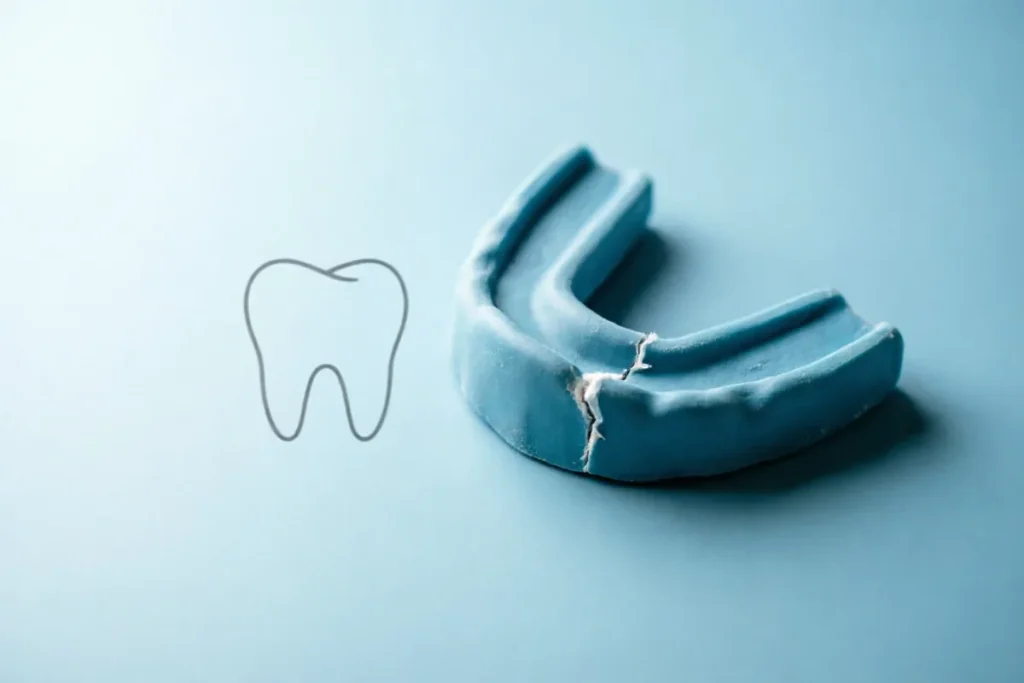
Replace a hockey mouthguard every season or by six months, whichever comes first, and sooner if wear or a change in fit makes it unreliable. Check the guard regularly rather than waiting for a calendar reminder, especially for a growing player.
- Tears, cracks or heavy chewing: Replace a guard that is torn, cracked or badly chewed.
- Warping or slipping: Replace it if it has warped or no longer stays securely in place.
- Dental changes: Reassess the fit after dental work, a braces adjustment or tooth movement; replace the guard if it no longer fits securely.
- Growth: Check a growing player’s guard regularly, since changes in the mouth can affect fit before the seasonal or six-month replacement point.
A mouthguard that feels loose or no longer sits comfortably may not provide a dependable fit. If you are unsure after a dental change, ask the player’s dentist or orthodontist to assess it before use.
Why can a mouthguard fail if players do not wear it?
A hockey mouthguard can fail to protect a player who does not wear it during play, even if the guard itself fits and is in good condition. In the JCDA survey, 45.6% of players never wore a mouthguard, 23.1% always did, 14.8% sometimes did and 16.5% wore one only when it was enforced.
The JCDA account links low compliance with concerns about comfort, function and visibility involving mouthguards and full-face shields. A guard that feels bulky or loose can be hard to tolerate on the ice; leaving it in a gear bag, however, means it provides no protection during play.
Make fit part of the choice
Comfort and retention belong in the selection decision alongside the type of guard. Stock, boil-and-bite and custom mouthguards offer different options, so a player who dislikes one fit need not simply go without protection.
- Bulky or loose fit: try another type of mouthguard.
- Fit concerns: ask a dental professional for help assessing the fit.
- Full-face shield visibility concerns: consider whether the mouthguard and shield together feel workable during play, rather than relying on enforcement alone.
Frequently asked questions
How often should a hockey mouthguard be replaced?
Can you wear a boil-and-bite mouthguard with braces?
Does a mouthguard protect the whole face?
How can I tell if a mouthguard fits properly?
Key takeaways
- Choose between stock, boil-and-bite and custom by fit, comfort and retention.
- For braces, allow room over the brackets and mould a boil-and-bite guard gently.
- A mouthguard protects teeth and oral soft tissue but does not replace facial protection.
- Replace a damaged or loose guard; use a season or six months, whichever comes first, as a baseline.
Sources
- betterhockey.com — “Hockey Mouthguard Guide: Types, Fitting and Care”
- What to Buy — “Hockey Mouthguard With Braces”
- my.clevelandclinic.org — “Mouth Guards: Types & Purpose”
- comizioorthodontics.com — “How Often Should Athletes Replace Their Sports”
- makurasport.com — “The Straightforward Guide to choosing the right Mouthguard”