Balance vs. Momentum: Why Beginners Wobble
Beginners wobble because staying upright on skates takes balance, while moving too slowly can make control harder. A steady glide gives the body more time to respond than a tense, hesitant shuffle.
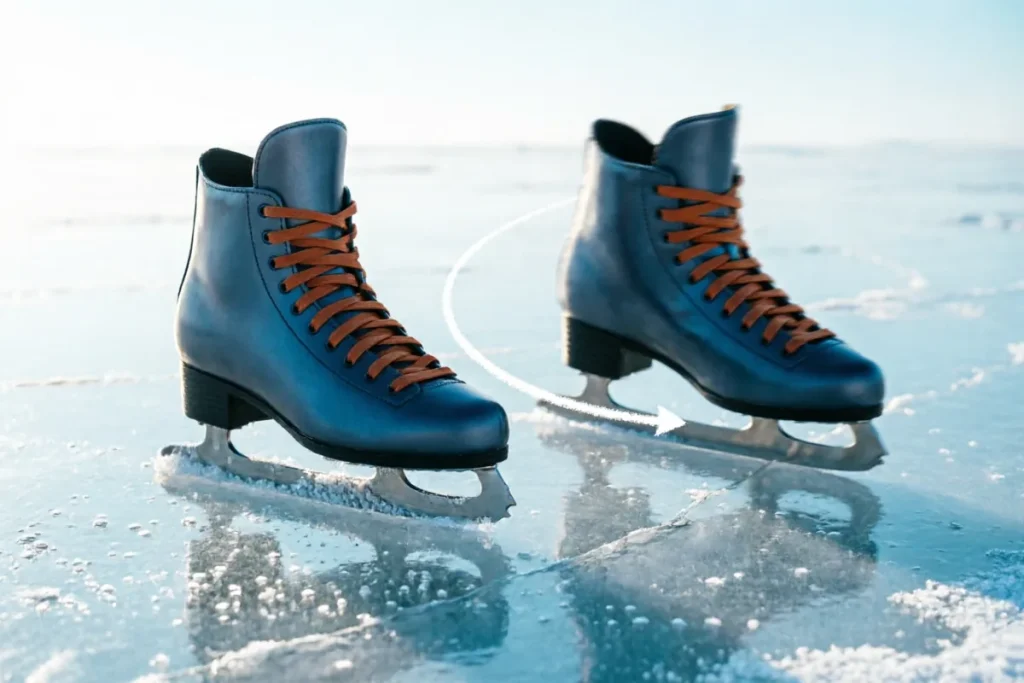
That doesn’t mean speed fixes everything: rushing can make a new skater feel less secure. Understanding how balance and momentum work together helps beginners build confidence, find a comfortable pace and make small corrections without fighting every wobble.
| Situation | Likely issue to check | Practical response |
|---|---|---|
| Wobble while standing still | Stance or skate fit | Bend knees, engage core, check boot security |
| Foot rolls inside the boot | Loose fit | Check that the skate holds the foot securely |
| Steady at rest, unstable while gliding | Control of movement | Ease the push and focus on a gentle glide |
| Wobble mainly on a curve | Direction change or premature crossover | Regain a controlled glide before adding crossovers |
How do balance and momentum differ on ice?
Balance is your ability to keep your body weight controlled over the blades, whether you are standing still or gliding; momentum is the continued movement that carries you forward or around a curve. Momentum can make a steady glide feel easier than stopping, but it does not fix poor posture or keep you upright by itself.
What each one does on ice
During a glide, your knees and core help you manage body position, while your blades and posture determine where you travel. Crossovers show how movement can build speed and change direction along a curve, but beginners still need to steer and keep their weight under control.
- Balance: Keep your weight controlled over the blades while standing or moving.
- Momentum: Use continued movement to travel forward or around a curve; do not rely on it to correct your posture.
- Snowfeet Skiskates: They are described as having a wider, more stable base than traditional skates, which may make finding balance easier. A wider base does not replace learning to control your glide.
What does a posture-related wobble look like?
A posture-related wobble is a loss of steadiness while standing still, before a push-off or glide begins. Because momentum is not yet helping you move, first check your stance and how your skates fit rather than trying to gain speed.
Skate fit is a useful first check: if your foot rolls inside the boot, the skate may be too loose. A secure fit helps support the ankle and keeps your foot better aligned with the blade. Stand with your knees bent and your core engaged; that posture helps you manage weight distribution and control.
Reset before pushing off
If your upper body tips while your feet stay planted, pause instead of pushing away in that position. Bring your torso back over your feet, bend your knees, and engage your core before trying again. This separates a posture problem from one that appears only once you start moving.
How can movement help you stay upright?
A gentle glide can help a beginner stay upright by making balance a controlled movement rather than a still pose. Once you can stand steadily, push off lightly and let the blades travel without trying to build speed; keep your knees soft and use your core to manage your weight as you move.
Leave crossovers and step sequences for later
Crossovers combine gliding with one foot passing over the other as you travel around a curve or circle. They are a later skill for gaining speed or changing direction, not a first fix for wobbling. Step sequences also require deliberate movement and changes of direction, so focus on standing steadily and making a gentle glide before attempting them.
How can you tell which kind of wobble you have?
Identify the wobble by noticing when it starts: before you move, during a glide, or mainly on a curve. Each pattern points to a different control check, so change one factor at a time rather than adjusting everything at once.
- Before moving: Check that your knees are bent, your core is engaged and your stance feels balanced. Make sure each boot holds your foot securely; a loose fit can let the foot roll and make it harder to stay upright.
- As you glide: If you feel steady while standing but wobble once moving, make a smaller push and concentrate on controlling the skate that is gliding. Keep the movement manageable until you can guide it without losing balance.
- On a curve: If the wobble is mostly on turns, do not add crossovers yet. First recover a controlled glide and a clear direction; crossovers are used to gain speed or change direction on a curve, so adding them before you feel steady may complicate control.
To find what helps, adjust only one thing at a time: boot fit, posture or movement. For example, keep your stance and push the same while checking whether a more secure boot fit improves control; then test a posture change separately. This makes it easier to tell which adjustment is useful.
When does momentum fail to solve the problem?
Momentum fails to solve a balance problem when a beginner cannot control the stance that carries it. More speed can make a wobble harder to correct: movement may help a skater keep gliding, but it does not replace a stable position with bent knees and controlled weight distribution.
Body mass can contribute to angular momentum, but a heavier beginner is not automatically steadier on skates. Stability still depends on control; carrying more momentum does not prevent the foot or body from tipping off balance.
When technique or fit adds instability
Crossovers require a skater to control the body through a curve while one foot crosses over the other. Trying them before holding a stable glide adds a balance challenge instead of fixing one. A loose skate creates a different problem: the foot can roll inside it, so pushing harder cannot correct the poor fit; a secure fit is needed to support the ankle.
What can a structured beginner class add?
A structured beginner class gives new skaters a guided setting to practise stance and controlled movement. Macquarie Ice Rink describes its Learn to Skate program as a nationally-accredited Aussie Skate™ program for ages 4 and over, giving beginners a named program to consider when looking for instruction.
Macquarie Ice Rink offers 30minute classes at specific times, and not all levels are held at the same time. Check the rink’s current program details before choosing a session so the class schedule and level suit your needs.
For a casual drop-in format, Macquarie Ice Rink says classes are available through its coffee or kiddies club programs. These offer an alternative to scheduled Learn to Skate classes; whichever format you choose, use the session to work on a steady stance and deliberate, controlled movement.
Frequently asked questions
Should a beginner focus on balance or momentum first?
How can I tell if loose skates are causing my wobble?
Do crossovers help new skaters stay upright?
What does the Macquarie Ice Rink Learn to Skate program offer?
Key takeaways
- A wobble while standing still points to stance or skate fit before momentum.
- Bent knees, an engaged core and a secure boot help support control.
- Crossovers are for controlled movement around a curve, not a fix for an unstable stance.
- Macquarie Ice Rink lists a nationally-accredited Aussie Skate™ Learn to Skate program for ages 4 and over.
Sources
- snowfeetstore.com — “Ice Skate Balance: Tips to Stay Upright”
- sciencefriday.com — “The Physics Of Figure Skating”
- redbull.com — “Figure Skating Glossary: Jumps, Spins & Footwork”
- thestjames.com — “The St. James: Sports, Wellness and Entertainment Complex”
- pinelandfarms.org — “Ice Skating at Pineland Farms: A Beginner's Guide – Pineland Farms, Inc”