Why Arena Ice Quality Changes Fast
Arena ice changes fast because it is constantly being used, resurfaced, and exposed to shifting temperature and humidity. Small changes in water quality, ice depth, and maintenance timing can quickly alter how hard, smooth, or fast the surface feels.
That makes ice quality one of the most sensitive parts of any rink operation. A surface that looks fine from the stands can behave very differently under skates, which is why the topic of Why Arena Ice Quality Changes Fast matters to skaters, coaches, and rink staff alike.
The answer is rarely one single fault. It is usually the combined effect of traffic, climate control, and upkeep, all working on a surface that is designed to be changed, not preserved indefinitely.
| Factor | What it does | Where it shows up |
|---|---|---|
| Skate blades | Cut grooves and shavings | Blue lines, circles, corners |
| Arena humidity | Adds moisture or frost | Center ice, benches, door areas |
| Resurfacing gap | Lets wear accumulate | Late period, long stoppages |
| Crowd heat | Warms the building air | Across the whole rink |
What makes arena ice change during a game?
Skate cuts and shavings
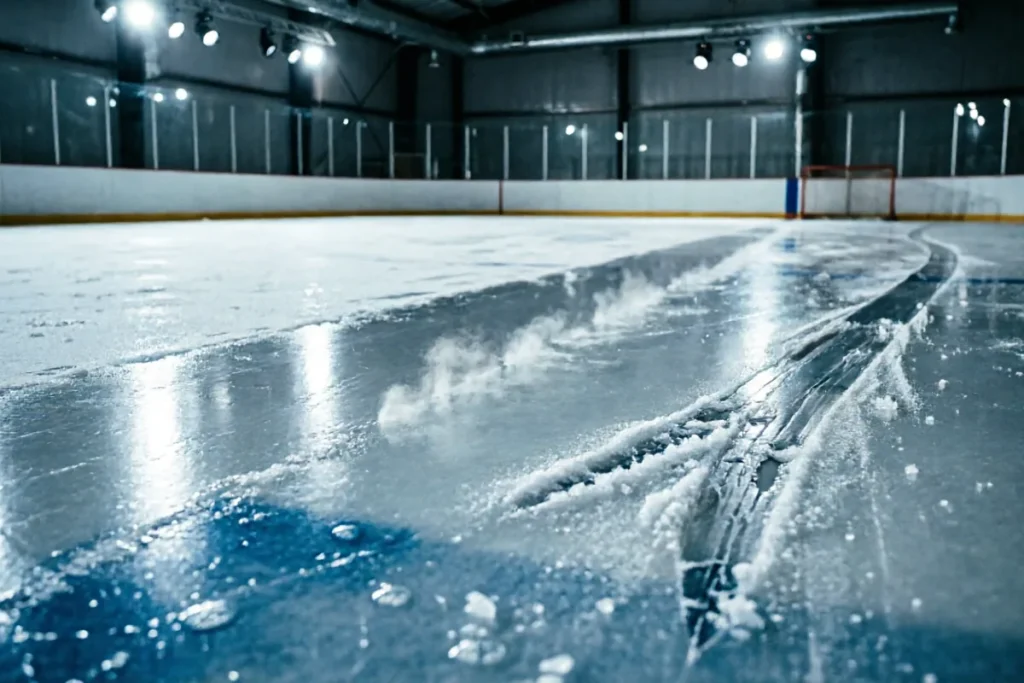
Arena ice changes during a game because every skate pass cuts the surface, and repeated turns at the blue lines and faceoff dots quickly roughen the top layer. That constant traffic leaves shavings and small gouges that make the sheet less uniform from one shift to the next.
- Blue lines: hard edge work concentrates stress in the same lanes again and again.
- Faceoff dots: repeated stops and starts break down the top layer faster than straight gliding.
- Every shift: fresh blades keep carving, so the surface does not stay smooth for long.
Heat, humidity, and timing
Heat from the crowd and arena lighting warms the building air, while the ice stays much colder, so the surface can move from firm to soft as conditions shift. Humidity in the bowl can also leave a thin film of moisture or frost, especially when doors open between periods or during long stoppages.
Timing matters too: if a game runs long or a period starts late, the ice has more time to collect shavings, water, and debris. That extra buildup changes glide and edge hold, which is why the same rink can feel different by the third period.
How do resurfacing and arena systems shape the ice?
Resurfacer pass
A resurfacer pass changes ice quality by stripping away chopped snow, spreading a thin fresh-water layer, and smoothing the top surface so skaters get cleaner glide after each break. In practice, that reset matters because the sheet is being battered by game speed, repeated stops, and constant traffic, so the difference between a fresh pass and a late-period surface can be immediate.
- Freshly resurfaced ice: cleaner glide, fewer ruts, and a more even top layer after the machine lays down water.
- Late-period ice: rougher texture, more cut-up snow, and slower response as the surface wears down.
- Timing as management: many rinks treat the resurfacer window as part of game control, not just routine cleaning.
Cooling and dehumidification
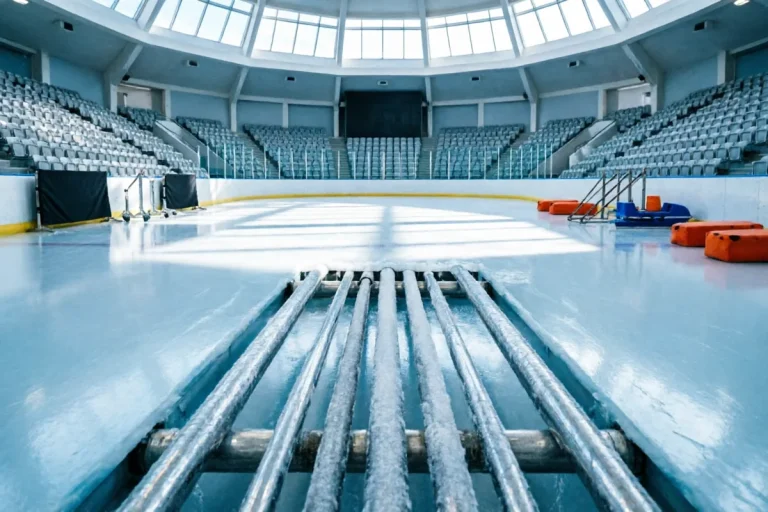
Arena refrigeration keeps the slab cold from below, but it cannot prevent the surface from wearing out under play. That is why dehumidification and airflow control matter too: they reduce condensation, helping the ice stay firm instead of turning sticky or foggy when warm, moist air meets the sheet.
When cooling, air handling, and resurfacing are coordinated, the rink can preserve more consistent conditions across a game. The system does not stop damage from skating; it simply slows the buildup of problems that make the ice feel slow, soft, or uneven.
Why does changing ice affect pace and puck control?
Puck speed and bounce
Changing ice alters pace because harder, cleaner ice lets the puck slide faster and stay flatter, while soft or chopped-up ice makes it bobble and slows clean receptions. That difference matters most on quick breakouts, long stretch feeds, and one-touch plays, where the first touch has to be exact.
- Hard, clean ice: faster puck travel, flatter passes, and cleaner long feeds.
- Soft or chopped-up ice: more bobble, slower receptions, and less reliable one-touch passing.
- Heavy shot volume near the crease and boards: repeated contact can leave uneven patches that change rebound angles.
Edges, turns, and stops
Ice quality also changes skating because a wet or rutted top layer reduces edge bite, which can blunt acceleration out of turns and make stops less crisp. In a game with repeated traffic around the crease and along the boards, those surface changes can build quickly and affect how players recover the puck.
For that reason, rink crews and coaches watch for visible wear in high-traffic areas rather than treating the sheet as uniform from end to end. The practical result is simple: the same play can feel sharp on fresh ice and hesitant once the surface has softened, cut up, or developed uneven patches.
Which game situations usually damage ice the fastest?
High-traffic zones
Power plays, penalty kills, faceoffs, board battles, and net-front scrums damage ice fastest because they force skaters to use the same lanes and the same small patches over and over. Center ice, the offensive-zone dots, the boards, and the crease all take repeated blade pressure, so the surface gets cut up and rutted much faster there than in low-traffic areas.
- Faceoffs: center ice and offensive-zone circles are stressed every time players dig in before the puck drops.
- Special teams: power plays and penalty kills recycle the same movement patterns, concentrating wear in a few lanes.
- Contact areas: boards, the front of the net, and goalie push-off spots collect repeated impacts and marks.
Stoppages and warmups
Long stoppages can soften the surface before play restarts, especially when indoor air is warm and the rink has time to sit between bursts of action. TV timeouts and other pauses let the top layer lose some firmness, so the next shift can leave deeper cuts and more visible snow buildup.
That is why ice can look sharp early in a period and then deteriorate quickly after several pauses in a row. Once the surface warms even a little, the same traffic patterns from special teams and scrums do more damage in less time.
When does bad ice become a safety problem?
Blade catch risk
Bad ice becomes a safety problem when the surface turns uneven enough to trap a skate blade or soften edge hold, because that makes a stumble more likely during hard lateral cuts, stops, and emergency turns. Rutted lanes and wet patches are the main warning signs: one can snag a blade, the other can make the skate slip before the edge fully bites.
- Rutted ice: a groove or ridge can catch the blade during a cross-step or cut.
- Wet patches: a slick film can reduce edge hold and make hard stops less predictable.
- Loose snow: leftover shavings can interfere with puck tracking and add a slide hazard near the crease and corners.
Goaltender movement
For goaltenders, uneven ice around the paint changes how fast they can push across the crease and recover back to their posts. That matters most on quick lateral recoveries, where a small delay in glide or grip can leave the goalie off-balance even if the puck movement itself is routine.
The practical standard is simple: if the ice is visibly rutted, glossy in patches, or covered with loose snow, it is no longer just a performance issue. It is a movement-control problem for skaters and a reaction-time problem for goalies, especially in the crease and the corners.
What are the trade-offs and limits of keeping ice perfect?
Why perfection is temporary
Perfect arena ice is temporary because a full resurfacing only resets the top layer; once skaters return, blades cut new grooves within minutes. A Zamboni pass can pause the action and smooth the sheet, but it cannot stop the next shift, the next turn, or the next scrape from changing the surface again.
Key limits of control:
- Full resurfacing clears ruts and shavings, but it also stops play long enough to break the flow of a game.
- Skating itself is the main source of change, so no arena can keep the ice identical from first puck drop to final horn.
- Humidity control helps stabilize the sheet, yet it cannot fully counter a packed building, open doors, or shifting outside weather.
Why colder is not always better
Colder ice can feel faster because a harder surface lets blades glide with less resistance, but pushing the temperature too low has a cost. When the ice gets overly hard, it can become brittle and less forgiving on falls, which matters in a sport built on speed, edges, and contact.
The trade-off is simple: the best rink is not the coldest one, but the one that balances speed, grip, and safety as conditions change during the game. That is why arena crews keep adjusting rather than chasing a single perfect setting that cannot last.
Frequently asked questions
Why does ice feel different in the third period?
Because the sheet has already taken hundreds of skate cuts, board contacts, and faceoff digs, and the surface can also soften if the arena air warms during the game.
Does a fresh resurfacing always improve play?
Usually it restores glide and removes shavings, but the effect is temporary; once play restarts, skate blades begin changing the surface again.
What part of the rink wears out first?
The most heavily used areas are usually the blue lines, faceoff circles, crease, and boards, where turns, stops, and battles concentrate traffic.
Can humidity really change puck movement?
Yes. Moist air can make the top layer feel sticky or soft, which changes how cleanly the puck slides and how confidently players can stop and pivot.
Key takeaways
- Skate blades, not just temperature, are what change ice fastest.
- Humidity and arena heat can alter puck speed within one game.
- Resurfacing helps, but only temporarily.
- The worst ice usually appears in high-traffic zones like the crease and faceoff circles.