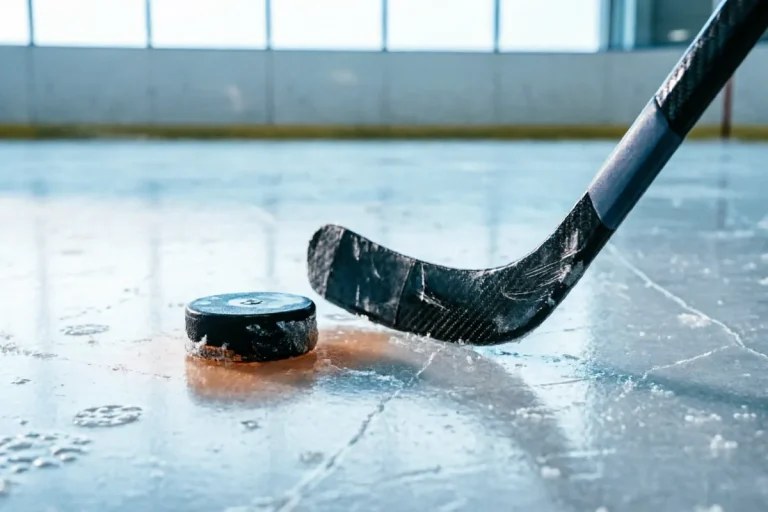
Why Hockey Rink Ice Looks White
Hockey rink ice looks white because its rough surface scatters light in many directions. The ice itself is clear; the white appearance comes from light reflecting and bouncing through it.
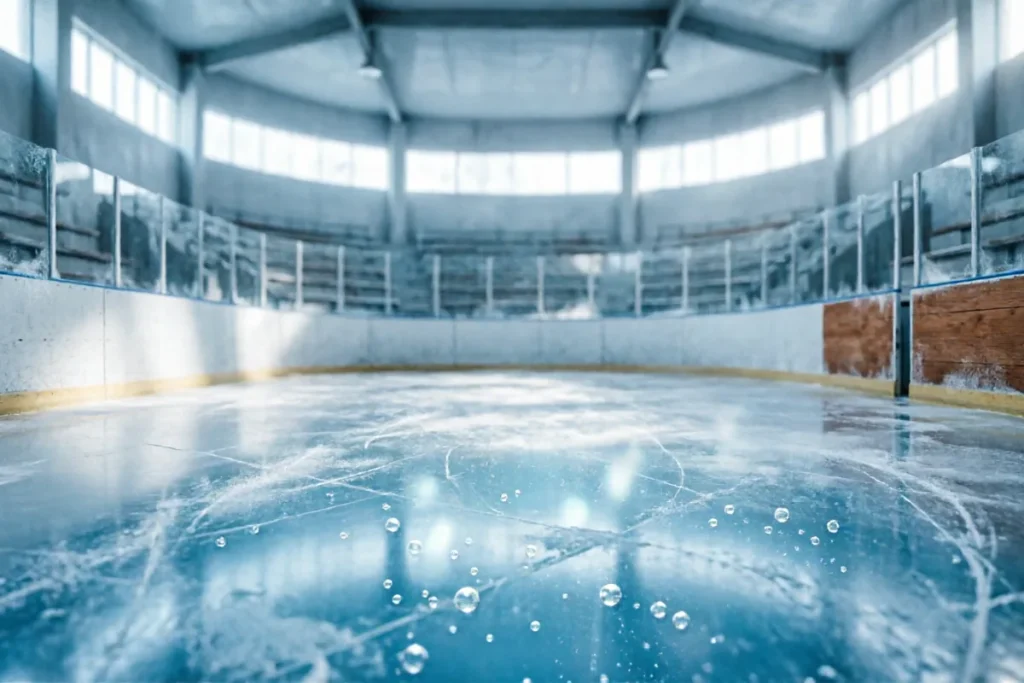
Before the rink is flooded, crews paint the concrete beneath the ice white and cover it with thin layers of water. That base helps create a bright, even surface, while the ice above it stays transparent enough for painted lines and logos to show through.
The next time you watch hockey, look for the contrast between the white ice and the coloured markings: both the prepared base and the way light travels through the ice shape what you see.
| Visible feature | Likely explanation | What to check |
|---|---|---|
| Even white field | White base coat beneath the ice | Whether the skating surface is smooth |
| Cloudy or pale appearance | Light scattered by bubbles, texture or snow | Whether cloudiness accompanies roughness |
| Skate marks | Wear from skating | Whether resurfacing clears the marks |
| Snow on the surface | Loose snow accumulated during use | Whether resurfacing removes it |
| Cracked or irregular appearance | Visible surface damage or texture | Ask rink staff to assess the ice |
Why is hockey rink ice white?
Hockey rink ice looks white because a white base coat is applied over the frozen surface, creating a pale background that makes the puck easier to see.
The coating is specialized paint made to adhere to frozen ice without compromising its integrity. Its contrast helps players track the puck and lets spectators follow it against the playing surface, including on television broadcasts.
Why ice can look pale on its own
Ice can also appear pale when bubbles trapped inside it and texture at its surface scatter light. Instead of passing cleanly through the ice, the light is redirected, making the sheet look less transparent.
How do air bubbles and ice texture scatter light?
Air bubbles and uneven ice scatter light by redirecting it at boundaries between ice, trapped air and surface irregularities, sending light back toward the viewer instead of letting it pass straight through.
When many such scattering points are close together, their combined effect makes the sheet look cloudy or white rather than transparent. The white base coat beneath the ice adds reflected light, giving the playing surface a more even visual background.
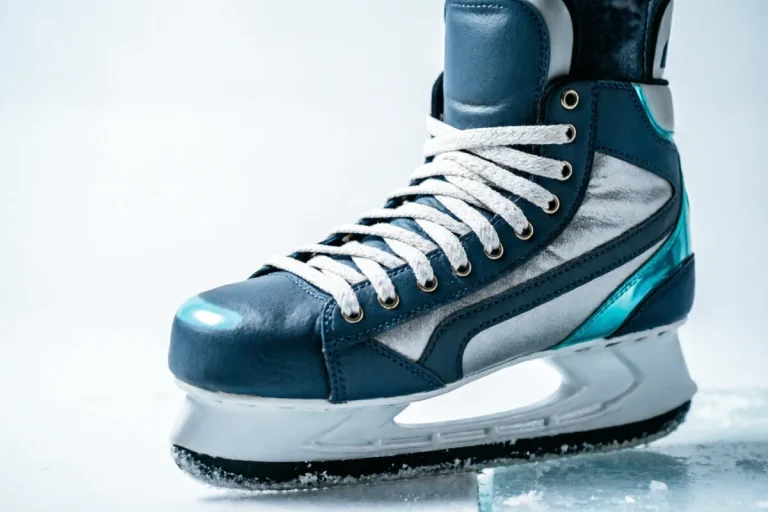
A blue cast in a close-up image does not show that the rink lacks its white painted layer. Lighting and the camera’s view through the ice affect the color recorded; the base coat can still be present beneath it.
How is the white base coat applied?
Rink builders apply the white base coat to prepared ice after the foundation layers have frozen solid, using paint designed to adhere to the frozen surface without compromising its skating quality.
The coating goes onto an ice sheet built in successive, thin applications of water. Each application is allowed to freeze evenly before the next, helping limit trapped air and create a more uniform surface.
Layer by layer, the builders form ice that can carry the white coating and remain suitable for skating.
How do skate marks and snow change the surface appearance?
Skate marks break up the ice’s smooth reflection, while loose snow scatters light across it as a pale, diffuse layer, making the surface look less uniform.
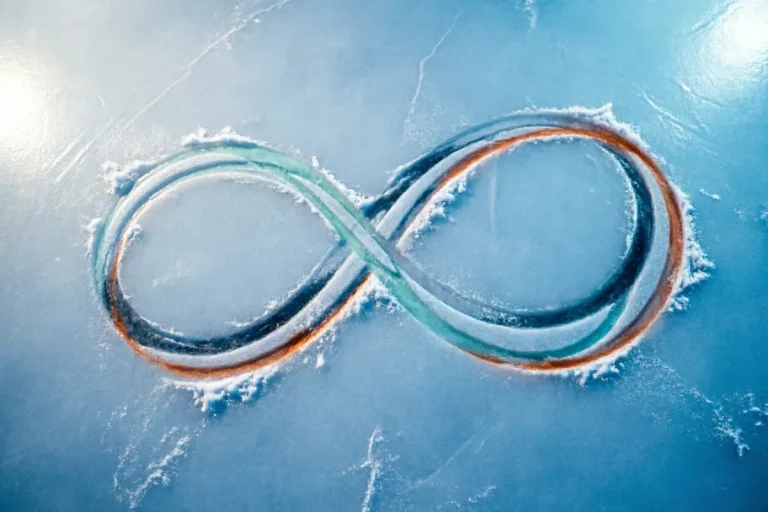
The Vecteezy photo “Frozen Ice Surface with Skate Marks and Snow Texture Background” depicts skate marks and snow texture together on the surface. The two features affect its appearance in different ways: cuts interrupt the reflected light, and snow softens the surface with a light coating.
A Zamboni resurfacer removes surface snow and lays down water, which freezes into a fresh layer. That new layer renews the skating surface; it does not replace the white painted base beneath it. The base continues to provide the background that makes the rink appear white.
When does whiteness point to a surface problem?
Whiteness alone does not indicate poor rink ice: the white base coat is an intended part of the playing surface. To judge the ice, look for conditions that affect skating, not its colour.
Vecteezy’s “Frozen Fractals, Cracked Blue Ice Texture” presents cracks as visible features of a frozen-ice surface. The photograph cannot show whether a rink’s ice is safe or playable.
More useful signs to notice are:
- Uneven texture or rough patches that can disrupt a skate’s glide.
- Accumulated snow on the surface.
- Damage that remains after resurfacing.
If rink ice looks cracked or irregular, ask rink staff to assess it. They can judge the surface condition; colour alone cannot.
What can make the ice look blue or cloudy?
Blue tones and crystalline patterns can appear in close-up views of rink ice, even when the surface looks white from the stands. Light scattered by bubbles, surface texture or loose snow can make ice look cloudy, but cloudiness alone does not identify a specific defect.
Vecteezy’s “Blue Frozen Water Transforms into Crystalline Ice Texture, Nature’s Cold Transformation” depicts crystalline ice, not a painted hockey rink. It can help illustrate close-up texture, but it should not be treated as a picture of rink paint.
To judge a rink’s appearance, compare the surface just after resurfacing with its look during play. Skate marks and accumulated snow change how light reflects from the ice.
What is the trade-off between appearance and ice quality?
The white base coat improves puck visibility and contrast for television, but it does not by itself make the ice fit for skating; even water layers and a smooth resurfaced top matter too.
Layered ice-making helps water freeze evenly and avoid trapped air bubbles. A Zamboni resurfaces the sheet to restore a smooth skating surface, while the white coat provides a visual background.
Appearance is not a surface test
A bright, uniform sheet can still have a rough top. Check the texture and how the ice skates, rather than judging quality by colour alone.
- Normal wear: Snow and skate marks can appear as the surface is used.
- Possible damage: Persistent roughness or visible damage deserves attention; a temporary mark or colour shift alone does not establish a defect.
Sources
- WBS Penguins — “How Hockey Rink Ice is Made: The Science Behind Perfect Ice”
- wpbf.com — “When does Olympic ice get resurfaced? – WPBF”
- unsplash.com — “Ice rink with skate marks – Free Photo on Unsplash”
- sciencedirect.com — “Experimental investigation on the relationship between water injection temperature and ice surface properties in speed skating rink with layered ice making meth”
- edmonton.ca — “Ice Making for Outdoor Ice Surfaces manual”