What a Zamboni Changes on Rink Ice
A Zamboni reshapes rink ice by shaving off worn, uneven ice and laying down a thin film of fresh water. That smooths the surface as the water freezes, changing how skates move across it.
The numbers
Resurfacing time with the Model A’s combined one-pass process, compared with the earlier process
Ice removed from a rink during a resurfacing
Year mass production of Zamboni machines began
The machine’s work is more than a cosmetic pass: it removes snow and ice debris, then uses hot water to help fill small grooves left by skating. The fresh layer needs time to freeze, so the ice can feel different just after resurfacing than it does once it has set.
What changes depends on the rink’s ice, the resurfacing settings and the time allowed for freezing. Here’s what the Zamboni does at each stage—and why those changes matter to skaters.
| Step | Action | Effect on rink ice |
|---|---|---|
| Wash | Cleans the surface | Prepares ice for a fresh water layer |
| Shave | Blade removes a thin layer | Cuts away scratches and grooves |
| Collect | Snow tank gathers shavings | Removes cut ice from the skating surface |
| Recoat | Fresh water is laid down | Freezes into a smoother top layer |
- 1960 Year the machines received international exposure at the Winter Olympics in Squaw Valley, California
How did the Model A change resurfacing?
The Model A changed rink resurfacing by combining ice shaving, shavings removal and fresh-water application in one pass, cutting the job from an hour to about 15 minutes.
One pass, three jobs.
Before the Model A, resurfacing meant handling those tasks separately: shave the ice, clear away the shavings, then spread water over the surface. The Model A brought all three steps together. Its blade removed surface imperfections, the machine collected the shavings, and fresh water was laid down to refreeze.
PolyGlide Ice gives the comparison as about 15 minutes rather than an hour. The time saving came from combining steps that had previously required separate work, not from dropping any of them.
The same sequence remains the basic logic of modern ice resurfacing: shave the surface, remove the snow, and apply fresh water. That water melts into the existing ice and freezes into a new surface layer.
What does a Zamboni do to the ice?
A Zamboni resurfaces rink ice by shaving away damaged ice, collecting the shavings, washing the surface and laying down fresh water that freezes into a smoother top layer.
Scrape, collect, wash, recoat.
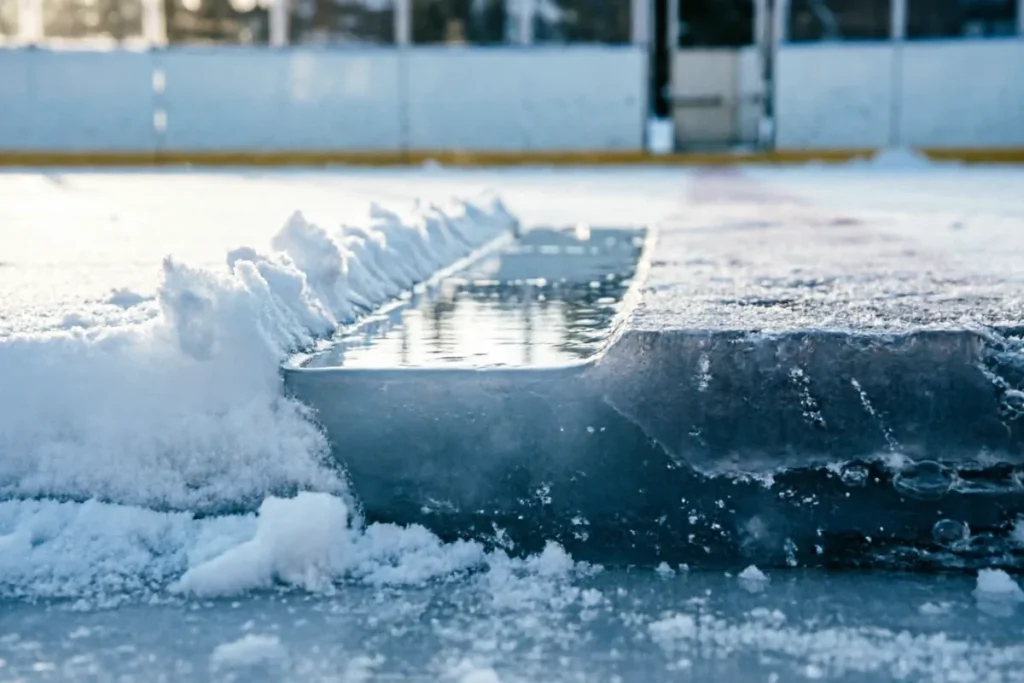
The resurfacer’s sharp blade cuts off a thin layer of ice. It removes the scratches, grooves and other surface imperfections that skates leave behind, rather than simply covering them with water.
As the blade shaves the surface, it lifts the cut ice as shavings. The machine carries them into its snow tank, clearing them from the rink instead of leaving loose debris on the ice.
The wash step cleans the exposed surface before the machine applies fresh ice-making water. This order matters: water laid over debris can leave it trapped beneath the new layer.
The fresh water melts slightly into the existing ice, then freezes. That bond forms a smoother surface for the next period of skating; the finish depends on the water freezing after it has been spread across the rink.
What does resurfacing remove?
A Zamboni resurfacing pass removes shaved ice and compacted snow from the rink surface, collecting the cuttings in its snow tank before laying fresh water. A resurfacing can remove about 60 cubic feet (1.7 cubic meters) of ice from a rink.
The material is not just loose debris. The blade cuts away a thin layer of ice, including scratches and surface imperfections, while snow compacted during skating is gathered with the shavings. The tank keeps those cuttings from being left scattered across the skating surface.
Scraping and recoating are separate steps in the same pass: after collecting the cuttings, the machine leaves fresh water behind. That water melts into the existing ice and refreezes, forming the new surface; the snow tank carries away the material removed during scraping.
How did the machine become established?
Frank Zamboni’s ice-resurfacing machine became established by replacing separate ice-maintenance tasks with a single pass that scraped the surface, removed the shavings and laid fresh water.
The Model A combined those steps on one machine: its blade shaved imperfections from the ice, the snow was collected, and water was spread over the surface to freeze. That sequence made resurfacing a coordinated process rather than a set of separate jobs.
Mass production of Zamboni machines began in 1954; they received international exposure at the 1960 Winter Olympics in Squaw Valley, California. Together, production and Olympic use helped take the machine beyond its early rink setting.
When can resurfacing not fix the ice?
Surface repair has limits.
A Zamboni can smooth surface wear, but shaving the ice cannot, by itself, repair a problem deeper in the ice or a rink-condition issue. Its blade removes a thin top layer; the machine then lays down fresh water, which must freeze into the surface for the finish to come out smooth.
If roughness remains after a pass, another coat is not automatically the answer. The fresh water’s finish depends on how it freezes, and resurfacing does not diagnose why the ice is uneven.
- Scratches and surface imperfections: the blade can shave these from the top layer.
- Problems below the surface: shaving alone cannot fix them; the underlying ice condition needs attention.
- Roughness after resurfacing: check the rink’s ice condition before assuming another layer of water will solve it.
When a pass leaves rough ice behind, check the ice and rink conditions before scheduling another coat.
Frequently asked questions
What are the main steps in Zamboni resurfacing?
Where do the ice shavings go?
Does a Zamboni add a new sheet of ice?
Can resurfacing fix every rough patch?
Sources
- Zamboni — “How It Works”
- Zamboni — “Fun Facts”
- wbspenguins.com — “The Mighty Zamboni: Ice Hockey's Unsung Hero”
- Page 3 — “The Zamboni Story | Zamboni”
- Glice — “How Much Does a Zamboni Cost To Buy, Hire & Operate?”