Why Ice Gets Rutted—and What Rink Crews Can Fix
Ice gets rutted when skate blades cut grooves into the surface faster than rink crews can restore it. Crews can reduce and repair ruts by resurfacing the ice, but how well that works depends on the ice condition and the timing of maintenance.
The numbers
Start of Columbus Ice Rink’s announced annual maintenance closure
Columbus Ice Rink’s goal reopening date, subject to change
Date the USA Skating Rinks guide says its public-skating rule examples were checked
Ruts are more than a cosmetic flaw: they change how the surface feels under a skate and can make edges less predictable. Understanding why ice gets rutted helps explain what rink crews can fix—and why resurfacing cannot prevent every groove from forming.
| Surface condition | What it indicates | Maintenance response |
|---|---|---|
| Shallow scratches | Light blade marks | Routine resurfacing can shave high spots and lay hot water |
| Raised rough patches | Uneven top layer | Shave the surface, then spread hot water |
| Deep groove or rut | Damage that may pose a skating hazard | Fill with water and slush or snow before resurfacing |
| Repair fill | New material needs to freeze | Compressed carbon dioxide can freeze the repair quickly |
What makes ice rough during a skating session?
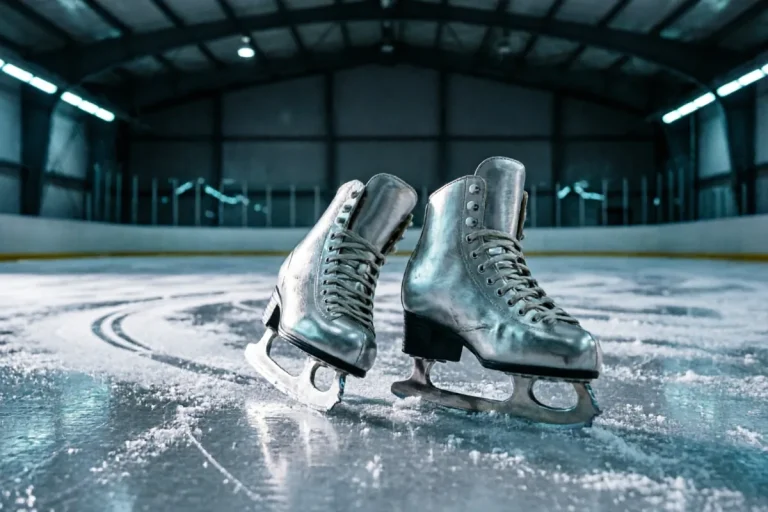
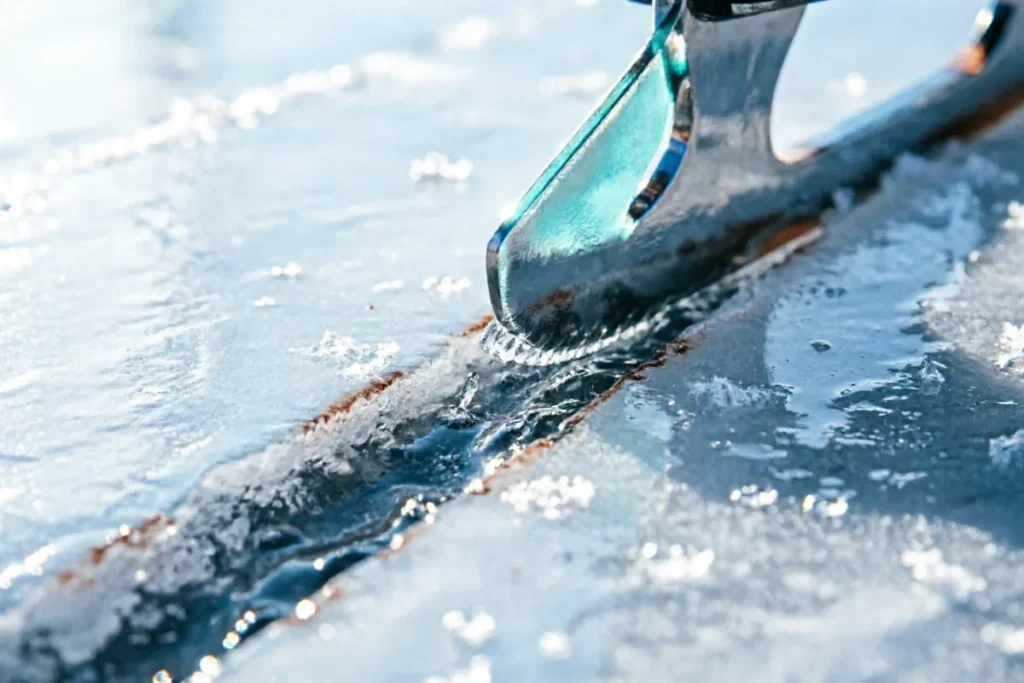
A skate blade makes ice rough by pressing its narrow edge into the surface, cutting a mark instead of distributing force across the rink.
Repeated passes deepen or widen those marks. Turns, stops and crossovers send more blade traffic through particular areas, so damage can build unevenly across the ice.
The damage may be a shallow scratch or a deeper groove, sometimes called a rut. A groove can change how a skate travels over the surface; deep ruts can become a safety hazard.
Ice temperature affects how the surface responds, but there is no single setting to prescribe without knowing the rink’s ice system and operating conditions.
How does traffic affect rough ice during a session?
Traffic is part of ice care.
Repeated use of the same route concentrates blade marks, so public-skating traffic patterns and staff directions can shape where rough, worn ice develops during a session.
The real public-skating policies in the USA Skating Rinks guide were checked September 20, 2026. The guide advises skaters to follow the direction announced for the session and to ask staff to explain the layout before joining traffic.
- Session direction: Following the announced route helps you avoid unexpected crossings.
- Staff guidance: Understanding the layout before you enter helps keep traffic from concentrating along an unintended path.
- Ice repair: A skating rule is not a repair method; it does not remove blade marks or restore rough ice.
How does routine resurfacing smooth the ice?
A Zamboni smooths routine blade marks by shaving the ice’s raised top layer, then spreading hot water that freezes into a smoother surface. The blade removes high spots; the water renews the surface rather than filling a deep rut.
Deep grooves need separate attention. If a rut is too deep for the resurfacing machine to smooth safely, rink crews must repair it before routine resurfacing; emergency repairs may use water mixed with slush or snow, frozen with compressed carbon dioxide.
After the Zamboni passes, the ice needs time to freeze before skating resumes. A freshly resurfaced sheet is not ready just because the machine has left the rink.
When does a rut need repair before resurfacing?
Repair first, then resurface
Deep grooves and ruts need repair before resurfacing when their depth or shape makes them a safety hazard for skaters; a shallow scratch does not automatically call for the same treatment.
The distinction is the damaged ice itself: a resurfacing machine can smooth the surface, but it should not be expected to level a hazardous rut without a repair first. The decision depends on how deep and irregular the damage is.
- Shallow scratch: assess whether routine resurfacing can remove the surface mark.
- Deep groove or rut: fill the damaged area before the resurfacing pass.
An emergency repair uses water mixed with slush or snow to fill the damaged area. Compressed carbon dioxide is released to freeze the fill quickly; once it has set, the resurfacing machine can smooth the ice.
What can a scheduled rink closure tell you about maintenance?
A scheduled annual rink closure signals time for maintenance beyond the ice smoothing done between skating sessions. Resurfacing removes high spots and lays down hot water; a longer shutdown gives the rink time to address broader maintenance and facility needs.
Columbus Ice Rink temporarily closed beginning July 11, 2026, for its annual maintenance season. The rink set August 10, 2026, as its goal to reopen, but that date could change if unforeseen maintenance issues or facility needs arose during the work.
For the current opening date or session status, check Columbus Ice Rink’s official notice before making plans.
When will resurfacing not solve the problem?
Routine resurfacing will not fill a deep rut: the damaged area must be filled before the machine shaves high spots and lays down hot water.
Repeated rough patches in the same place need more than another routine pass. Rink staff may need to look at where skaters concentrate their traffic and check the condition of the ice; deep grooves can become safety hazards.
When to stop skating
Repair-freeze time depends on the rink’s temperature, construction and operating conditions, so there is no universal wait time or temperature setting to rely on. If the surface looks uneven or your blade catches in a groove, stop skating and alert rink staff rather than steering around it. Wait for staff to confirm the surface is ready before returning.
Sources
- WSAV-TV — “Winter Olympics 2022: What’s the science behind ice skating?”
- bryantpark.org — “Ice Skating, Holiday Shops, The Lodge, and much more at New York City's Bryant Park”
- rockefellercenter.com — “The Rink at Rockefeller Center”
- Park Authority — “Mount Vernon Rec Center Ice Arena”
- gopsusports.com — “Pegula Ice Arena – Penn State – Official Athletics Website”