How to Tell If Your Goalie Pads Fit Wrong
Goalie pads fit wrong if they leave gaps, restrict movement or shift when you skate. Check that your knee lands on the knee stack and that the pad stays aligned through your stance and butterfly.
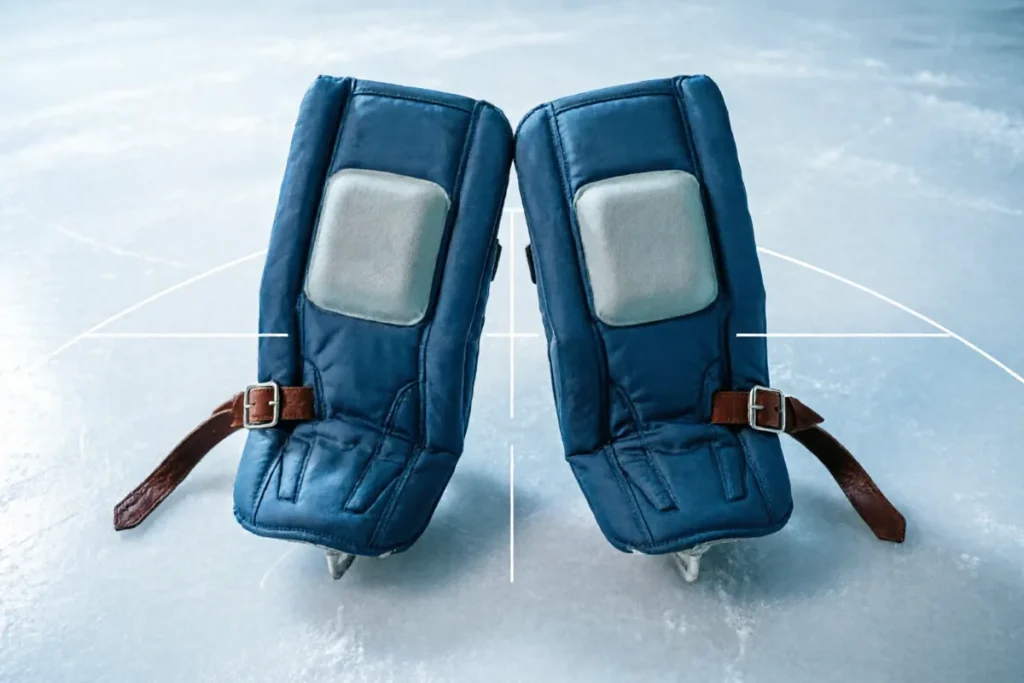
A pad that looks right while you’re standing may still twist, ride up or pull your knee off the stack in motion. These signs can point to a sizing or strapping problem—or to a shape that doesn’t match your leg—so assess the fit while moving, not just in front of a mirror.
| Symptom | First check | What to adjust or verify |
|---|---|---|
| Knee misses the block | Butterfly position | Knee strap position and pad size |
| Pad stays twisted | Rotation and return | Knee and calf strap settings |
| Coverage gap | Skates on, stance set | ATK, skate size and thigh rise |
| Fit needs very tight straps | Overall comfort and movement | Setup, sizing or pad style |
How do you check whether the knee lands on the block?
To check whether your goalie knee lands on the block, put on your skates and full goalie equipment, settle into your normal stance, then drop into your usual butterfly and see whether your knee meets the landing area.
The knee block, also called the knee stack, is the pad’s landing surface for your knee. Check it in your normal setup rather than judging the pad while standing in socks or with the straps pulled tight in an unusual position.
If your knee misses the block, check the pad’s size and how it sits on your leg before changing strap tension. Pad sizing uses your ankle-to-knee measurement alongside skate size and thigh rise; sizing charts can help you compare those measurements with a pad’s fit.
A knee that repeatedly misses the landing area is a fit concern. Don’t force the pad into place by tightening straps to pull the block under your knee; reassess the size and positioning instead.
How should you measure and assess pad size?
Measure ankle-to-knee (ATK) as the starting point, then compare it with your skate size and the pad’s thigh rise using the manufacturer’s chart for that specific model.
To measure ATK, sit with your legs bent at a 90-degree angle. Measure from the centre of your ankle bone to the centre of your knee; keep the tape along the leg rather than measuring around it.
- ATK: Use the ankle-to-knee measurement as your baseline for pad sizing.
- Skate size: Include your skate size when checking the recommended pad size.
- Thigh rise: Consider how far the pad extends above the knee, alongside ATK and skate size.
- Manufacturer’s chart: Check the sizing chart for the exact pad you are considering. Size labels and recommendations can vary by brand.
These measurements work together: ATK alone does not determine the recommended size. If a chart gives a range or the fit seems uncertain, try the specific pad with your skates on and check where your knee lands on the knee block.
Which straps should you adjust before changing pads?
Adjust the knee strap first, then the calf strap, and test the boot strap separately before changing pads. The knee should sit securely on the knee block without the strap pulling it out of alignment.
- Knee strap: Set its position and tension so the knee stays on the block without being forced sideways or out of place.
- Calf strap: Adjust how you use it and how tightly it holds, then move through your goalie stance. Check whether the pad stays positioned and returns naturally after rotating.
- Boot strap: Test it on its own. Many modern goalies remove the boot strap entirely, so using one is not a requirement for a usable fit.
If the pad feels secure only when every strap is cranked down, treat that as a possible fit or style mismatch—not a reason to keep tightening. Strap settings can change how a pad sits, but they should not have to force the knee onto the block.
How can you tell whether the pad rotates freely?
A goalie pad rotates freely if it follows your leg through a butterfly movement and returns naturally when you release it, without needing a hard pull on the straps.
Test one adjustment at a time. Rotate the pad through your usual butterfly motion, let it settle, then adjust the knee strap or calf strap and repeat. Changing both straps together makes it harder to tell which one is restricting rotation.
If the pad stays twisted, or only moves when the straps are pulled tight, the setup may not suit your leg or playing style. Loosen or reposition a strap and test again; if the problem persists, check the pad’s fit.
After every adjustment, check where your knee lands. The knee block, also called the knee stack, must still sit under your knee in the butterfly. A pad that rotates more freely is not a better fit if your knee misses the block.
How do you find gaps in coverage?
Find coverage gaps by checking the pad at the boot and thigh with your skates on, then repeating the check in your normal butterfly.
At the boot, look at the space between the pad and your skate. Then take your goalie stance and inspect the thigh area: the pad should cover without leaving an exposed gap. Repeat the check after rotating the pad and dropping into your usual butterfly. A gap that appears only when you move still matters, because your coverage changes with your position.
To decide whether a gap points to sizing, consider your ATK measurement (ankle to knee), skate size and thigh rise together. ATK alone does not establish the right pad size; the combined fit should place your knee on the knee block while the pad covers the thigh in your stance.
Check the fit before tightening straps
A tighter strap is not a fix if it pulls your knee away from the block or restricts pad rotation. If the gap remains, or the pad only feels secure when straps are cranked down, reassess the sizing and fit rather than tightening further.
When should you stop a pad-fit test and check other equipment?
Stop a goalie-pad fit test if your knee repeatedly misses the knee block, the pad does not return after rotation, or the straps must be overtightened to keep the pad in place.
Change one strap setting at a time, then test the knee landing and pad rotation again. If alignment and movement still conflict, compare your measurements with the specific manufacturer’s sizing chart before replacing the pads.
Check neck protection and on-ice rules
- Across England, Wales, Scotland and Northern Ireland, a neck laceration protector is mandatory for every player, adults included, and training guidance says to wear it there too.
- In British play, you leave the ice at once to refit equipment. The NHL, Hockey Canada and the PWHL let players refit a helmet and continue playing.
If a helmet needs refitting during play, follow the rule for your competition; the British procedure requires leaving the ice first.
Frequently asked questions
Should goalie leg pads feel tight?
What does ATK mean for goalie pads?
Should I use a boot strap?
When should I replace goalie pads?
Sources
- GoalieMonkey — “How to Choose Goalie Pads: Fit, Flex, Style, and Skill Level”
- prostockhockey.com — “How to Size Hockey Goalie Pads the Right Way – Pro Stock Hockey”
- goaliecoaches.com — “What Size Goalie Pads Do I Need? Complete Goalie Pad Sizing Guide”
- majerhockey.com — “Goalie Pad Sizing Chart: Get the Right Fit – Toronto”
- forums.hfboards.com — “How Can I Tell If I'm Weaing My Leg Pads Correctly?”