How Hockey Skate Insoles Affect Fit and Support
Hockey skate insoles affect fit and support by changing how your foot sits inside the boot and how pressure is distributed. The right insole can improve contact and stability; a poor match can create pressure or leave the foot feeling less secure.
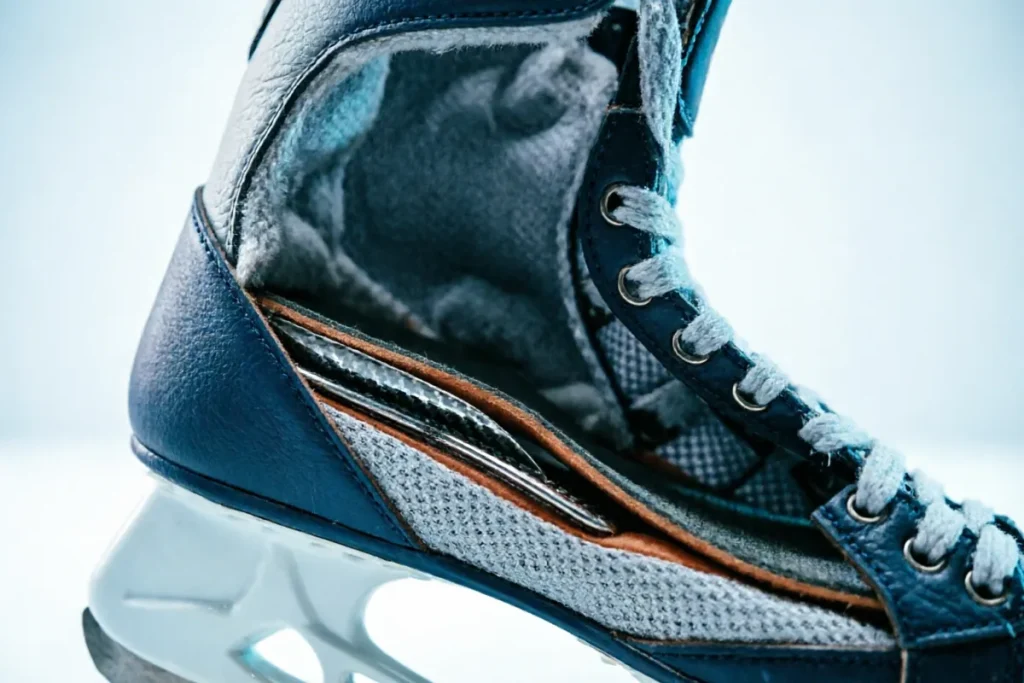
Insoles do not change the skate’s shell or replace a correctly sized boot. Their effect depends on your foot shape, the insole’s thickness and support, and how the skate holds your heel and midfoot. Even a small change in volume can alter the fit.
This guide explains what to look for, how insoles can affect comfort and control, and when a fit problem is more likely to come from the skate itself.
| Option | Main fit effect | Best fit question |
|---|---|---|
| Stock insole | Retains the skate’s original underfoot volume | Does the skate already fit securely without recurring pressure? |
| Aftermarket footbed | Can change thickness, cushioning and arch contact | Will the new shape fit without reducing needed toe room? |
| Custom insole | Can be tailored to address an individual support issue | Does a recurring problem remain in an otherwise suitable skate? |
How do skate insoles change fit and support?
A hockey skate insole changes fit by taking up space beneath your foot and, depending on its shape, supporting the arch and limiting movement inside the boot. The skate’s rigid shell still sets the basic shape and width.
Thickness matters because the insole sits between your foot and the skate’s footbed. A thicker replacement leaves less room inside the boot; a thinner one leaves more. If the fit already feels tight across the top of your foot, extra material can make that pressure worse.
A contoured insole supports the arch and can help reduce foot movement. A cushioned surface mainly changes how the skate feels underfoot; cushioning alone does not reshape the shell or correct every stability problem.
Match the insole to the fit problem
- Foot collapse or excessive rolling: A contoured insole may provide support, but its effect depends on your foot and the skate.
- Heel lift: An insole may help limit movement, though it cannot guarantee a secure heel if the boot’s fit is the underlying issue.
- General underfoot comfort: A cushioned replacement changes the feel beneath the foot, while thickness also affects available space.
Insoles can address problems a rigid skate cannot compensate for, but they do not change the boot’s basic width or shape. If you try a different footbed, check both heel hold and pressure inside the boot while wearing your usual skate socks.
How do aftermarket footbeds change support and space?
Aftermarket footbeds change fit by taking up different amounts of skate volume and by changing how the arch is supported; compare thickness and arch contact, not cushioning alone.
Thickness changes volume
Replacement insoles use different thicknesses and materials, so a thicker footbed can leave less room inside the skate. Compare how each option sits under your foot before choosing for cushioning: a tighter fit may create pressure, while extra space can affect how securely your foot sits.
- SOLE Thin with ReCORK: uses a recycled-cork base.
- SOLE Thin with EVA: uses a plastic base.
Arch shape changes contact
SOLE’s Performance Thin and Active Thin footbeds have the same arch height. SOLE recommends the EVA plastic base of Active Thin for people seeking sturdier arch support.
A firmer-feeling arch is not automatically a better fit. The footbed should meet your arch without creating new pressure; if the contact feels intrusive inside the skate, try another option rather than assuming more support is always better.
Which pressure points can a contoured insole address?
A contoured hockey skate insole can target pressure beneath the forefoot, help hold the heel in place, and support the arch; where it helps depends on where your discomfort occurs.
True designs its insoles from its 3D foot last and includes integrated metatarsal support intended to reduce pressure on key areas of the foot. That support may also help balance, energy transfer and edge control, but it is distinct from cushioning: support shapes how the foot is held, while cushioning softens impact during a stride.
True’s contoured, flexible heel cradle is intended to secure the foot and reduce friction. AeroSpring™ Glide foam cushions each stride, a separate function from the insole’s structural support.
Match the insole feature to the pressure point
- Forefoot: If pressure sits beneath the ball of your foot, note its exact location; True’s integrated metatarsal support is designed to reduce pressure on key areas.
- Heel: If discomfort or friction centres around the heel, consider how securely the foot sits in the skate. True’s flexible heel cradle is designed to help secure it.
- Arch: If the arch is uncomfortable, record that location before choosing a replacement. A contoured shape alone does not establish that a particular insole will suit your foot.
Track where discomfort occurs before swapping insoles. If the problem persists, reassess the skate’s fit as well as the footbed.
When is changing insoles unlikely to fix the fit?
Changing insoles is unlikely to fix fit when the skate shell is too narrow, too wide or the wrong shape for your foot; an insole cannot reshape the boot.
Check the boot before upgrading.
Assess the shell and the fit around your foot before choosing a thicker or custom footbed. A thicker footbed takes up more internal volume, which can make the skate feel tighter or increase pressure at the toes. If toe pressure is already a problem, adding material underfoot may make it worse.
- Shell width or shape: If the boot does not match your foot’s width or overall shape, an insole will not correct that mismatch.
- Toe pressure: A thicker footbed reduces space inside the skate and may worsen pressure at the toes.
- Heel lift: If the heel lifts because the boot has excess space or its shape does not match your foot, a different footbed may not hold it securely.
Custom insoles are more relevant when recurring foot collapse, excessive rolling or heel lift continues in a skate that otherwise suits your foot. They can address support needs beneath the foot, but they cannot compensate for a boot that is the wrong shape.
The benefit depends on the player’s needs. If the shell fit is unsuitable, address that first; consider a custom footbed when the boot fits well but a recurring support problem remains.
How should you choose between stock, aftermarket and custom insoles?
Keep the stock insole if your hockey skate holds your foot securely and you have no recurring pressure or support problem; move to an aftermarket footbed for a specific underfoot adjustment, and consider custom support if a persistent foot issue remains.
- Stock insole: Keep the footbed that came with the skate when the boot fits securely and you are not repeatedly bothered by pressure or inadequate support.
- Aftermarket footbed: Choose a replacement when you want to change cushioning, arch contact or the space inside the boot without changing the skate shell. Replacement footbeds come in different thicknesses and materials, so a thicker option can affect internal volume.
- Custom support: Consider a footbed shaped to your needs if foot collapse or excessive rolling keeps recurring despite a suitable skate fit. Custom support can address how your foot sits in the boot, but it cannot correct a shell that is the wrong size or shape.
After installing any new insole, lace up and check toe room, heel hold and arch contact. The arch should feel supported without a new pressure point; if the change makes the skate feel cramped or the heel lift, reassess the fit rather than assuming a different insole will solve it.
Frequently asked questions
Can a hockey skate insole make a skate fit tighter?
Do hockey skate insoles stop heel lift?
Are custom insoles worth considering if my skates otherwise fit?
Is cushioning the same as arch support?
Key takeaways
- Insole thickness changes the space inside a hockey skate.
- SOLE’s Performance Thin and Active Thin have the same arch height, but different base materials.
- True’s insoles combine a heel cradle with integrated metatarsal support.
- An insole cannot change a skate shell that is the wrong shape or width.
- Custom support is most relevant for recurring foot problems in an otherwise suitable skate.
Sources
- Toronto's Best Hockey Retailer — “The Majer Method – Custom Hockey Skate Insoles: Are They Worth It? – Majer Hockey”
- hockeymonkey.com — “Hockey Skate Insoles: Shop Insoles and Gel Pads”
- Buy and Sell on SidelineSwap — “Elite Hockey Pro Insoles – Senior Skate Size 10-10.5 (New) | SidelineSwap”
- Buy and Sell on SidelineSwap — “Elite Pro Hockey Skate Insoles | SidelineSwap”
- Buy and Sell on SidelineSwap — “Bauer Aetrex Hockey Skate Orthotics Insoles – Size 6 – Fit B | SidelineSwap”