Heated Clothing Aims to Steady Winter-Sports Performance
Heated winter-sports clothing uses powered heating elements to add warmth when activity slows or cold conditions set in. The development matters because cold hands and feet can make equipment handling and movement more difficult for skiers, snowboarders, cyclists and motorcyclists. Unlike ordinary layers, heated garments generate warmth rather than relying only on trapped body heat. Their intended performance benefit is steadier comfort, not a substitute for technique or suitable winter clothing.
Warmth when activity changes
Winter activity alternates between exertion and pauses: a skier may stop on a lift, while a cyclist takes a break or a motorcyclist waits at a traffic light. A person who is warm while moving can cool quickly after stopping, particularly if sweat has dampened clothing. Integrated heating is designed to help limit that abrupt shift.
Conventional layering remains useful, but adding insulation is not always an easy answer. During a climb or another hard effort, excess warmth can lead to sweat; when movement stops or wind picks up, damp fabric can feel cold. Heated clothing offers another way to respond to changing effort, with heat levels adjustable on many garments rather than another layer to put on or remove.
Control and mobility on the slopes
Cold fingers can affect fine motor tasks that are part of a day on the slopes, including planting ski poles, adjusting bindings and handling zippers. Warm hands may make those tasks easier and help a skier keep attention on the terrain. The same principle applies to snowboarders managing bindings and other equipment in the cold.
Foot comfort also matters for balance and posture. Boots can restrict circulation, especially when buckles are tightened, so adding warmth around the toes or from beneath the foot may help address discomfort. Heated socks and heated insoles work differently: socks provide warmth around the foot, while insoles add it from below and can be moved between footwear. The best fit depends on the boot and where the cold is felt.
Battery-powered heating in garments
Heated clothing described for winter use commonly combines heating elements built into selected areas with rechargeable lithium-ion batteries. Many models offer three heat settings, allowing the wearer to reduce warmth during more intense movement and increase it during a pause. This adjustable approach is central to the performance claim: temperature can be managed as activity and conditions change.
Brands including Wulcea highlight graphene technology in heated apparel, while the broader product category includes jackets, vests, gloves and socks. These garments target people who spend extended periods outdoors, from winter-sports participants to outdoor workers. For sports, the design challenge is to add warmth without making movement or handling equipment awkward.
Comfort depends on fit and conditions
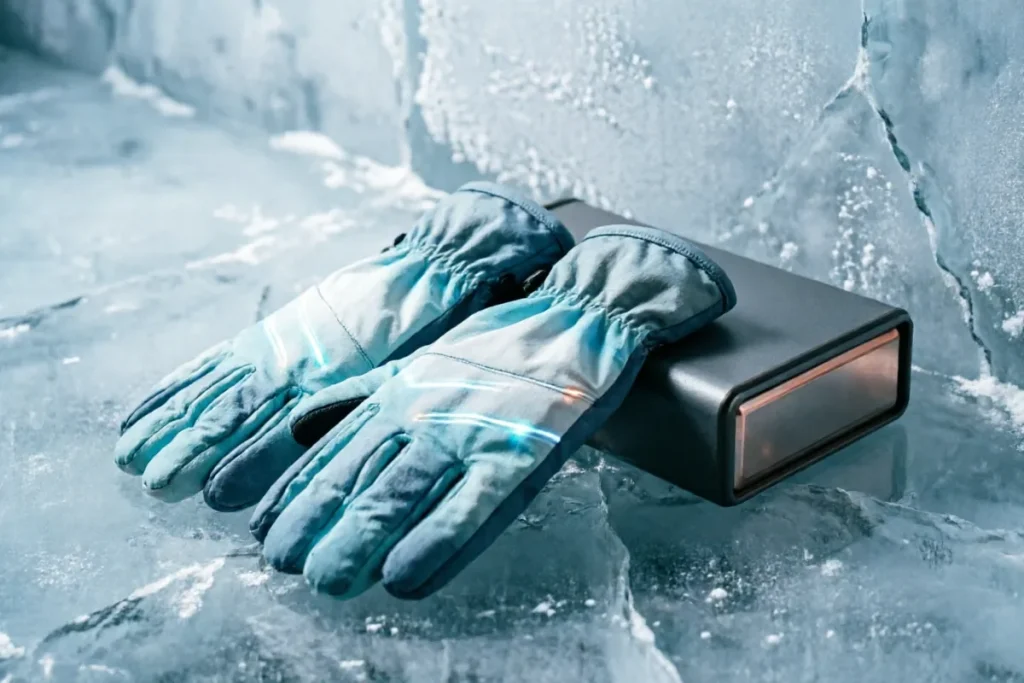
For heated gloves, warmth alone does not determine whether they work well on the slopes. A secure cuff helps keep out snow, and a snug fit should allow dexterity without squeezing the hand. A battery pack near the cuff can be less intrusive than a larger unit on the back of the hand, while easy-to-operate controls matter when the other hand is gloved.
Moisture protection and durability also affect day-to-day usefulness. Snow and melting ice can wet gloves, so water-resistant outer materials and breathable construction help manage exposure and internal moisture. Reinforced palms and strong stitching are intended to withstand repeated contact with poles and bindings. These practical details support the heating system; they do not remove the need to match a garment to the activity and conditions.
A steadier day outdoors
Adjustable heat may be especially useful when temperatures shift between a cold morning and a milder afternoon, or when a long outing includes inactive breaks. Heated accessories can also help people who often experience cold hands or feet stay more comfortable outdoors. The central promise is more consistent warmth through changing levels of effort, rather than a claim that every wearer will perform better.
For winter sports, the relevant measure is whether added warmth helps preserve comfort and mobility without interfering with fit, circulation or equipment use. Heated clothing makes warmth an adjustable part of the kit, addressing one common source of distraction in cold conditions while leaving the athlete responsible for safe, appropriate clothing and movement.
Takeaway: Heated garments aim to keep warmth more consistent through winter-sports effort and rest, helping athletes stay comfortable and focused.
Sources
- Wulcea GrapheneHeat Wear — “Wulcea Heated Apparel 丨Blogs”
- USD 17.2 Bn by 2034 — “Heated Clothing Market Size, Share & Growth”
- Gobi Heat — “A Buyer's Guide to Battery Powered Heated Socks”
- Weston Store — “Your Complete Guide to Finding the Best Heated Vest”
- straitsresearch.com — “Heated Jacket Market Size, Share, Growth, Analysis, Report, 2034”