Bauer Skates: Models, Fit and Buying Guide
Bauer skates are ice-hockey skates in several model lines, with the right choice depending on fit, playing level and budget. Compare how each model feels on your foot, not just its position in the range.
The numbers
Expected ice hockey equipment market size
Expected ice hockey equipment market size
Expected ice hockey equipment market size
Even within one brand, skates can differ in shape, support and comfort. This guide to Bauer skates explains how to compare models, assess fit and make a practical buying decision—so you can focus on a secure, comfortable feel on the ice.
| Option | Fit description | Buyer check |
|---|---|---|
| Vapor | Wider toe box; narrow V-fit at heel and ankle | Check tapered heel hold |
| Supreme | Natural, close-to-the-foot anatomical feel | Check overall foot contact |
| Nexus | Wide-foot family in the traditional lineup | Check forefoot room |
| Fit 1 / Fit 2 / Fit 3 | Narrow / medium / wide width and volume | Available on most Vapor and Supreme skates |
- 4.83% over 2026-2031 Expected market CAGR
- 5,689 fans per game Average attendance in the PWHL's inaugural season
What are the differences between Bauer Vapor, Supreme and Nexus skates?
Bauer Vapor, Supreme and Nexus skates differ primarily in their intended foot shape: Vapor has a wider toe box with a narrow V-fit around the heel and ankle, Supreme offers a natural, close-to-the-foot anatomical fit, and Nexus is the wide-foot option. These family names are fit cues, not a ranking of quality.
- Vapor: The wider toe box and close heel-and-ankle hold create a tapered, locked-in feel. Bauer’s Performance Fit System also offers Vapor models in Fit 1, Fit 2 or Fit 3, corresponding to narrow, medium and wide width and volume options.
- Supreme: Its natural, close-to-the-foot shape is intended to follow the foot anatomically. Supreme models are also available through Bauer’s Performance Fit System in Fit 1, Fit 2 or Fit 3.
- Nexus: This is Bauer’s traditional family for wide feet. Choose it as a shape option rather than assuming it is a higher or lower tier.
How to choose
Compare how each boot holds your heel and fits your forefoot, then use Bauer’s fit options to refine the choice. The ice hockey equipment market is expected to grow from USD 2.10 billion in 2025 to USD 2.20 billion in 2026 and reach USD 2.79 billion by 2031, with a CAGR of 4.83% over 2026-2031, according to Mordor Intelligence’s Ice Hockey Equipment Market Analysis.
How do Bauer Fit 1, Fit 2 and Fit 3 differ?
Bauer Fit 1 is the narrow width-and-volume option, Fit 2 is medium, and Fit 3 is wide; Bauer’s Performance Fit System offers these choices on most Vapor and Supreme skates. The fit number distinguishes interior width and volume within a skate family, but it does not determine the correct skate length.
- Fit 1: Choose this width-and-volume option when comparing the narrower fit within a Bauer skate family.
- Fit 2: This is the medium width-and-volume option.
- Fit 3: This is the wide width-and-volume option.
Bauer’s Vapor and Supreme families also have different shapes: Vapor has a wider toe box with a narrower V-fit at the heel and ankle, while Supreme is designed for a close, anatomical feel. Compare the family shape and numbered fit, then check skate length separately; Bauer notes that skate size is based on foot length and is typically smaller than shoe size.
Bauer and women’s hockey
Bauer was among the Professional Women’s Hockey League’s sponsorship partners in its inaugural season, which averaged 5,689 fans per game and secured over 40 sponsorship partners. That context does not change how Fit 1, Fit 2 and Fit 3 work: they remain width-and-volume choices to assess alongside family shape and skate length.
How should you size Bauer hockey skates?
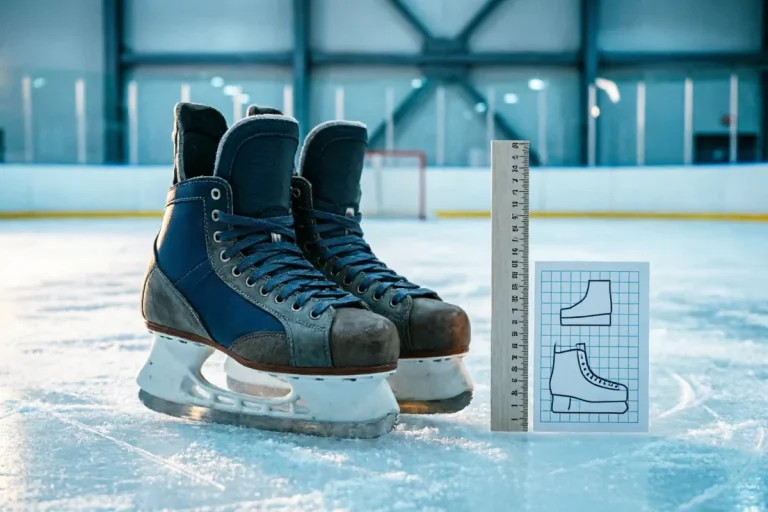
Size Bauer hockey skates by foot length, not by your everyday shoe size. Bauer’s buying guidance treats skate sizing and shoe sizing as different: begin by measuring your foot, then use Bauer’s sizing guidance to identify a skate size.
Check fit in the intended Bauer skate
Try skates with the socks you expect to wear for hockey, and assess heel lock and toe space while standing. Bauer’s Vapor, Supreme and Nexus families are designed for different foot shapes, so try the intended family and fit profile rather than assuming one size will feel the same across models.
- Vapor: A tapered shape, with a narrower heel and ankle and a wider toe box.
- Supreme: A close-to-the-foot, anatomical feel.
- Fit 1, Fit 2 and Fit 3: On most modern Vapor and Supreme skates, these provide narrow, medium and wide width-and-volume options, respectively.
If a Bauer skate holds your heel securely but pinches your forefoot, consider another fit profile before choosing a longer size. The right profile should accommodate your forefoot while keeping the heel stable.
Which Bauer skate is a practical choice for a beginner?
The Bauer Vapor X3 is a practical beginner choice if its fit feels stable and comfortable on your foot. Its reference price range is $250–$300; check the retailer’s current price before buying, since it may change.
What to weigh when trying the Vapor X3
The Vapor X3 combines a lightweight boot with a thermoformable design, which can be shaped to the foot. Those features are useful only if the skate fits comfortably and holds your foot securely; try it on and assess the fit rather than choosing by features alone.
- Fit: Prioritize comfort and stability, including a secure heel, over an advanced feature set.
- Boot level: A beginner does not need to pay for an elite-level boot with features beyond their needs.
- Price: Use $250–$300 as a reference range, then confirm the current price with the retailer.
What does Bauer's history explain about the Supreme name?
Bauer’s Supreme name reflects the company’s long history in skate design: Bauer made the boot, while Starr Manufacturing Company made the blade. That distinction helps explain why Supreme is more than a label within Bauer’s skate range; it is tied to the company’s role in developing the skate boot.
Bauer’s ownership changed on February 21, 2008, when Nike sold the Company to investors Roustan Inc. and Kohlberg & Co. The brand’s reach extends beyond product sales: Bauer was among more than 40 sponsorship partners for the PWHL’s inaugural season, which averaged 5,689 fans per game.
Why the name matters to today’s market
Bauer Supreme sits within a broader ice hockey equipment market that Mordor Intelligence expects to grow from USD 2.10 billion in 2025 to USD 2.20 billion in 2026 and reach USD 2.79 billion by 2031, with a CAGR of 4.83% over 2026-2031. For skate buyers, the name’s history provides context; choosing a current pair still comes down to how its fit and feel suit the player’s foot.
When can a Bauer skate fit or buying guide lead you wrong?
A Bauer skate fit guide can lead you wrong when you treat a model-family label, shoe size or listed price as a guarantee of fit or availability. Vapor has a tapered shape, with a wider toe box and a narrow heel and ankle, but that heel shape may not suit every foot; a wide forefoot alone also does not determine the volume your whole foot needs.
Check the fit, not just the label:
- Vapor: Try the heel hold and overall volume on your own foot; the family name cannot confirm a comfortable fit.
- Skate size: Do not convert shoe size directly. Bauer sizing is based on foot length, so measure your foot and, where possible, get an in-person fit check.
- Bauer Vapor X3 price: Its stated $250–$300 range is a reference, not a promise about today’s local price or stock. Check with the retailer before buying.
- Construction level: Do not pay more for features that sound advanced while comfort, correct length and secure heel hold remain unresolved.
A Bauer skate should feel right in length and volume, with the heel held securely, before construction becomes the deciding factor. If a Vapor’s tapered heel does not work for you, reassess the fit rather than assuming a wider forefoot means the skate is suitable.
Frequently asked questions
What is the difference between Vapor and Supreme?
Key takeaways
- Vapor uses a wider toe box and a narrow V-fit at the heel and ankle.
- Supreme is described as a close, anatomical fit; Nexus is the traditional wide-foot option.
- Fit 1, Fit 2 and Fit 3 correspond to narrow, medium and wide width-and-volume options.
- The Vapor X3 is a beginner option with a stated $250–$300 price range and thermoformable design.
Sources
- hockeymonkey.com — “Bauer Skate Sizing Chart”
- BAUER — “The Ultimate Skate Buying Guide”
- Top Picks & Buying Guide — “Best Hockey Skates for Beginners in 2025”
- Puckstop — “How To Choose The Right Ice Hockey Skates & Find The Ultimate Fit”
- prostockhockey.com — “How to Size Hockey Skates – Pro Stock Hockey”