Ice Hockey Equipment Checklist: What You Need
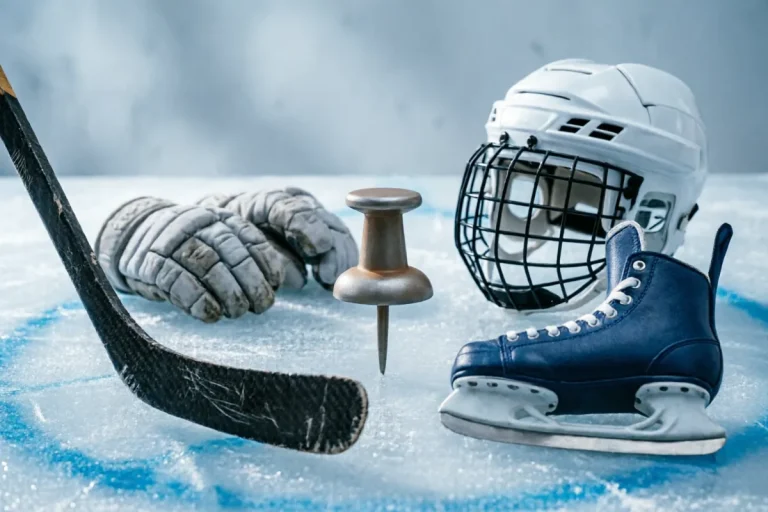
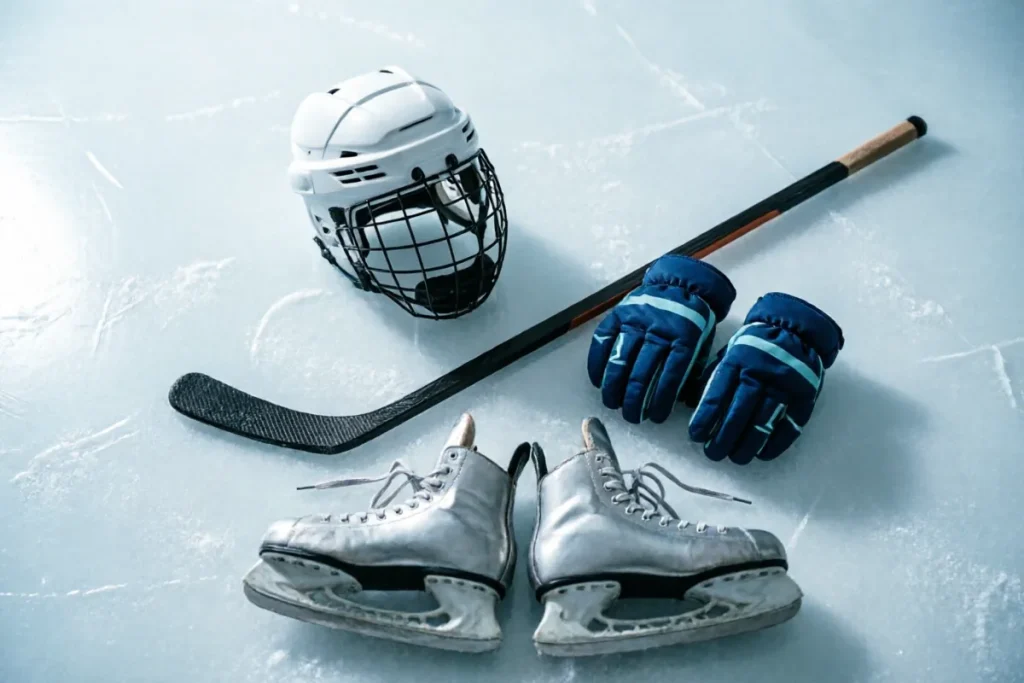
Ice hockey players need a helmet, skates, gloves, a stick, and protective gear suited to their position and level of play. A complete checklist helps you prepare before heading to the rink.
The numbers
Projected ice hockey equipment market size
Projected market CAGR
IIHF-recorded indoor rinks
Use this guide to check the essentials and make sure your equipment fits and is ready to use. The right ice hockey equipment can help you feel more comfortable and protected on the ice, whether you’re learning the game or returning for another season.
| Equipment | Purpose or fit check | Checklist status |
|---|---|---|
| Stick | Generally reaches the chin with skates on | Core playing gear |
| Skates | Heel should feel locked in place | Core playing gear |
| Helmet with facemask | HECC-approved; current sticker | Essential protection |
| Shoulder pads, elbow pads and shin guards | Cover the intended areas without restricting movement | Essential protection |
| Hockey pants | Padded shorts protect hips and thighs | Essential protection |
| Neck guard, mouth guard and athletic supporter | Check team or competition requirements | Recommended or requirement-dependent |
- 1,522 in the United States IIHF-recorded indoor rinks
- 16 in Mexico IIHF-recorded indoor rinks
What ice hockey equipment does every player need?
Playing equipment
Every ice hockey player needs a hockey stick and skates, plus a hockey jersey and hockey socks to cover and help hold protective gear in place. With skates on, the stick should reach from the ice to the player’s chin.
- Stick: Check its length while wearing skates; it should reach the chin from the ice.
- Skates: Choose a pair that fits securely.
- Clothing: Wear a hockey jersey and hockey socks over the protective kit.
Protective equipment
A complete protective kit includes a helmet with a facemask, shoulder pads, elbow pads, shin guards, hockey pants and gloves. Add a neck guard and athletic supporter; a mouth guard is also recommended.
- Head and neck: Use a helmet with a facemask and a neck guard. The helmet should carry a current Hockey Equipment Certification Council (HECC) sticker.
- Body and limbs: Wear shoulder pads, elbow pads, shin guards, hockey pants and gloves.
- Additional protection: Include an athletic supporter, and consider a mouth guard.
How should a beginner choose a stick, skates and helmet?
Choose a stick by checking its length with the player wearing skates, choose skates that hold the heel securely, and select a helmet approved by the Hockey Equipment Certification Council (HECC) with a current HECC sticker. Before buying, make sure all three items are comfortable and fit the player.
- Stick: With skates on, stand the stick upright with its blade on the ice. Its top should generally reach the player’s chin.
- Skates: Check that the heel feels locked in place inside each boot. If it lifts, the fit does not meet this key check.
- Helmet: Look for HECC approval and check that the HECC sticker is current. Do not rely on approval alone if the sticker is out of date.
Fit should be checked on the actual player, not judged by appearance or a label alone. Have the player try the stick, skates and helmet before purchase, and confirm that each feels comfortable while sitting securely in place. If any item feels wrong or unstable, try another size or model rather than settling for it.
How should protective gear fit together?
Protective gear should cover the intended body areas, fit together without gaps, and let the player move freely. Shoulder pads and elbow pads should stay in place as the arms bend and extend; shin guards should cover the lower legs, with hockey socks worn over them.
Check the layers together
Hockey pants should include padded shorts that cover the hips and thighs. Try the pants with the shin guards and socks: the layers should meet without exposing the legs between the guards and pants or making it hard to bend the knees.
Gloves, jersey and pads need to work as a set. Put them on together and move the arms, shoulders and legs through normal skating and stick-handling motions; check that the jersey does not pull the pads out of place, that the gloves meet the elbow protection, and that no body area the pads are meant to cover is left exposed. If anything shifts, pinches or restricts movement, adjust the fit before playing.
What should players check before each skate?
Before each skate, check that the helmet’s HECC sticker is current for the season, inspect the stick and confirm the skates hold the heel securely. These quick checks help catch expired certification, visible damage or a loose fit before the player takes the ice.
- Helmet: Find the HECC sticker inside the back-left area of the shell and check that its date remains valid for the current season. An expired sticker can mean the player is not allowed on the ice.
- Stick: Look over the shaft and blade for cracks, splits or other damage that could affect its use.
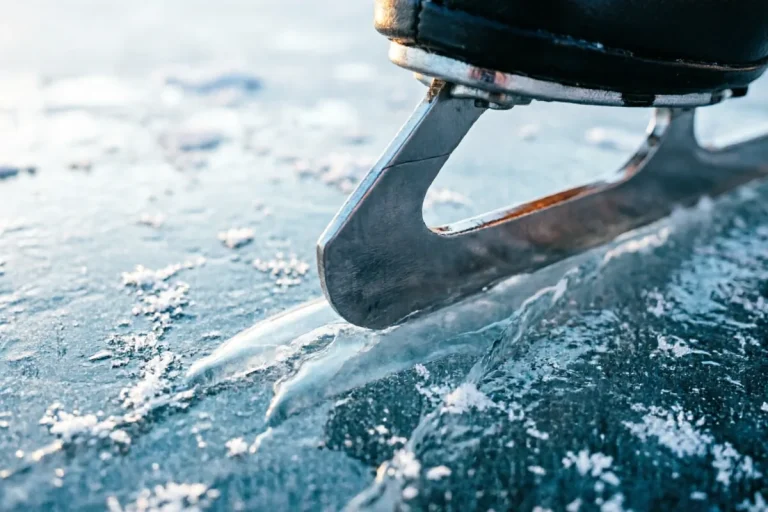
- Skates: Check that each skate holds the heel firmly rather than letting it lift inside the boot. Sharpening is recommended every 5-10 hours of use.
Keep the neck guard, mouth guard and athletic supporter in the player’s regular kit, and confirm each is packed before leaving. A repeatable pre-skate check makes these protective items less likely to be forgotten when attention is focused on the helmet, stick and skates.
Which equipment upgrades are optional, and what should not be skipped?
Optional upgrades add to the helmet, skates, stick and required protective gear; they do not replace any of them. A mouth guard is a sensible extra alongside core equipment, while a neck guard and athletic supporter are also recommended. Check your team’s or competition’s rules to confirm which items are mandatory before you buy or take the ice.
Common fit and buying mistakes
A helmet must be approved by the Hockey Equipment Certification Council (HECC) and carry a current HECC sticker. An expired sticker can mean no ice time, so check it rather than assuming an older helmet is still acceptable.
- Skates: Check that the heel is held firmly in place; a loose heel lock is a fit problem, not a reason to choose a more comfortable-looking pair.
- Helmet: Confirm HECC approval and a current sticker; appearance or comfort cannot make an unapproved helmet acceptable.
- Protection: Keep required protective gear in the kit. A mouth guard or other optional addition does not make up for missing or inadequate protection.
How is the ice hockey equipment market changing?
The ice hockey equipment market is growing steadily, with projected expansion through 2031. Mordor Intelligence gives the market size as USD 2.10 billion in 2025, USD 2.20 billion in 2026 and USD 2.79 billion by 2031, with a CAGR of 4.83% over 2026-2031.
What the market figures mean for players
These figures describe the industry as a whole, not the price or quality of any individual player’s equipment. A larger market does not tell a player whether a particular stick, helmet or pair of skates is affordable or suitable.
For a personal equipment checklist, practical fit and safety criteria remain more useful than market growth. Check that a stick reaches the player’s chin while wearing skates, and that a helmet has a current Hockey Equipment Certification Council (HECC) sticker.
How does rink access shape equipment choices?
Rink access shapes equipment choices by determining how often a player can use and maintain skates and other gear. The IIHF records 3,500 indoor rinks in Canada, 1,522 in the United States, and 16 in Mexico, reflecting very different levels of access across these countries. A player with less frequent ice time may use their equipment less often, while regular sessions mean more opportunities to check fit, wear and skate sharpness.
Match the checklist to actual ice time
Choose equipment around the player’s real schedule and the rules of their team or competition, rather than buying for an imagined level of play. Before each session, check that skates fit securely and that pads, gloves and a helmet with a facemask are ready to use; the helmet should have an approved, current HECC sticker.
- Skates: Base sharpening and maintenance on actual use; the general guidance in the article’s equipment information is to sharpen them every 5–10 hours.
- Helmet: Check the HECC sticker and confirm it meets the team or competition’s requirements.
- Protective gear: Confirm the required pads, neck guard and other equipment against team rules before buying or replacing items.
Frequently asked questions
What is the essential ice hockey equipment checklist?
How long should a hockey stick be?
How often should hockey skates be sharpened?
Can a player use a helmet with an expired HECC sticker?
Key takeaways
- Start with a HECC-approved helmet with a current sticker.
- A stick should generally reach the chin with skates on.
- Check skate heel lock and sharpen skates every 5-10 hours of use.
- Hockey pants should have padded shorts for hip and thigh protection.
- Use the team's or competition's rules to check which recommended items are mandatory.
Sources
- learntoplay.nhl.com — “Equipment – Learn to Play Hockey – NHL”
- midcoasthockey.org — “Equipment Requirements”
- wolfehockey.com — “Youth Hockey Gear: The Ultimate Guide for Young Players”
- Brookline Youth Hockey — “Hockey Equipment”
- allblackhockeysticks.com — “What Gear Do You Need to Play Hockey? Full Equipment List for”