Hockey Helmet Fit: Check Coverage and Stability
A hockey helmet fits correctly when it covers the forehead and the back of the head, sits level, and stays in place without shifting.
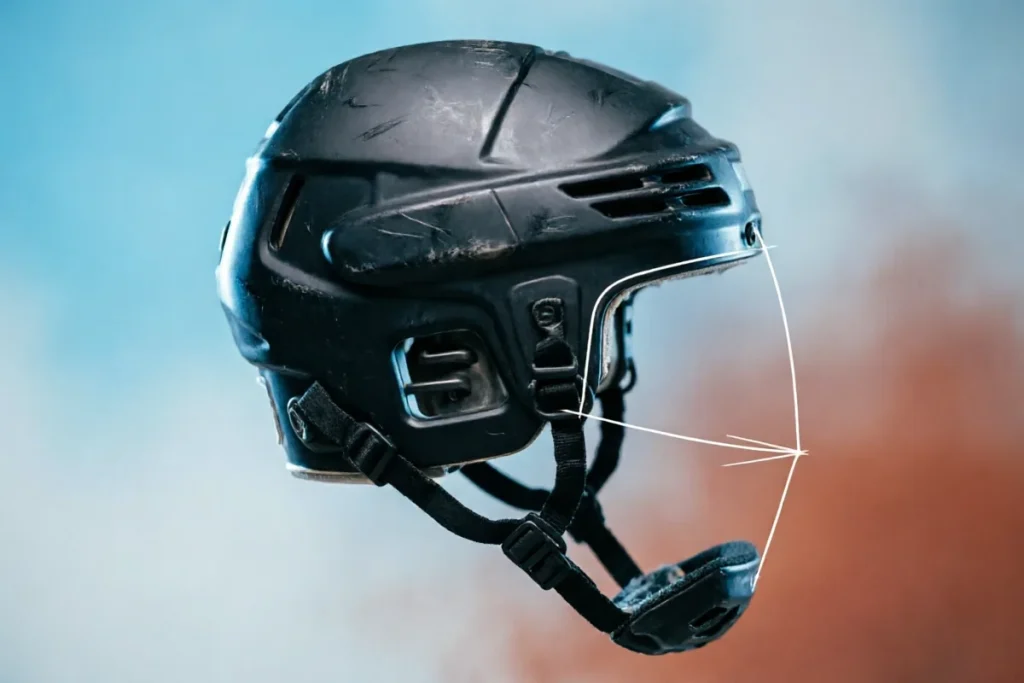
To check hockey helmet fit, look at coverage and stability together: a helmet that feels snug but leaves part of the head exposed is not a good fit, while one that moves easily may not stay positioned during play. This guide explains what to check and how to spot a poor fit.
| Check | What to look for | If it fails |
|---|---|---|
| Forehead coverage | Front sits low enough to protect the forehead | Adjust position or try another size or shape |
| Shell stability | Snug, even pressure; adjustment system holds securely | Refit or try another size or brand |
| Chin strap | Fits properly and helps keep the helmet stable | Adjust and repeat the fit check |
| Cage alignment | Facial protection fits with the helmet | Correct the fit before play |
| Approval and condition | Legal approval and intact, secure hardware | Check suitability and manufacturer replacement guidance |
Why can “hockey” mean different sports?
“Hockey” can mean different sports because the word is used differently across regions: in Europe, it more typically refers to field hockey, while in Canada, it typically refers to ice hockey. That distinction matters when choosing protective gear, since a helmet designed for ice hockey is not general equipment for every sport called hockey.
Ringette adds another part of the Canadian ice-sport context. It was invented by Sam Jacks, the same Canadian who codified the rules for the open disk style of floor hockey in 1936. Ringette and ice hockey are distinct sports, so the name “hockey” alone does not identify which equipment a player needs.
What “hockey” means in this guide
This guide uses “hockey” to mean ice hockey. For that sport, helmet fit and facial protection need to work together: check that the helmet sits securely and that the face protection aligns properly, rather than treating the shell as the only part of the fit.
How should a hockey helmet sit on your head?
A hockey helmet should sit level and snug, with its front edge low enough to protect the forehead and its shell covering the widest part of the head. It should feel secure without painful pinching, gaps or shifting when you move your head.
To check coverage, measure around the head one inch above the eyebrows; use that measurement to help select a helmet size, then check how the shell sits. The helmet should cover that widest area evenly rather than riding high at the front or leaving exposed gaps around the sides.
Check pressure and stability
Assess the fit around the whole head, not just at the forehead. The shell should make snug, even contact without creating a painful pressure point, while a loose-feeling fit or visible gap indicates that the helmet is not sitting correctly.
- Forehead: The front edge sits low enough to protect it.
- Coverage: The shell sits evenly around the widest part of the head, checked at one inch above the eyebrows.
- Pressure: Contact feels snug and even, without painful pinching.
- Stability: The shell does not feel loose or leave gaps.
How do you check helmet stability and the chin strap?
Check hockey helmet stability by fastening its adjustment system, then gently move the shell: it should stay secure against the head rather than shift excessively. The fit should feel even and snug, without painful pressure or gaps; if the shell will not hold steady, try a different size, shape or brand.
Check the chin strap and facial protection
A hockey helmet’s chin strap should fasten securely and keep the helmet stable during movement. With the strap fastened, check that the helmet does not loosen or slide out of position; adjust the fit before skating if it does.
A cage or other facial protection should align with the helmet and remain properly fitted when the helmet is worn. Check the cage and helmet together, not separately: facial protection that sits out of place can compromise the overall fit.
Which labels and standards should you check?
Check the helmet for legal approval and confirm that it is intended for ice hockey; then verify its fit and any facial protection separately. A certification label does not replace a fit check: the helmet should sit securely, cover the forehead and stay stable without painful pressure or excessive movement.
What the standards cover
- ASTM F1045: The Standard Performance Specification for Ice Hockey Helmets covers the protected areas of the head, shock absorption and retention-system strength. Check for this standard when assessing the helmet itself.
- ASTM F513: The Standard Safety Specification for Eye and Face Protective Equipment applies to facial protection. Check the approval of the cage or other eye and face equipment alongside helmet fit; helmet approval alone does not establish that the facial protection is approved.
- Fit and intended use: Confirm that the helmet’s approval and stated use match how it will be worn. After adjusting it, check that the shell remains secure and that the chin strap and facial protection sit properly.
For a combined helmet-and-cage setup, assess each component: the helmet should fit and remain stable, while the facial protector should have its own appropriate approval. If either component shifts, leaves a gap, or fails to sit correctly, adjust the fit or try a different size or shape before playing.
When should you replace a helmet or change its fit?
Replace a hockey helmet after a serious impact if the manufacturer’s guidance calls for replacement, even if the shell looks undamaged. Inspect the helmet and follow the maker’s instructions; appearance alone cannot establish whether it remains suitable for use.
When fit or adjustment no longer holds
Replace or refit a helmet that no longer sits snugly around the head, stays stable, or holds its adjustment. Check that the front still covers the forehead and that the shell does not shift during a fit check. A helmet that slips or cannot keep its setting is not fitting securely.
If the helmet fails the fit check, try a different size, shape, or brand rather than forcing the fit. After changing helmets, recheck the chin strap and the fit and alignment of the cage: both should work with the chosen helmet and stay properly positioned. Reassess the fit whenever the helmet’s adjustment no longer holds or it begins to move on the head.
When does a helmet fit check fall short?
A helmet fit check falls short when comfort is treated as proof of coverage and stability: a helmet can feel comfortable yet leave a gap at the forehead or shift excessively. Check that the front sits low enough to protect the forehead and that the shell stays secure when you move your head; comfort alone cannot confirm either.
Check the whole assembly—and replacement guidance
A correctly fitted helmet shell does not compensate for a loose chin strap or a misaligned cage. Check the strap and facial protection separately, making sure the cage sits correctly in relation to the helmet and face.
A visual inspection cannot determine whether a helmet remains suitable after a serious impact. Follow the manufacturer’s replacement instructions, and check that the helmet and its face protection meet the applicable approval requirements; a sound-looking shell is not, by itself, a reason to keep using it.
Frequently asked questions
How low should a hockey helmet sit?
The front should sit low enough to protect the forehead, and the shell should cover the widest part of the head.
How tight should a hockey helmet feel?
It should feel snug with even pressure, without painful pinching, gaps or excessive movement. Its adjustment system should hold the shell securely.
What should I do if the helmet moves during a fit check?
Adjust its fit system and chin strap, then check again. If it remains unstable, try a different size, shape or brand.
Does a helmet label replace checking the fit?
No. Check legal approval and relevant standards such as ASTM F1045, but also assess forehead coverage, stability, strap fit and facial-protection alignment.
Should a helmet be replaced after a serious impact?
Treat a serious impact as a reason to inspect the helmet and follow the manufacturer’s replacement guidance; a helmet that no longer fits securely should not be used as though it passes the fit check.
Key takeaways
- Set the helmet front low enough to protect the forehead.
- Check snug, even pressure and a shell that stays stable when adjusted.
- Inspect chin-strap fit and cage alignment as well as the helmet shell.
- Check legal approval and ASTM F1045 or ASTM F513 labels as relevant.
- After a serious impact, follow the manufacturer’s replacement guidance.
Sources
- icehockeyman.com — “Hockey Helmet Fit Checklist”
- RinkStop — “How to Fit a Hockey Helmet: A Parent's Guide”
- Better Hockey US — “Hockey Helmet Fit Guide | Better Hockey”
- icehockeyman.com — “How Should a Hockey Helmet Fit?”
- Ice Box Hockey — “Helmet Fit Guide”