Youth Hockey Skates: Fit and Sizing for Parents
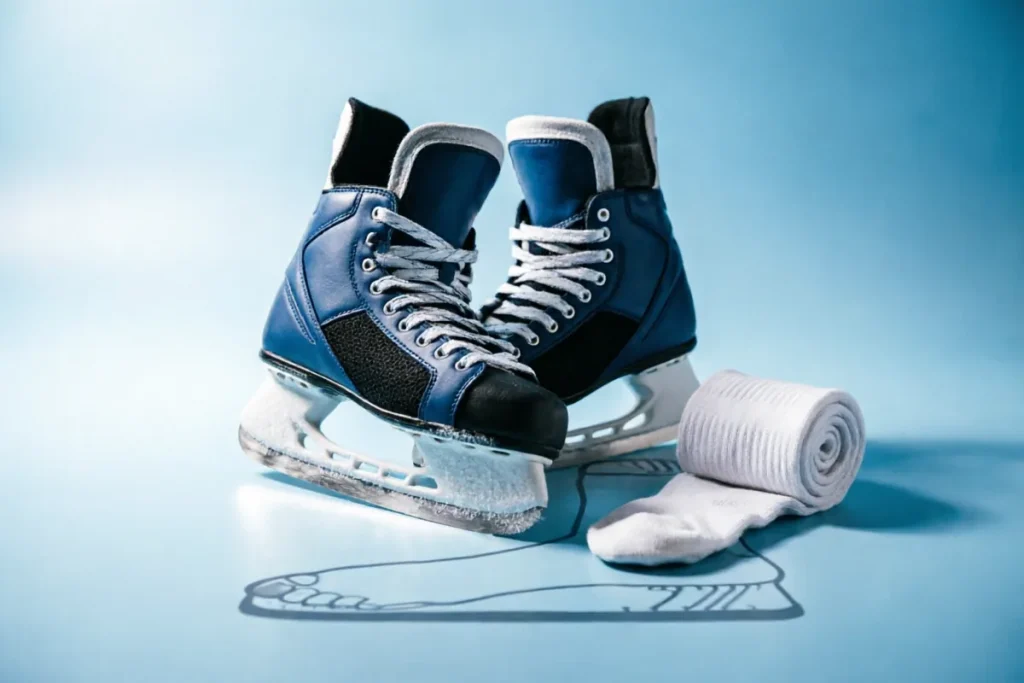
Youth hockey skates should fit snugly, with the heel held in place and the toes lightly touching the front when standing. Parents should check the fit in hockey socks and leave enough room for comfortable movement—not extra space for a child to grow into.
The numbers
Players added by USA Hockey
USA Hockey youth membership
Hockey Canada registered players
A skate that is too loose can make balance and control harder, while one that is too tight can cause pressure and discomfort. Youth hockey skates: fit and sizing for parents comes down to checking the whole fit, not relying on a child’s shoe size alone. Try skates on with the socks they’ll wear on the ice, fasten them as usual, and have your child stand and bend their knees.
| Fit point | What to check | Warning sign |
|---|---|---|
| Toe space | Light contact when standing | Pain or curled toes |
| Heel | Stays seated when knees bend | Heel lifts or slips |
| Midfoot and ankle | Foot feels securely held | Sliding or sharp pressure |
| Growth allowance | At most a half size if support remains | Loose fit or reduced control |
| Sizing chart | Use the skate brand’s own chart | Assuming shoe and skate sizes match |
- 2.4% Increase in Hockey Canada registrations
How do you measure a child’s foot for youth hockey skates?
Measure in hockey socks
Measure both of your child’s feet while they are standing and wearing the hockey socks they use for skating. Record each foot’s length; use the longer measurement when checking a skate size chart.
Use the skate maker’s chart
A child’s street-shoe size is only a starting point: shoe and hockey-skate sizes do not convert the same way across every brand. Check the chart for the specific skate maker, then use a shop fitting or that chart to confirm the starting size.
- Both feet: Measure each one, since their lengths may differ.
- Hockey socks: Wear the pair intended for skating while measuring.
- Larger foot: Match its recorded length to the maker’s chart.
- Brand-specific sizing: Use the chart for the skate brand you are considering, not a general shoe-to-skate conversion.
A shop fitting can help check how the chart-based starting size feels in the skate. Avoid choosing a size from street shoes alone, or sizing up for growth without checking the fit: an oversized skate can cause blisters and make skating harder to manage.
How should youth hockey skates fit in hockey socks?
Youth hockey skates should be tried on with the child’s usual hockey socks, laced as they would be for skating. Sock thickness changes how snug the boot feels, so assess the fit in the pair the child will wear on the ice rather than in everyday socks.
Check the fit while standing and bending
With the skates laced, have the child stand and then bend their knees into a skating position. The toes should just touch the front while standing; painful curling or ongoing pressure means the fit needs reassessment. As the child bends, check that the heel stays seated instead of lifting inside the boot.
Midfoot and ankle support should feel secure, not painful. Ask the child to describe what they feel: numbness or sharp pressure is a sign to stop and reassess the fit, not to tighten the laces further. A skate that feels roomy in the shop is not automatically a good choice for growth; an oversized boot can cause blisters and make control harder on the ice.
How much growing room should you allow?
Allow no more than a half-size increase for growth, and only if the hockey skate still holds your child’s heel and foot securely. A larger boot may seem like it offers useful extra room, but space is not a benefit if the foot shifts inside it.
Check the fit with your child standing in the skates, then focus on heel hold and control. If the heel lifts or the foot slides, the skate is too large: movement inside the boot can cause blisters and make skating harder to control. Do not choose a bigger size just because your child is likely to grow.
- Consider a half-size increase: only when the heel and foot remain secure in the boot.
- Reject a loose fit: heel lift or foot movement outweighs the appeal of extra toe space.
- Recheck as the foot changes: reassess fit rather than buying a larger skate in anticipation of growth.
How does a child’s playing level affect skate choice?
A child’s playing level should shape how much support and control the skate provides, but fit the child’s foot first; age group alone is not a sizing guide. USA Hockey added 13,396 players in 2024-25 to set a membership record, including 396,525 youth members. Hockey Canada registered over 603,000 players, up 2.4%. These participation figures show the scale of youth hockey, not the size an individual child needs.
Choose for foot fit and control
For a beginner, prioritise a boot the child can control comfortably: a skate that is too large can shift on the foot, cause blisters and make skating harder. A more experienced player may need a boot that gives secure support during stronger skating, but the fit still has to match the child’s foot.
- Foot length: Use a skate-sizing chart for the brand, then try the size on; do not select it from the child’s age or team category.
- Boot control: Check that the heel stays in place and the foot feels secure without painful pressure.
- Room to grow: A half-size allowance may be considered only if the skate remains controllable; extra room is not a substitute for fit.
When can a sizing rule lead to the wrong skate?
Common fit mistakes
A skate-sizing rule can lead to the wrong fit when it replaces a try-on or encourages a skate that is too large. The suggestion to start 1–1.5 sizes below a child’s normal shoe size is only a starting point; check how the skate holds the foot.
- Using shoe size as a verdict: CCM’s sizing chart shows a direct relationship between CCM skate size and youth shoe size, but do not assume every brand uses the same conversion. Check the chart for the specific skate brand.
- Buying room to grow: A half-size allowance is not worthwhile if it lets the heel lift or the foot slide inside the skate. The child needs a secure fit, not extra space that undermines control.
- Ignoring discomfort: Pain, numbness or rubbing during the try-on are reasons to stop and reassess the size and fit. Do not treat these signs as something the child simply needs to get used to.
A child’s feedback matters during the try-on: have them stand and move in the skates, then ask whether anything hurts, feels numb or rubs. If the heel rises or the foot shifts, reassess rather than choosing the larger size for growth.
How can you compare skate sizes before buying?
Compare a youth hockey skate’s manufacturer chart for the exact brand and model with how that skate fits during a try-on in hockey socks; shoe size is only a starting point. Charts can differ between brands and models, so don’t use a CCM chart to choose another skate.
- Manufacturer chart: Use the size recommendation for the specific skate being considered, then treat it as a guide to which size to try.
- Heel hold: With the skate fastened, check that the heel stays secure rather than lifting inside the boot.
- Toe contact: Check how the toes meet the front of the boot. The fit should not cause pain.
- Foot movement: Make sure the foot does not slide around inside the skate; extra space for growth is not a substitute for a secure fit.
Choosing between adjacent sizes
If two sizes seem plausible, compare both on the child’s foot in hockey socks and judge the fit by heel hold, toe contact, and movement. Choose the size that secures the foot without pain, even if the larger size seems to offer more room to grow. A skate that is too large can make the fit uncomfortable and harder for a child to manage on the ice.
Frequently asked questions
Should youth hockey skates be the same size as regular shoes?
Not necessarily. A common starting point is to try skates 1–1.5 sizes below normal shoe size, then confirm the fit in hockey socks and check the specific brand’s chart.
Can I buy youth hockey skates a size too large so my child can grow into them?
That can compromise control and cause blisters. Consider only a half-size allowance when the boot still holds the heel and foot securely.
Should my child’s toes touch the front of the skate?
They can meet the front lightly while standing, but should not be painfully curled or pressed. Recheck the fit if there is persistent pressure.
Do CCM youth skates use the same sizing as every other brand?
No universal conversion should be assumed. CCM’s chart directly relates CCM skate size to youth shoe size, so check the chart for the brand you are buying.
Key takeaways
- Measure both feet in the hockey socks used for skating and size from the larger foot.
- Try the skate with laces tightened and check heel hold, toe contact, and midfoot support.
- A half-size growth allowance is only sensible when it does not reduce control.
- Use the exact brand’s sizing chart; CCM has a direct youth shoe-size relationship in its chart.
Sources
- Sizing, Fit & Features Guide — “How to Choose the Best Youth Hockey Skates”
- icehockeycentral.com — “The Ultimate Guide to Sizing Youth Hockey Skates”
- MonkeySports — “Hockey Skate Sizing Guide & Fit Chart”
- Thinees — “Hockey Skate Sizing Guide”
- Dataintelo — “Ice Skating Equipment Market Size, Share & Forecast Report 2025 to 2034”