Figure Skating at the Winter Olympics: A Short History
Figure skating has been a core part of the Winter Olympic Games since their inception in 1924, showcasing a blend of athleticism and artistry on ice that captivates audiences worldwide. It remains one of the most popular and visually striking events, combining technical skill with expressive performance in singles, pairs, and ice dance disciplines.
Updated: September 28, 2026
The story of figure skating at the Winter Olympics is rich and evolving, reflecting changes in sport, culture, and technology over nearly a century. From its early days as a demonstration of basic jumps and spins to today’s complex routines featuring quadruple jumps and intricate choreography, the discipline has grown in both difficulty and spectacle. This history highlights how figure skating has maintained its place as a symbol of grace and competitive spirit at the heart of the Games.
Exploring the history of figure skating at the Winter Olympics reveals not only the progression of athletic achievement but also the stories of legendary skaters, memorable performances, and shifting judging standards. Understanding this evolution helps fans and newcomers alike appreciate the depth and excitement that figure skating brings to the Olympic stage every four years.
| Discipline | Program Duration | Key Elements | Olympic Debut |
|---|---|---|---|
| Men’s Singles | Short: 2:40, Free: 4:30 | Jumps, spins, step sequences | 1924 |
| Ladies’ Singles | Short: 2:40, Free: 4:00 | Jumps, spins, step sequences | 1924 |
| Pairs | Short: 2:40, Free: 4:30 | Lifts, throws, side-by-side jumps | 1924 |
| Ice Dance | Free dance: 2:50 | Rhythm, interpretation, lifts under 5 secs | 1976 |
When did figure skating first appear at the Winter Olympics and how has it evolved?
Origins and expansion
Figure skating first appeared at the Winter Olympics in 1924, held in Chamonix, France, as one of only four sports featured at the inaugural Games. The initial Olympic program included three events: men’s singles, ladies’ singles, and pairs skating. It was not until 1976 that ice dance was introduced, expanding the competitive disciplines to four. By the 2026 Winter Olympics in Milan-Cortina, over 150 skaters competed across these four categories, reflecting significant growth in both participation and global interest.
Governing body
The International Skating Union (ISU), founded in 1892, is the official organization responsible for regulating figure skating rules and judging standards at the Olympics. The ISU sets technical requirements and scoring systems that have evolved to maintain fairness and encourage innovation in the sport. For example, the ISU’s 2026 judging system emphasizes both technical difficulty and artistic presentation, impacting how athletes strategize their routines.
- 1924 Winter Olympics: debut year with three figure skating events
- 1976 Winter Olympics: introduction of ice dance discipline
- International Skating Union (ISU): established 1892, governs Olympic rules
- 2026 Winter Olympics: over 150 skaters competing in four disciplines
What are the main figure skating disciplines contested at the Olympics?
Singles and pairs
Four main figure skating disciplines are contested at the Winter Olympics: men’s singles, ladies’ singles, pairs skating, and ice dance. Both men’s and ladies’ singles feature two segments—the short program and the free skate—each judged on technical elements like jumps and spins, and artistic components such as choreography and interpretation. The programs typically last about 2 minutes 40 seconds for the short and up to 4 minutes for the free skate, with scoring guided by the International Skating Union (ISU) standards.
Pairs skating combines athleticism and coordination, with elements including jumps, lifts, and throws. A critical technical rule requires lifts to remain under 5 seconds, emphasizing strength and timing between partners. Judges assess synchronization and execution across the short and free programs, which have similar durations to singles events but demand unique pair-specific skills.
Ice dance and team event
Ice dance centers on rhythm, musical interpretation, and precise footwork, making it distinct from the jump-focused disciplines. Competitors perform a 2-minute 50-second free dance, alongside compulsory and original dances, all evaluated for timing, expression, and technical merit. Since the 2022 Winter Olympics, the team event has combined results from men’s singles, ladies’ singles, pairs, and ice dance to produce an overall national ranking, uniting all four disciplines into one medal competition. This format requires countries to demonstrate depth across disciplines rather than relying on individual standouts.
How is figure skating scored at the Winter Olympics?
Judging mechanics
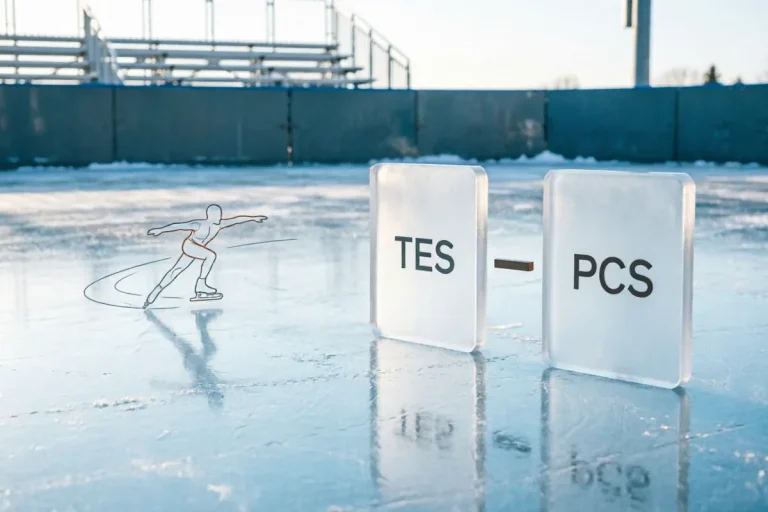
Figure skating at the Winter Olympics is scored using the ISU Judging System, which combines Technical Element Scores (TES) and Program Component Scores (PCS) to determine the total segment score. A technical panel identifies each element performed, such as jumps and spins, assigning a base value. Judges then apply a Grade of Execution (GOE) ranging from −5 to +5 to adjust this base value. Top skaters, like Nathan Chen, often achieve total segment scores exceeding 200 points, reflecting a blend of technical precision and artistic performance.
Penalties and rules
Deductions are applied for falls, each costing 1.0 point, and for time violations if programs exceed strict limits—short programs must last 2 minutes and 40 seconds, plus or minus 10 seconds. Additionally, skaters’ costumes must comply with ISU guidelines, prohibiting excessive accessories that could endanger safety or interfere with judging. These rules ensure fairness and safety, maintaining the integrity of Olympic competition.
- Grade of Execution (GOE) scale: −5 to +5 per element
- Short program time limit: 2:40 ± 10 seconds
- Fall deduction: 1.0 point per fall
- Costume regulations: ISU safety and appropriateness standards
What equipment and attire are standard for Olympic figure skaters?
Skates and boots
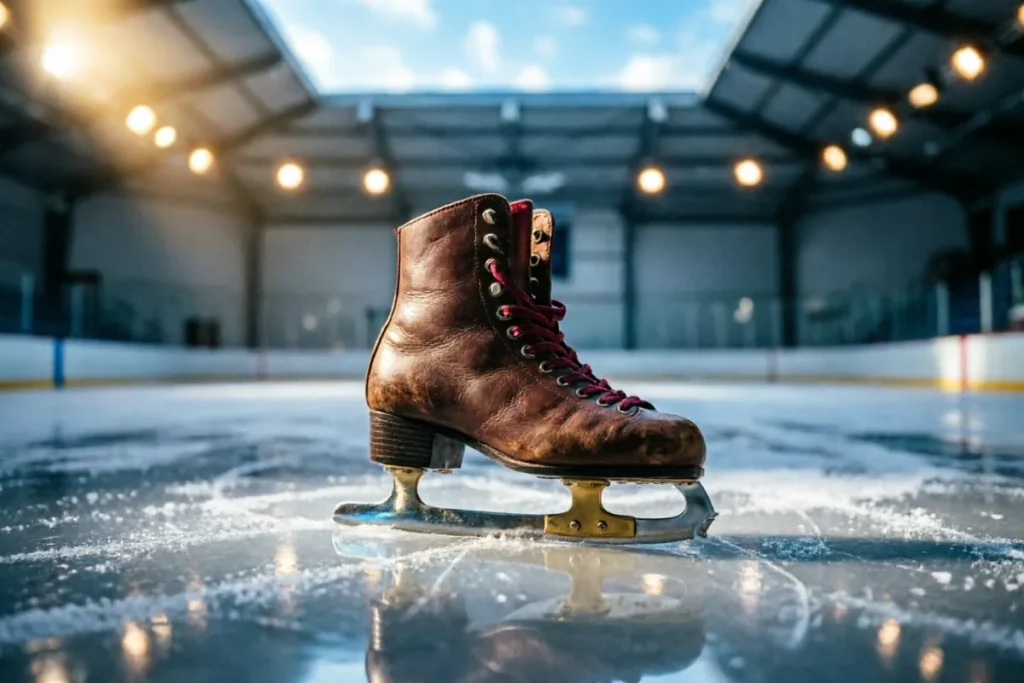
Olympic figure skaters use specialized skates featuring blades typically 24 to 27 centimeters long, crafted from tempered carbon steel to ensure durability and precise edge control. Leading manufacturers such as Jackson Ultima and Edea provide boots and blades preferred by elite athletes, with boot prices ranging from $400 to $600. These boots are designed to offer optimal ankle support while maintaining flexibility for complex jumps and spins.
Costumes and safety
Figure skating costumes at the Olympics must allow full freedom of movement and comply with International Skating Union (ISU) rules, which limit excessive embellishments and forbid the use of props during routines. Protective padding is minimal, as aesthetic presentation is prioritized, which unfortunately increases the risk of injury during high-difficulty maneuvers. Skaters balance safety and style by choosing attire that meets these regulatory standards while enabling peak athletic performance.
- Blade length: 24–27 cm, tempered carbon steel
- Boot cost: $400–$600, brands Jackson Ultima and Edea
- ISU costume regulations: restrict embellishments, prohibit props
- Protective padding: minimal to preserve aesthetics, raising injury risk
What are common challenges and controversies in Olympic figure skating?
Judging reforms
Judging controversies have been a significant challenge in Olympic figure skating, leading to major reforms in scoring systems. The 2002 Salt Lake City scandal, where allegations of vote trading and biased judging arose, exposed vulnerabilities in the 6.0 judging system. In response, the International Skating Union (ISU) introduced the International Judging System (IJS) in 2004, a detailed, point-based system designed to increase transparency and reduce subjectivity. This system assigns base values to each technical element and grades of execution, aiming to minimize nationalistic bias despite ongoing concerns. However, political and national preferences still occasionally influence outcomes, even with anonymous judging panels intended to safeguard fairness.
Athlete risks and barriers
Athletes face considerable physical risks and financial barriers in Olympic figure skating. Complex jumps like the quadruple axel, attempted increasingly since the mid-2020s, carry a high injury risk, often requiring 6 to 12 months of rehabilitation after falls or joint damage. Additionally, the cost of elite training remains prohibitive for many skaters. Annual expenses at top rinks, including coaching by recognized experts and ice time, can exceed $50,000. This financial threshold limits access to high-level preparation, influencing the diversity of competitors at the Olympic level.
- ISU International Judging System (IJS), adopted 2004
- 6 to 12 months typical injury recovery time for major jump injuries
- Annual elite training costs often surpass $50,000
- Quadruple axel attempts increasing since early 2020s
Frequently asked questions
When was ice dance introduced to the Winter Olympics?
Ice dance was added as an Olympic discipline in 1976 at the Innsbruck Winter Games.
How long is a typical Olympic short program?
Short programs are timed at 2 minutes and 40 seconds, with a 10-second allowance either way.
What is the typical cost of Olympic-level figure skating boots?
High-performance boots from brands like Jackson Ultima typically cost between $400 and $600.
How are falls penalized in Olympic figure skating scoring?
Each fall incurs a deduction of 1.0 point from the total segment score according to ISU rules.
Key takeaways
- Figure skating has been part of the Winter Olympics since 1924 with four main disciplines today.
- ISU scoring combines technical execution and artistic components, with strict time and costume regulations.
- Elite skaters use specialized boots costing up to $600 and blades tailored for precision and durability.
- Judging reforms since 2002 enhance transparency but controversies and injury risks persist.
- Training costs can exceed $50,000 annually, limiting access to top-level competition.