How Judges Distinguish a Clean Lutz from a Flutz
Judges distinguish a clean Lutz from a flutz by checking which edge the skater uses to take off. A Lutz begins on an outside edge; a flutz takes off from an inside edge.
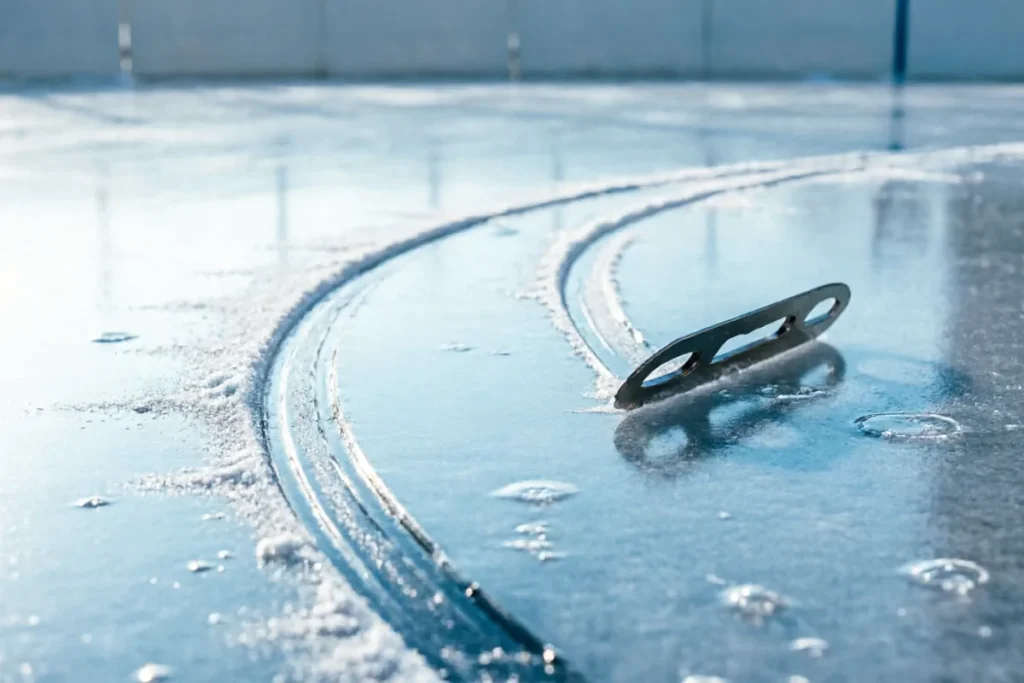
The difference can be subtle, especially when the edge changes just before the jump. What judges look for is the take-off edge—not the jump’s appearance in the air—to distinguish a clean Lutz from a flutz.
| Element or call | Takeoff edge | Scoring effect |
|---|---|---|
| Clean Lutz | Back outside | No wrong-edge mark |
| Flip | Back inside | Correct edge for a flip |
| Severe Lutz edge violation | Inside edge instead of outside | “e”; base value cut to 80% of full value |
| Mild edge issue | Edge concern without a severe call | “!”; base value unchanged |
- 80% Base value retained after a severe wrong-edge call
How does the technical panel distinguish a clean Lutz from a flutz?
The technical panel distinguishes a clean Lutz from a flutz by checking the blade edge at takeoff: a Lutz must leave the ice from a backward outside edge, while a flip takes off from a backward inside edge.
A flutz is still identified by its Lutz-style entry, but the skater shifts onto the inside edge before takeoff. That makes its edge technique closer to a flip; the panel assesses the edge actually used, not the jump’s name or the skater’s intended entry.
- Clean Lutz: The blade remains on a backward outside edge at takeoff. The toe pick helps the skater launch, but does not replace the outside-edge requirement.
- Flutz: The takeoff occurs from a backward inside edge instead of the required outside edge.
- Flip: The takeoff uses a backward inside edge.
The key moment is the instant the blade leaves the ice. The toe pick assists the takeoff, but a toe-pick push does not by itself make the jump a clean Lutz: the panel still checks which edge supports the takeoff.
How does an edge call change a Lutz’s value?
A Lutz edge call changes the jump’s base value when the takeoff uses the wrong edge: a severe violation marked “e” reduces it to 80% of full value, while a mild issue marked “!” leaves the base value unchanged.
The Lutz is expected to take off from a backward outside edge. If the skater takes off from the inside edge instead, the jump is commonly called a flutz. The technical call concerns the blade edge at takeoff, not whether the skater completes the jump afterward.
- “e”: A severe wrong-edge call cuts the Lutz’s base value to 80% of its full value.
- “!”: A mild edge concern does not reduce the base value, though judges may reflect it in their assessments.
What the call does—and does not—measure
An edge violation changes the technical scoring of the element even when the jump is otherwise completed. The call identifies a problem with the takeoff; it is not a complete assessment of the performance. Rotation, landing and other elements of the skate are not described by the edge mark alone.
What role does video review play in an edge call?
Video review helps the technical panel inspect the Lutz’s brief transition into takeoff and judge whether the blade remains on its outside edge or shifts to the inside edge. The edge at takeoff is the relevant criterion: the landing edge and the jump’s later rotation do not determine whether the Lutz takeoff was clean.
At full speed, a small inward change can be hard to see. Reviewing the takeoff lets the panel examine that moment more closely; it supports the edge call rather than changing what a Lutz requires. A Lutz uses a back outside edge at takeoff, while an inside-edge takeoff is a flutz.
What to check about the review
The review procedure depends on the competition’s technical-panel process. If you want to know how a particular event handles edge calls, check its official notice for the review arrangements.
What can a skater work on to fix a flutz?
A skater can work on a flutz by keeping the blade on its back outside edge through the Lutz takeoff, instead of letting it roll onto the inside edge. The key is to watch how the edge changes during the approach and at takeoff.
iCoachSkating lists “Lutz Prints and Theory” and “Lutz Drills” among its flutz-fixing material. Its video is identified as “Figure Skating Jumps – The Lutz: Fixing a Flutz (Nick Perna)”. These resources give a skater specific Lutz material to use when practising the edge.
Check the edge transition
Use a drill to focus on the transition from the approach into takeoff: the Lutz must leave the ice from a back outside edge, not an inside edge. Then record the jump and review the video, paying attention to the blade immediately before it leaves the ice. If the edge changes, adjust the approach and repeat the check.
When is a flutz call difficult to settle?
A flutz call is difficult to settle when the blade’s takeoff edge changes subtly, leaving the panel to judge whether the skater left the ice from an outside or inside edge.
A clean Lutz takeoff from the back outside edge and a clear inside-edge takeoff are distinct. The difficult cases lie between them: the edge change may be small enough that skaters and viewers disagree about what the blade was doing at the moment of takeoff.
That disagreement can extend to whether different panels apply the same standard. But the technical question is the visible takeoff edge, not whether someone informally calls the jump a “flutz” or believes a skater usually takes off from the wrong edge. A skater’s established technique does not decide the edge on a particular attempt.
What the call rests on
When the takeoff edge is unclear, the call depends on the panel’s assessment of that moment. The jump’s shape in the air, its landing, or the label used by commentators cannot by itself settle whether the blade changed edge before takeoff.
To assess a disputed call, focus on the blade’s edge at the instant the skater leaves the ice; if that transition is hard to see, the panel’s judgment remains decisive.
Frequently asked questions
What is a flutz in figure skating?
What does the “e” mark mean on a Lutz?
Does a mild edge warning lower the base value?
What edge should a clean Lutz use?
Key takeaways
- A Lutz requires a back outside-edge takeoff; a flip uses a back inside edge.
- A severe wrong-edge call marked “e” reduces base value to 80% of its full value.
- A mild “!” edge issue leaves base value unchanged.
- iCoachSkating lists “Lutz Prints and Theory” and “Lutz Drills” for flutz-fixing work.
Sources
- Adults Skate Too LLC — “Figure Skating Scoring Explained | How IJS Works in Plain English”
- Krigor Studio — “Figure Skating Terms Explained: The Complete Parent Glossary”
- Ice Skating Jewellery — “A Skater’s Glossary: Terms, Moves and Competition Jargon Explained”
- Chique Sport — “6 Competitive Figure Skating Jumps Explained!”
- icoachskating.com — “Figure Skating Jumps – The Lutz: Fixing a Flutz (Nick Perna)”