Understanding Wintersport Ice Sports Arenas: Design, Use
Wintersport ice sports arenas are specialized facilities designed to provide optimal ice conditions, spectator experience, and athlete performance for sports like ice hockey and figure skating. Their design balances technical requirements such as ice quality and climate control with functional aspects including seating capacity, safety measures, and multi-use adaptability.
Updated: September 28, 2026
Understanding wintersport ice sports arenas involves exploring how architectural choices, refrigeration technology, and venue management come together to support high-level competition and entertainment. These arenas must accommodate diverse events, from local leagues to international championships, while addressing challenges like energy efficiency and spectator comfort. For those interested in how arenas influence the game itself, further reading can be found in our detailed analysis of Ice Hockey at the Winter Olympics: Venue Challenges and Highlights and Olympic Ice Hockey Competition: Arena Selection and Its Effect on Play.
This article delves into the key design principles and functional uses of ice sports arenas, as well as their broader impact on wintersport culture and event success, offering a comprehensive overview for fans, athletes, and industry professionals alike.
| Feature | Typical Value/Standard | Impact | Cost Range |
|---|---|---|---|
| Rink Size | 60m × 30m | Standardized for ISU and IIHF competition | N/A |
| Lighting | ≥1,200 lux | Ensures broadcast and athlete visibility | $100,000–$250,000 |
| Seating Capacity | 6,000–6,300 seats | Influences spectator atmosphere and revenue | Variable by arena |
| Ice Maintenance | −5°C to −7°C ice temp | Preserves ice hardness and glide | $10,000/month |
| Dasher Boards | IIHF compliant, Schelde Sports | Player safety and puck rebound | $20,000+ per rink |
What are the key design standards for wintersport ice arenas?
Standard rink dimensions
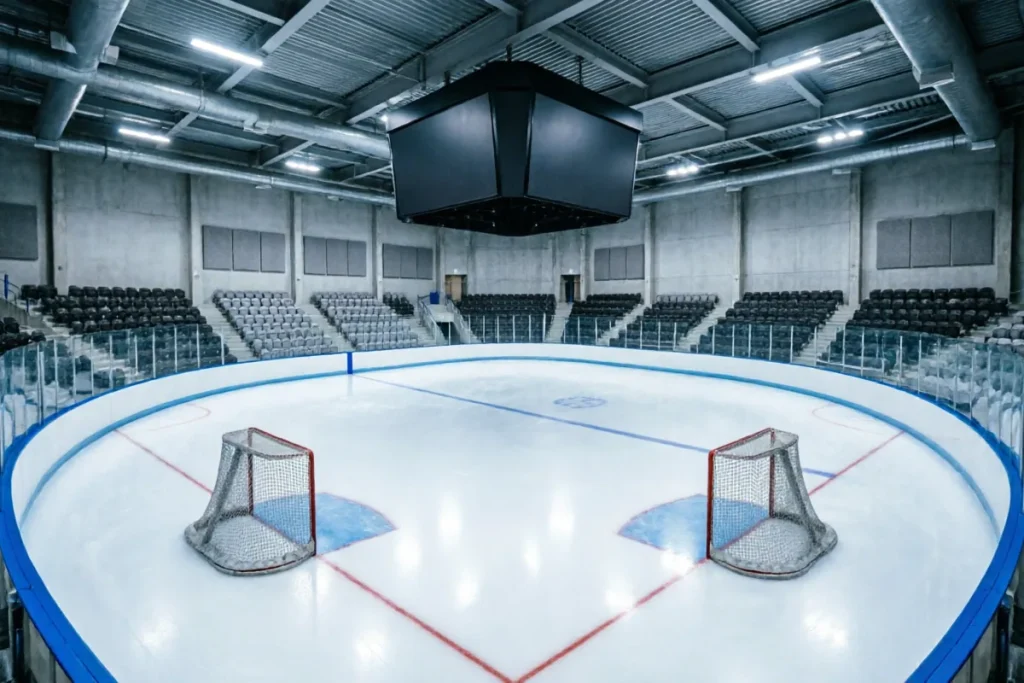
Wintersport ice arenas adhere to precise size standards defined by international governing bodies to ensure uniform competition conditions. The International Skating Union (ISU) specifies a figure skating rink dimension of 60 meters by 30 meters, which serves as the global standard for elite events. Similarly, the International Ice Hockey Federation (IIHF) mandates the same 60m x 30m size for ice hockey rinks but requires an additional corner radius of 8.5 meters, a feature integral to Olympic and World Championship arenas.
Environmental controls
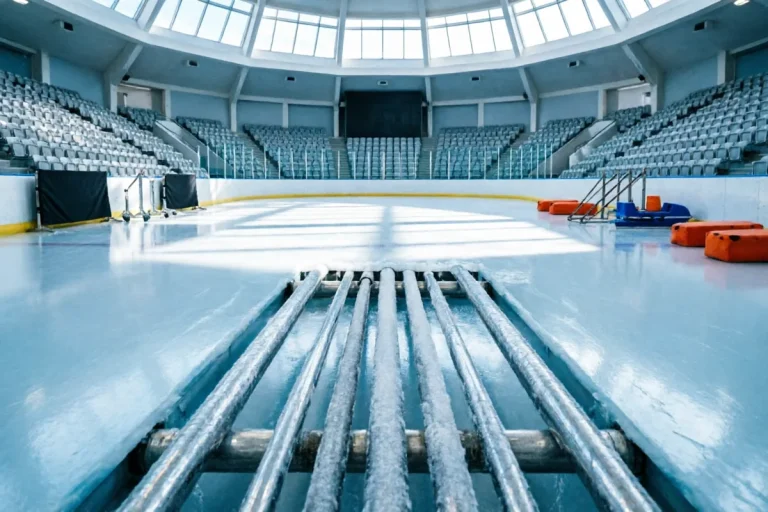
- Ice temperature: Modern arenas maintain ice surface temperatures between -5°C and -7°C using advanced refrigeration systems to optimize ice hardness and glide quality.
- Seating capacity: Venues vary widely, with the 2018 Gangneung Hockey Centre accommodating 6,000 spectators for hockey, while the 2026 Torino Palavela seats approximately 6,300 for figure skating events.
These environmental and structural standards collectively ensure that ice arenas meet the demanding requirements for athlete performance and spectator experience in international wintersport competitions.
How do arena features affect ice hockey and figure skating competitions?
Visual and acoustic environment
Arena features significantly influence athlete performance and viewer experience by ensuring optimal lighting and sound conditions. For ice hockey and figure skating events, lighting standards mandate at least 1,200 lux to guarantee high-quality TV broadcasts and clear athlete visibility under fast-paced conditions. The 2026 Milan Arena exemplifies advanced acoustic design by incorporating sound-absorbing materials that reduce crowd noise interference, helping athletes maintain focus during critical moments.
Player safety and ice quality
The quality and compliance of dasher boards and glass directly affect player safety and game dynamics, with IIHF-approved boards from Schelde Sports costing upwards of $20,000 per rink installation reflecting this priority. Temperature and humidity control are equally vital; excess humidity causes fog and ice surface degradation, which is managed by sophisticated HVAC systems that can cost several hundred thousand dollars to install and operate, ensuring consistent ice quality for fair competition.
What are the typical costs and economic considerations in building and operating ice sports arenas?
Construction and capital costs
Building a mid-size ice sports arena typically requires an investment between $25 million and $80 million, depending on seating capacity and the level of amenities offered. This cost range covers essential infrastructure such as the ice rink, refrigeration systems, seating, locker rooms, and public facilities. For example, arenas designed for international competitions often include advanced features like climate control and spectator comfort enhancements, which drive costs toward the higher end of the scale.
Operational expenses and revenue
Operating an ice arena involves consistent expenditures, with ice maintenance alone averaging around $10,000 monthly. This includes refrigeration and resurfacing equipment such as the Zamboni Model 552, which is commonly used for ice upkeep. Energy consumption is another significant cost factor, as arenas use between 1,000 and 2,500 megawatt-hours annually. To offset these expenses, many venues invest in energy-efficient technologies like LED lighting and modern compressors.
- Monthly ice maintenance: approximately $10,000 for refrigeration and resurfacing equipment (e.g., Zamboni Model 552)
- Annual energy consumption: between 1,000 and 2,500 MWh
- Energy-saving investments: LED lighting, efficient compressors
- Revenue streams: ticket sales, concessions, and ice rental fees
- Example revenue: hosting international figure skating events can generate over $3 million in direct income
How do arena location and venue selection influence ice sports competitions?
Geographic and environmental factors
Arena location significantly affects ice quality and competition conditions, especially through altitude. Venues situated above 1,000 meters require specialized refrigeration systems to counteract lower air pressure and temperature variations that reduce ice density. For example, arenas at high-altitude locations must adjust cooling settings to maintain optimal ice hardness and glide, ensuring fair play and safety. This technical consideration influences both figure skating and ice hockey performance, as inconsistent ice can alter jump landings or puck speed.
Spectator and athlete experience
- Accessibility: Arenas in major metropolitan areas, such as Toronto’s Scotiabank Arena, benefit from extensive public transit networks that boost attendance and atmosphere. Easy access via subway or bus routes correlates with higher ticket sales and fan engagement.
- Venue design and gameplay: The size and layout of Olympic ice hockey venues vary widely, impacting gameplay dynamics. For detailed assessments, see analyses in articles like ‘Ice Hockey at the Winter Olympics: Venue Challenges and Highlights’ and ‘Olympic Ice Hockey Competition: Arena Selection and Its Effect on Play’.
What limitations and trade-offs exist in ice sports arena design and use?
Comfort versus performance
Ice sports arenas face the challenge of balancing optimal ice quality with spectator comfort, as cooler air improves ice conditions but can cause discomfort in seating areas. Maintaining air temperatures near 10°C enhances ice hardness, yet many arenas report that spectators find temperatures below 15°C unpleasant for extended periods. For example, the Ericsson Globe in Stockholm uses targeted air circulation systems to keep seating zones around 16°C while maintaining the ice surface near 7°C, demonstrating a practical compromise.
Multi-use arenas must also accommodate concerts and other sports, often requiring frequent ice installation and removal that can increase operational costs by 15–20%. This trade-off affects ice consistency and longevity, as seen in venues like the Rogers Place in Edmonton, where ice transitions can take up to 12 hours, impacting scheduling and ice quality.
Economic and environmental trade-offs
High energy consumption in ice arena operations conflicts with sustainability goals, since refrigeration and climate control systems can account for up to 50% of total facility energy use. Some arenas, such as the SAP Garden in Munich, integrate solar panels to supplement electricity, yet fully offsetting energy usage remains challenging due to seasonal demand fluctuations and refrigeration loads.
- Energy costs can reach $200,000 annually in medium-sized arenas.
- Solar panel installations typically cover 20–30% of energy needs.
- Smaller arenas with 5,000–7,000 seats foster greater athlete motivation and a more intense atmosphere.
- Larger venues exceeding 15,000 seats reduce crowd noise impact but may diminish spectator intimacy.
Frequently asked questions
What is the standard rink size for Olympic figure skating and ice hockey?
Both figure skating and Olympic ice hockey use a rink measuring 60 meters by 30 meters, as defined by the ISU and IIHF respectively.
How much does it cost to maintain ice quality in a professional arena?
Monthly ice maintenance costs, including refrigeration and resurfacing equipment like the Zamboni Model 552, average around $10,000.
Why does arena location matter for ice sports competitions?
Elevation and local climate affect ice quality and refrigeration needs, while accessibility influences spectator attendance and event success.
Can arenas be optimized for both ice sports and other events?
Multi-use arenas require trade-offs; frequent ice installation and removal can degrade ice quality and increase operational costs by up to 20%.
Key takeaways
- Ice sports arenas follow strict ISU and IIHF rink dimensions of 60m x 30m.
- Maintaining ice quality costs about $10,000 per month in refrigeration and resurfacing.
- Arena design impacts athlete performance through lighting, acoustics, and board quality.
- Location and venue selection influence ice conditions and spectator experience.
- Trade-offs exist between ice quality, spectator comfort, and multi-use arena functionality.