Skating Gloves vs Mittens: Warmth and Grip
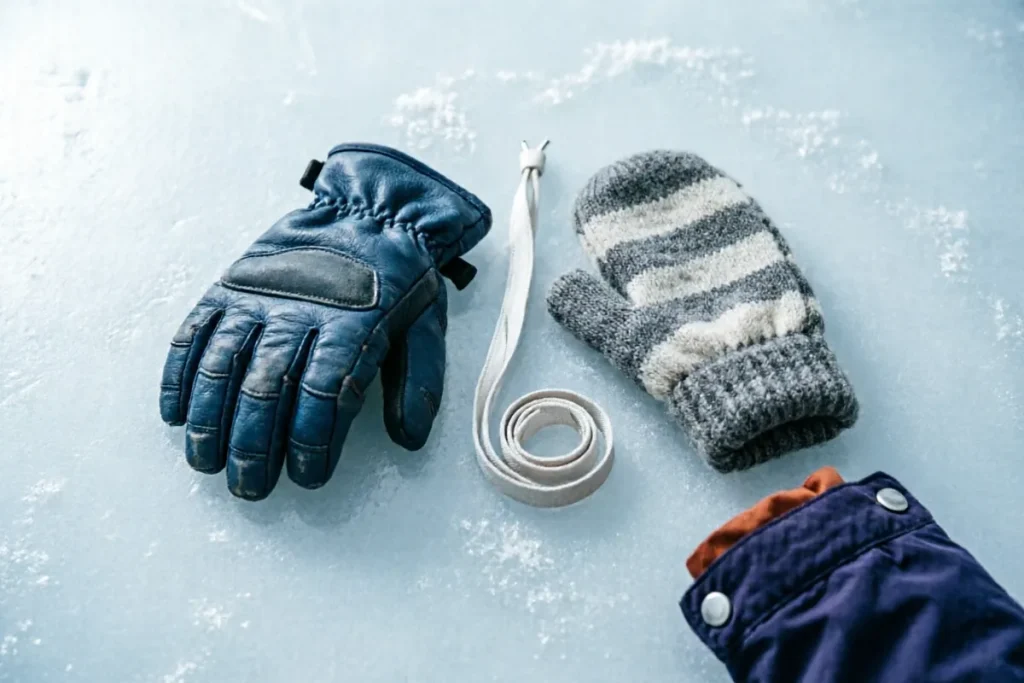
Gloves usually provide better grip and finger control, while mittens keep hands warmer by holding the fingers together. For skating, choose gloves when handling equipment or adjusting gear matters; choose mittens when warmth is the priority.
The numbers
Common range for Thinsulate insulation
Temperature in the reported metal-contact test
Largest reduction reported for one mitt under metal contact
The trade-off depends on what you do on the ice and how cold your hands get. Skating gloves vs mittens is not a simple choice between performance and comfort: insulation, fit and the need to use your fingers all matter.
| Option | Warmth | Finger movement | Useful for |
|---|---|---|---|
| Gloves | Less shared finger warmth | Best independent movement | Laces, zips and phone handling |
| Mittens | Fingers share warmth | Most limited for fine tasks | Keeping hands warm during pauses |
| Trigger mitts | Between glove and mitten | More movement than a conventional mitten | Balancing warmth with gear adjustments |
Are gloves or mittens better for recreational skating?
For recreational skating, gloves suit adults who need to adjust laces, fasten a jacket zip or use a phone between laps; mittens suit skaters whose hands get cold before they need to do fine tasks.
- Gloves: Each finger moves independently, making small adjustments easier without taking them off.
- Mittens: Fingers stay together and share warmth, but tasks such as handling laces or a phone are less convenient.
- Trigger mitts: Some fingers are grouped while others have more room to move, offering a middle ground between warmth and dexterity.
On a recreational session, choose based on what is more likely to interrupt your skating: cold hands or fiddly adjustments. If you need both warmth and some finger movement, trigger mitts are worth considering.
How does handwear affect grip on the ice?
Gloves generally give you better control on the ice because each finger can move separately, making it easier to pick up a skate guard, hold a water bottle or adjust gear.
A bulky mitten can make small objects harder to grasp; extra warmth does not automatically mean better control. Before choosing, test your handwear with the items you actually take to the rink, including your skate guards and phone.
- Gloves: Choose them when separate finger movement matters for handling gear or a phone.
- Mittens: Check whether you can grip your usual rink items without removing them.
- Fit: Pick a snug pair that does not pull tight across your palm when you curl your fingers.
Why do mittens usually feel warmer?
Mittens usually feel warmer because your fingers share one enclosed space and can retain heat together, while gloves separate each finger into its own section.
That shared space matters most when your hands are relatively inactive, such as during a pause at the rink. Gloves offer more independent finger movement, but that can come at the cost of warmth when you are standing still.
Thinsulate insulation labels commonly range from 40 to 200 grams, which can help you compare products. The figure alone does not determine warmth: fit and the conditions you skate in also affect how well a pair keeps your hands warm.
What should you check on a glove’s insulation label?
Check the glove’s label for its specific insulation type and amount: Thinsulate insulation commonly ranges from 40 to 200 grams, but that range is not a warmth rating for every glove.
- Insulation: Look for the amount listed for the model you are considering; compare labels rather than assuming all gloves in the range perform alike.
- Weather protection: Waterproof and breathable construction matters if your skating sessions involve wet snow or damp surfaces.
- Fit: Choose a close fit that leaves a little room around your fingers. A glove that compresses them is not the fit to aim for.
- Construction: Try the models available to you and compare their actual fit and build, not just whether they are gloves or mittens.
When might a mitt’s warmth advantage be less straightforward?
A mitt’s warmth advantage is less straightforward when you need finger control for small tasks, or when cold contact with metal is involved.
At −10°C, one mitt showed the largest reduction, 30.46%, under metal contact. That result applies to the metal-contact condition, not to every skating session.
Small tasks still matter
Mittens can make fastening skate laces or handling a phone awkward. If you need to remove an outer mitten to adjust gear, a thin liner underneath keeps your hand covered while you work.
- For lace adjustments: choose a setup you can manage without repeatedly exposing your hand.
- For small gear: do not choose a bulky mitt on the assumption that you will never need to handle it.
How should you test fit before buying?
Test gloves or mittens with your jacket and any poles you use before buying; seam placement and finger-section shape vary considerably between models.
Try both types on with your jacket fastened. Check whether the cuffs overlap or catch, and whether a seam presses against your fingers when you grip a pole.
- Hand movement: Close your hand fully, then grasp a skate guard.
- Cuff stability: Operate a jacket zip without the glove or mitten cuff shifting.
- Break-time tasks: Practise the small tasks you expect to do during a recreational session, such as handling gear or adjusting clothing.
A comfortable fit at rest is not enough: repeat these checks while moving your hands, since the jacket cuff and handwear can sit differently together.
Which option should you choose for your next session?
Choose gloves if independent finger movement matters more to you than keeping your hands warm during pauses; choose mittens if cold hands at rest are the bigger problem and slower handling is acceptable.
- Gloves: Easier for adjusting skate laces, handling buckles, using a phone or picking up gear.
- Mittens: Keep fingers together so they share warmth, but make small adjustments harder.
- Trigger mitts: A middle ground when gloves feel too cold and full mittens make rink-side adjustments awkward.
Fit can change the choice. If a glove or mitten feels tight, shifts on your hand or has an uncomfortable cuff, try another model before deciding; the category alone cannot tell you how it will feel during your session.
Sources
- absolute-snow.com — “What To Look For When Choosing Ski or Snowboard Gloves or Mittens”
- REI Expert Advice — “The 7 Best Gloves and Mittens of 2026: Tested”
- GearJunkie Tested — “The Best Winter Mittens of 2026”
- Tested & Ranked — “Best Ski Gloves and Mittens of 2026”
- The North Face — “Are Mittens or Gloves Better for Winter Sports?”