How to Choose Hockey Skate Boot Stiffness
Choose hockey skate boot stiffness by matching it to your weight, skating strength and experience. The boot should support your stride without restricting the ankle movement you can control.
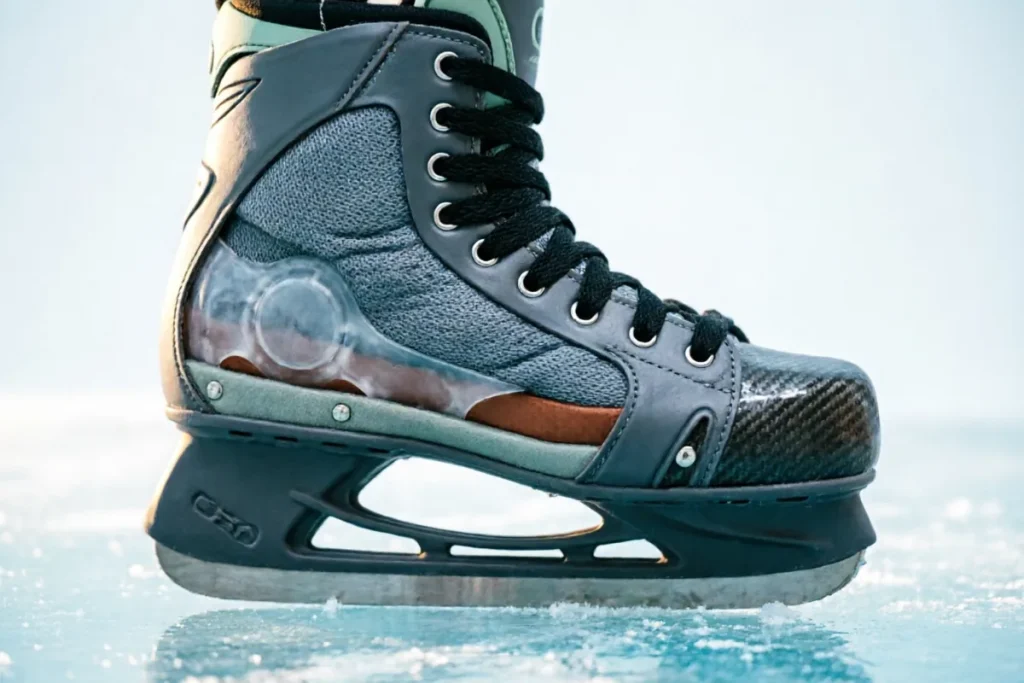
A stiffer boot can feel supportive, but too much resistance may make it harder to flex into each stride; a softer boot may not provide enough support. Hockey skate stiffness labels are not always directly comparable across brands, so use the fit and feel of the specific skate as your guide.
When choosing hockey skate boot stiffness, consider how the boot responds as you bend your knees and push off—not just its rating. Here’s what to assess before you buy.
| Skating situation | Useful stiffness direction | What to check |
|---|---|---|
| Learning balance and basic strides | Softer or more flexible | Can you bend forward without the boot folding too easily? |
| Lighter skater | Avoid excess rigidity | Can you flex the boot into your skating stance? |
| Heavier skater needing more support | Consider greater resistance | Does the ankle feel held without blocking forward flex? |
| Casual or longer sessions | Comfort-led, often soft to medium | Does the boot remain comfortable as you skate? |
| Hard, frequent skating and direction changes | More support may suit you | Can you still move naturally and maintain a controlled stance? |
How does boot stiffness relate to support and movement?
Hockey skate boot stiffness is how strongly the boot resists bending and twisting around your foot and ankle; a more rigid boot can support the ankle and send skating force more directly toward the blade, but it must still let you flex into a skating stance.
Forward flex matters alongside lateral support. You need to bend your knees and ankles while skating, so a boot that blocks this movement can restrict your stance even if it feels supportive. Stiffness is therefore not a simple “more is better” choice: consider whether the boot supports your ankle without preventing the forward bend you need.
Figure-skating examples are not a hockey scale
Risport’s figure-skating models illustrate why stiffness figures should be read in context, not treated as a hockey rating:
- Risport Comfort Electra: Support-Stiffness 45; described for refining figures and single/double jumps.
- Risport entry-level dance model: Support-Stiffness 35; intended for beginner dance and group athletes.
These are figure-skating examples, not a hockey stiffness scale. For hockey skates, assess how the boot supports your ankle and how freely you can flex forward into your skating position.
How should skill, weight and use guide your choice?
Choose hockey skate stiffness by whether you can flex the boot comfortably in your stride, then weigh that against your body weight, experience and typical session. Maximum stiffness is not a useful target on its own.
Start with control, not a label
A learning skater needs enough forward flex to bend the ankle and articulate the foot. If a rigid boot limits that movement, it can make basic skating harder rather than provide useful support.
- Learning: Choose a boot that lets your ankle bend and your foot move through the stride; do not default to the stiffest option.
- Lighter skater: A very rigid boot may take more force to flex than you can comfortably apply, leaving you unable to use its support as intended.
- Heavier skater: More resistance may feel supportive and help the boot hold its shape under your weight.
Weight is a guide, not a substitute for trying the boot. The useful test is whether you can bend into a skating stance without fighting the boot or feeling that your ankle lacks support.
Match stiffness to the session
How you skate changes the trade-off between comfort and support. A boot that feels manageable for a short, hard session may become tiring during longer recreational skating.
- Casual, longer sessions: Prioritize comfort and manageable forward flex over a highly rigid response.
- Hard skating and frequent direction changes: More support may suit your skating, provided you can still bend the boot into your stride.
When comparing boots, check that the fit holds your foot securely and that the boot’s resistance still allows a natural forward bend.
How can you test a boot before buying it?
Test a hockey skate boot by squeezing its quarter panels below the tendon guard, then lacing it on and checking whether you can flex forward without lifting your heel.
-
Compare the quarter panels. With the skate off your foot, press the boot inward just below the tendon guard. Notice how readily the sides fold. A boot that collapses with little resistance may not give you enough support; some resistance can suit a newer skater.
-
Check forward flex. Put the skate on and secure the laces as you would for skating. Bend your knees and ankles into a skating stance. The boot should let you move forward without making you fight its stiffness, while your heel stays down.
Try both skates, since comfort and movement can differ between feet. Assess the fit with the laces secured, not with the boot loosely fastened: a skate that feels acceptable unlaced may become restrictive once tightened.
If the boot feels restrictive when you flex, or unstable when you stand and move, ask the retailer for fitting advice before buying. The squeeze test is only a first check; comfort, heel hold and usable forward flex matter together.
Why isn’t the stiffest boot automatically the best choice?
A hockey skate boot is not automatically better because it is stiffer: if your strength or technique cannot flex it naturally, the boot can restrict ankle and foot movement instead of improving control.
When the boot resists your stride
A stiff boot can take longer to break in, but persistent pressure or restricted forward flex is a reason to reassess both stiffness and fit. A boot that limits your movement may make it harder to use your natural stride; more rigidity does not correct a poor fit.
- Your strength and technique: Choose a stiffness you can flex while skating, rather than treating maximum rigidity as the goal.
- Pressure and flex: If the boot creates immediate pressure or prevents a comfortable skating position, check the fit and stiffness before assuming it only needs more break-in time.
- Manufacturer values: Treat stiffness numbers as specific to each model. They are not a universal scale for comparing hockey skates.
Risport Mercurio has Support-Stiffness 65, is thermoformable, and is designed for double and triple jumps. Those are figure-skating specifications, not a recommendation for hockey: the model’s stated purpose is performing jumps, and its stiffness value cannot be directly compared with a hockey boot’s.
When comparing hockey skates, assess how the boot fits and flexes on your foot; use its manufacturer’s stiffness value only within that model’s own specifications.
Frequently asked questions
Should a beginner choose a soft hockey skate boot?
Does a heavier skater need a stiffer boot?
How do I know if my hockey skates are too stiff?
Can I compare stiffness numbers across skate brands?
Sources
- ghskates.com — “Find Your Perfect Boots”
- newtohockey.com — “How to Properly Fit Hockey Skates – Hockey Skate Fitting Guide – New To Hockey”
- Top Bauer, CCM & True Picks — “Best Hockey Skates for 2026”
- ice.riedellskates.com — “The Complete Ice Skates Buying Guide”
- modsquadhockey.com — “Stiffness of skates – Ice Hockey Equipment – ModSquadHockey”