What Do Figure Skaters Do on Practice Ice?
Figure skaters use practice ice to warm up, refine skating skills and rehearse jumps, spins, footwork and full programs. What they work on depends on their level and training goals.
A session may focus on one difficult element or connect several skills into a routine, with time to repeat and adjust each part. Practice ice is where skaters build control, consistency and confidence before performing or competing.
| Practice task | Where it happens | What it targets |
|---|---|---|
| Program run-through | On ice | Full program flow |
| Jump or spin drill | On ice | A specific element |
| Dance practice | On or off ice | Dance moves and sequences |
| Strength training | Off ice | Physical preparation |
What are competitors trying to accomplish on practice ice?
Figure skaters use practice ice to rehearse program run-throughs and repeat elements that need work, turning the session into focused preparation rather than unstructured free skating. A skater might drill a jump or spin on its own, then connect it to the steps and transitions around it in the full program.
Practice priorities differ by discipline: ice dancers work on dance moves and sequences, while pairs and singles prepare for their own program demands. Lilah Fear and Lewis Gibson of Team Great Britain took part in an ice dance training session at Milano Ice Skating Arena on February 02, 2026.
Make each session specific
A useful practice session has a clear target: checking an individual element, refining a passage, or testing how a sequence fits into a run-through. Isolating a jump or spin helps skaters focus on that element before combining it with the rest of the program; ice dancers can use the same approach with dance moves and sequences.
How does competition practice fit around an event?
Competition practice fits around an event through assigned ice sessions: skaters should get on the ice only when scheduled and check with the ice monitor before stepping on. That check helps keep the session organised and confirms that the skater is using the correct practice time.
On competition practice ice, skaters can rehearse jumps, spins and dance moves, run through their programs, and repeat difficult elements. They should give way to other skaters, particularly pairs and ice dance teams moving together, and keep their equipment ready so they can use their assigned time efficiently.
Keep event details with your equipment
Competition information belongs with the gear: keep event times and practice-ice details accessible alongside skates, guards, spare laces and music copies. The Milano Cortina 2026 Winter Olympic Games runs from February 6-22. Lilah Fear and Lewis Gibson of Team Great Britain took part in an ice dance training session at Milano Ice Skating Arena on February 02, 2026.
How do skaters share crowded practice ice?
Skaters share crowded practice ice by checking with the ice monitor before stepping onto the rink, following the assigned session arrangements and yielding to skaters with priority. These checks clarify who is permitted on the ice and help everyone move safely within the session.
Who has right of way?
During a multi-skater session, the skater whose music is playing conventionally has right of way. Pairs and ice dancers moving together also have priority over skaters practising separately, so singles skaters should watch for their paths and planned sequences.
When a partner sequence or moving program run-through is underway, give way instead of cutting across it. Keep a predictable line and change direction only when there is room; sudden crossings can interfere with a skater’s timing and make limited practice space harder for everyone to share.
What should competitors prepare besides their skating?
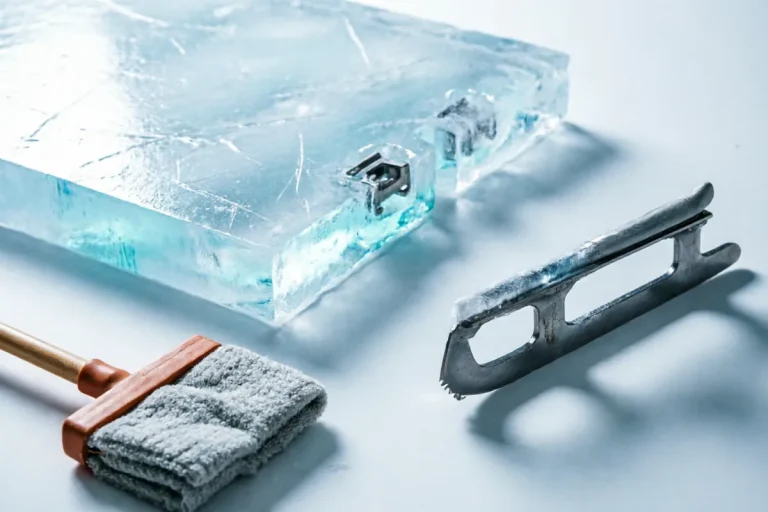
Figure skaters should prepare their skating equipment, competition clothing, music and event information before practice ice. Check that skates are ready, and pack guards, soakers and extra laces so equipment needs do not interrupt preparation.
A competition bag should also contain the costume and a backup, plus extra tights or socks and any needed hair accessories. Pack warm-up clothing and gloves as well; keep event times and practice-ice details with the competition information so they are easy to check.
Music needs a backup too: keep two copies of the skater’s music available for run-throughs. With both copies packed, a missing or unusable single copy is less likely to derail a practice run.
What can off-ice work add to a practice session?
Off-ice work adds focused strength, jump and dance practice to a figure skater’s session, reinforcing skills without taking up shared rink space. It gives skaters a place to rehearse a movement on the ground, while practice ice remains available for tasks that require skating.
Match the task to the space
The right choice depends on what the skater needs to practise. A complete program run-through requires ice; strength training can be done away from it. Jump drills and dance practice can also reinforce the corresponding elements without requiring a skater to occupy the rink.
- Jump: Use off-ice jump drills to rehearse the movement, then practise the skating element on the ice.
- Spin: Keep the skating spin on the ice, where the skater can practise it in motion.
- Dance move: Rehearse the movement off the ice, then work on its skating version during practice.
- Complete run-through: Choose the ice, because the program must be performed on skates.
A specific priority makes the session easier to plan: decide whether the focus is a jump, spin, dance move or complete run-through. That choice helps direct each task to the space where it can be practised.
When does a practice plan stop working?
A practice plan stops working when it creates a safety risk, ignores the assigned session, or spends time repeating a full program instead of addressing a specific need. During a run-through, the skater whose music is playing has right of way, and pairs or dance teams skating together also need a clear path; cutting across them can disrupt their practice and create a collision risk.
Adjust the session and check the kit
Practice ice access depends on assignment, not arrival time: getting to the rink early does not mean a skater may step onto the ice. Check with the ice monitor before entering, then choose focused drills or repeats when a particular jump, spin, or dance move needs attention; a full-program run-through is only one option.
Competition preparation also depends on the kit being ready before leaving. Check for the music copies, a backup costume and spare laces, along with the skater’s other equipment, so a missing item does not disrupt competition day.
Frequently asked questions
Can a skater step onto practice ice whenever they arrive?
Who has right of way when several skaters are practising?
Do competitors spend the whole practice session skating their program?
What should a competitor bring for music and costume backup?
Key takeaways
- Use practice ice for both full-program run-throughs and targeted jump, spin or dance drills.
- Check with the ice monitor and skate only in an assigned session.
- Respect music right of way and give priority to pairs and ice dancers moving as a unit.
- Pack two music copies, a backup costume, guards, soakers and extra laces.
Sources
- adultsskatetoo.com — “How Olympic Figure Skaters Train, On and Off the Ice”
- media.specialolympics.org — “Figure Skating Rules, Protocol & Etiquette”
- usfigureskating.org — “Compete USA – U.S. Figure Skating”
- soyouwanttowatchfs.com — “Introduction to Figure Skating Competitions”
- mirror.co.uk — “Winter Olympics figure skating rules and list of banned moves competitors must adhere to – The Mirror”