Hockey Gloves vs. Mitts: Fit, Feel and Protection
Hockey gloves protect the hands and wrists while allowing stick control; mitts are not a standard substitute for hockey gloves. Fit, feel and protection depend on the glove’s design and how it sits on your hand.
A glove that feels secure on the fingers can still restrict your grip or leave the wrist exposed. This guide compares fit, mobility and coverage so you can judge what matters when choosing hockey gloves.
| Criterion | Hockey gloves | Mitts |
|---|---|---|
| Finger movement | Separate, segmented fingers | Grouped fingers; less independent movement |
| Stick handling | Supports finger articulation | May limit precise finger control |
| Coverage | Fingers, knuckles, backhand, thumb and wrist | Coverage depends on the design |
| Try-on check | Grip a stick; flex thumb and wrist | Check grip and whether grouped fingers restrict movement |
What separates hockey gloves from mitts?
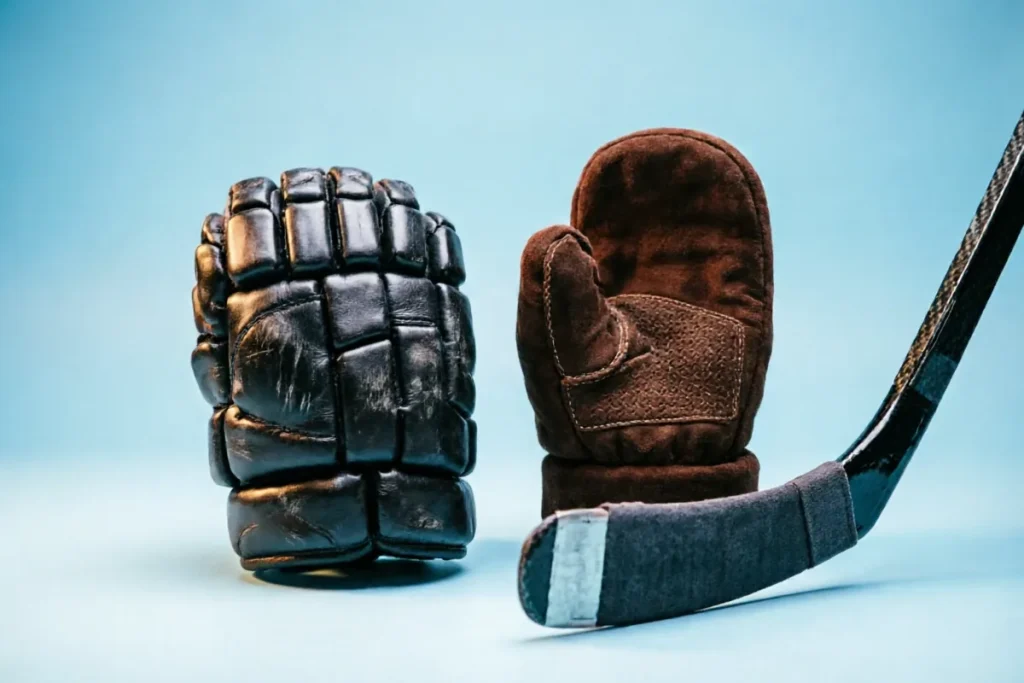
Hockey gloves have separate finger sections for independent movement, while mitt-shaped designs group the fingers together and reduce individual articulation.
Hockey gloves combine segmented fingers with backhand and knuckle protection, a protected thumb and a flexible cuff. That construction covers the hand while leaving the fingers able to work around the stick; a mitt-shaped alternative prioritizes coverage over separate finger movement, so do not assume it offers the same stick-handling control.
Sherwood’s CIP technology lets players adjust the cuff’s volume for a more personalized fit. An AX Suede palm, pro-flex thumb and stretch lycra finger gussets contribute to a game-ready feel from day one.
Choosing by feel and control
- Recreational play: Choose the shape that feels comfortable and gives you a usable grip on the stick. Try handling the stick before deciding; coverage alone does not tell you how secure the grip will feel.
- Competitive stick handling: Finger articulation matters more when you need your fingers to move separately around the stick. Compare how freely each finger bends and whether the cuff allows wrist movement.
Which option gives you more mobility and stick feel?
Separate finger panels generally give you more independent movement around the stick, while segmented flexible panels preserve movement with coverage; a thin, durable palm helps maintain stick feel, and texture supports grip.
Palm and finger movement
Hockey glove designs balance finger mobility with protection across the hand. The palm matters too: a thinner, durable surface keeps the stick easier to feel, while a textured palm supports grip.
- Separate finger panels: let each finger move independently around the stick.
- Segmented flexible panels: cover the hand while allowing it to move.
- Sherwood Rekker Legend Pro: combines an AX Suede palm, a pro-flex thumb, and stretch lycra finger gussets. Together, these features support a flexible feel at the palm, thumb, and fingers.
Cuff adjustment
Sherwood’s CIP technology lets players adjust the Sherwood Rekker Legend Pro’s cuff volume. That adjustment can help the glove sit securely without restricting wrist movement.
How do you compare protection and coverage?
Compare hockey gloves by checking how well they cover your fingers, knuckles, backhand, thumb and wrist—not by judging padding thickness alone.
- Fingers and knuckles: Check that the finger sections cover the hand and that multi-layer foams or plastic inserts protect the knuckles. Segmented panels should let your fingers bend for gripping and stickhandling.
- Backhand: Look for protective coverage across the back of the hand, not just over the knuckles. Padding should remain in place when you close your hand around the stick.
- Thumb: Dedicated thumb protection should cover the thumb while leaving it enough movement for normal stick handling. Bend and move your thumb in the glove; a rigid fit can limit control.
- Wrist: A flexible cuff helps preserve wrist mobility, but it should still cover your wrist when you hold the stick in your normal stance. Check coverage in that position rather than with your hand relaxed.
Glove construction varies by manufacturer and model, so compare the coverage and movement of the pair you are considering. Put the glove on, grip a stick, and check that the protective panels stay over the areas they are meant to cover.
What should you check when trying hockey gloves on?
When trying hockey gloves on, hold a stick, close your fingers around it, and check that the grip feels secure without pulling the palm tight. Then test finger movement, thumb clearance and wrist comfort.
Try them with a stick
A stick reveals whether the palm and finger gussets work for your grip. Keep your fingers wrapped around the shaft and check for a secure hold without tightness or bunching across the palm. Compare the palm material and gussets directly: the Rekker Legend Pro has an AX Suede palm and stretch lycra gussets, features you can assess by feel and movement.
- Grip: Hold the stick and close your fingers around it; the palm should not feel pulled tight.
- Finger movement: Move each finger while holding the stick to check that the glove does not restrict the grip.
Check the fit at the thumb and cuff
Move each finger, bend your thumb and try ordinary stick-handling movements. Thumb protection should cover the joint without getting in the way. Flex your wrist through the range you use while handling the stick; the cuff should remain comfortable and provide the coverage you want.
- Thumb: Check both protective coverage and freedom to bend.
- Cuff: Check comfort as your wrist flexes, and decide whether the coverage suits you.
When can a glove or mitt compromise your play?
A hockey glove or mitt can compromise your play when its shape or fit limits the finger and wrist movement you need to handle the stick.
A mitt-style shape may feel comfortable, but it can make independent finger movement harder. If precise stick control matters to you, check how freely each finger bends while gripping the stick, not just how the glove feels at rest.
- Finger fit: A close fit can improve control, but the glove should not restrict finger movement. Flex your fingers around the stick before choosing.
- Wrist fit: Check that the cuff allows your wrist to move through the range you use for stickhandling. A glove that binds at the wrist is not a good fit.
- Palm condition: A thin palm can preserve stick feel, but it must withstand regular use. Inspect its construction and condition rather than choosing by thinness alone.
Hockey glove construction varies by manufacturer and model. An adjustable cuff can change volume around the wrist, but it cannot establish whether the fingers, palm and overall fit work for your hand. Try the glove with your stick and check each area separately.
Frequently asked questions
Are hockey gloves better than mitts for stick handling?
What should a hockey glove palm feel like?
Why does thumb protection matter?
How should the cuff fit?
Key takeaways
- Separate finger sections favor independent movement over a mitt-style shape.
- Check fingers, knuckles, backhand, thumb and wrist coverage.
- Assess palm durability and stick feel together.
- Try the glove with a stick and test thumb movement, wrist flex and cuff fit.
Sources
- allblackhockeysticks.com — “Hockey Glove Protection: How Hockey Gloves Protect Your Hands”
- hejduksport.cz — “How to Choose Hockey Gloves”
- icewarehouse.com — “Tapered Fit Hockey Gloves – Ice Warehouse”
- hockeymonkey.com — “Best Hockey Gloves: Top Ice Hockey Glove Reviews for 2026”
- warrior.com — “HOCKEY GLOVES EXPLAINED”