Glossary of Key Terms for Youth Skating Coaches and Parents
A glossary of essential terms for youth skating coaches and parents provides clear definitions of key vocabulary related to ice hockey and figure skating, helping newcomers communicate effectively and support young athletes’ development. Understanding this specialized language enhances coaching strategies and parental guidance in the skating world.
Updated: September 28, 2026
For those involved in youth skating—whether guiding beginners on the ice or cheering from the sidelines—grasping the terminology used in training and competition is vital. Skating disciplines have their own unique jargon, covering everything from techniques and equipment to rules and scoring. This glossary serves as a practical resource to demystify those terms and foster confident involvement in the sport.
Whether you are a coach aiming to convey instructions clearly or a parent eager to follow your child’s progress, familiarizing yourself with these essential terms can improve communication and deepen your appreciation of the skating journey. This article compiles the most important words and phrases you’ll encounter in youth ice hockey and figure skating environments.
| Model | Price Range (USD) | Support Level | Recommended Age Range |
|---|---|---|---|
| Jackson Ultima Excel | $150-$220 | Medium ankle support | 6-12 years |
| Riedell 110 LS | $200-$300 | High ankle support | 8-14 years |
| Edea Overture | $280-$350 | Lightweight, moderate support | 10-16 years |
| Risport Royal Pro | $300-$400 | High performance support | 12+ years |
What are the key technical terms youth skating coaches and parents should know?
Technical Skills
Key technical terms youth skating coaches and parents should know include Axel, Edge, Spin, and Lutz, as these form the foundation of figure skating technique and competition standards. The Axel jump, first standardized in 1924 at ISU Championships, is distinct for its forward takeoff and requires 1.5 rotations for a single Axel, setting a baseline for jump progression. Understanding edges—the inside and outside curved parts of the skate blade—is critical; the US Figure Skating Basic Skills program mandates mastery of edges starting at Level 1 before advancing to jumps or spins.
Spins are rotational moves classified by body position, such as upright, sit, or camel spins, with the International Skating Union requiring a minimum of two revolutions for spins to be counted in competition scoring. The Lutz jump, named after Alois Lutz who first executed it in 1913, involves a takeoff from the back outside edge of one foot combined with a toe pick assist. Coaches and parents should recognize that adherence to these technical definitions and thresholds is essential for effective training and competition preparation.
- Axel: 1.5 rotations, standardized in 1924
- Edges: Inside and outside blade curves, taught from Level 1 in US Figure Skating Basic Skills
- Spin: Minimum two revolutions required by ISU for scoring
- Lutz: Back outside edge takeoff with toe pick, first performed in 1913
What equipment terms should parents understand for supporting young skaters?
Equipment Essentials
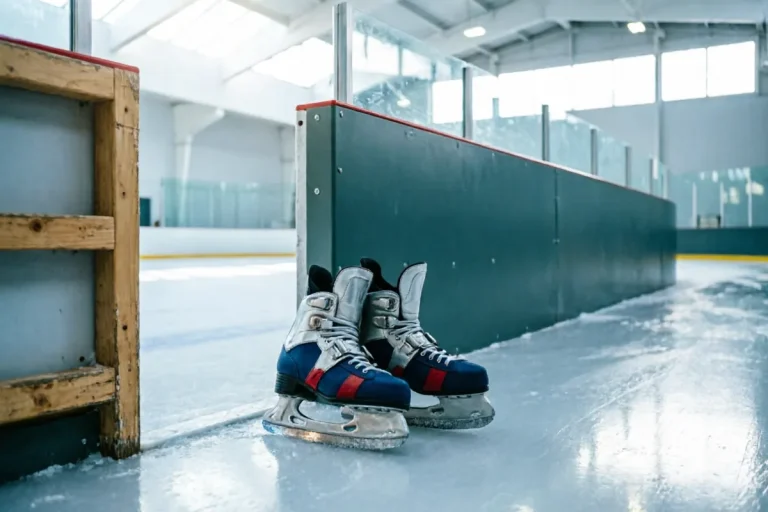
Parents supporting young skaters should understand key equipment terms including boots, blades, sharpening, and protective gear to ensure safety and performance. Youth figure skating boots, such as the Jackson Ultima Excel or Riedell 110 LS, typically range from $150 to $300 and provide essential ankle support for beginners. Proper boots fit and quality are crucial for developing skating skills and preventing injury.
Blades commonly used by novices include the MK Gold Seal model, priced around $100 to $150. These blades require professional sharpening every 15 to 20 skating hours to maintain edge control. The standard radius for blade sharpening is 7/8 inch; improper sharpening can hinder a skater’s ability to maneuver effectively. Parents should budget approximately $20 to $30 per sharpening session at local pro shops to keep blades in optimal condition. Additionally, helmets certified under ASTM F1492 are recommended for children under age 8, with typical prices between $40 and $70, helping protect young skaters from head injuries.
- Boots: Jackson Ultima Excel or Riedell 110 LS, $150–$300
- Blades: MK Gold Seal, $100–$150; professional sharpening every 15–20 hours
- Sharpening radius: 7/8 inch, $20–$30 per session
- Protective gear: ASTM F1492 certified helmets for beginners under 8, $40–$70
How do competition and testing terms impact youth skaters’ progress?
Testing
Testing programs like Moves in the Field (MITF) significantly shape youth skaters’ technical growth by setting clear skill benchmarks. For example, the MITF Level 1 requires skaters to complete 8 specific edge and step elements with a minimum passing score of 60% under the 2026 test standards. These quarterly test sessions, organized by regional US Figure Skating clubs, cost between $30 and $50 per test, providing structured progress checkpoints that motivate skaters to refine fundamental techniques essential for advancing through higher levels.
Competition
Competition categories also impact youth skaters’ development by aligning skill requirements with age and experience levels. The 2026 USFS Rulebook defines categories such as Beginner, Pre-Preliminary, Preliminary, and Juvenile—the latter being the highest nationally recognized level for skaters under 13, with specific age and skill limits. Competitions demand mastery of technical elements tailored to each category, encouraging skaters to demonstrate their abilities under pressure and gain critical performance experience. This progression system balances skill acquisition with competitive exposure, fostering steady improvement and goal-oriented training.
- MITF Level 1 Passing Score: 60% minimum on 8 elements (2026 USFS standards)
- Test Fees: $30–$50 per test session (quarterly frequency)
- Competition Categories: Beginner to Juvenile levels, per 2026 USFS Rulebook
- Juvenile Level: Highest national level for skaters under 13 (2026 USFS Rulebook)
What limitations and common mistakes should coaches and parents be aware of when working with youth skaters?
Youth skating coaches and parents must be aware that excessive training hours, improper equipment sizing, neglecting fundamental skills, and undue competition pressure can all hinder young skaters’ development and well-being. Managing these factors carefully helps prevent injuries, burnout, and mental health challenges.
Limitations
Overtraining is a critical limitation in youth skating; the American Academy of Pediatrics (2026 guidelines) recommends limiting on-ice training to no more than 12 hours per week to reduce risks of injury and burnout. Additionally, using adult-size boots before a skater’s feet are ready can cause ankle injuries. Properly fitted youth boots typically cost around $200 and should allow some toe wiggle to avoid restricting foot movement or causing blisters.
Common Mistakes
Skipping fundamental skills such as mastering edges and stroking before attempting jumps is a frequent error that delays progress and increases injury risk. Coaches emphasize building these basics first to ensure safe and effective skill advancement. Furthermore, placing excessive focus on competition scores can negatively impact a young skater’s mental health. The US Figure Skating SafeSport program advises maintaining a balanced approach that includes scheduled rest periods to support both physical and psychological well-being.
- Training limit: 12 hours on ice per week (American Academy of Pediatrics, 2026)
- Youth boot cost: approximately $200, with proper toe wiggle fit
- Focus on edges and stroking before jumps to reduce injury risk
- Balanced training and rest advised by US Figure Skating SafeSport program
How can parents and coaches effectively communicate using skating terminology?
Effective Communication
Parents and coaches can communicate effectively by mastering key skating terms from the 2026 US Figure Skating (USFS) Basic Skills curriculum and the International Skating Union (ISU) judging system, enabling clear understanding of instructions, scoring, and training plans. Familiarity with moves like the ‘three-turn’, ‘Mohawk’, and ‘spiral’ allows parents to follow coaching cues precisely during practice and competition.
Understanding the language of scorekeepers and judges is equally important. The 2026 ISU judging rules define ‘GOE’ (Grade of Execution) as a score adjustment ranging from -5 to +5 points per element, reflecting performance quality, while ‘levels’ categorize technical difficulty. This knowledge helps parents interpret competition results accurately and support their skaters with informed feedback.
- Technical terms: ‘three-turn’, ‘Mohawk’, ‘spiral’ defined by 2026 USFS Basic Skills curriculum
- Judging language: GOE scale from -5 to +5 points per element under 2026 ISU rules
- Practice structure terms: ‘warm-up’ (minimum 10 minutes recommended by USFS), ‘off-ice training’, ‘cool-down’
- Injury terms: ‘overuse injury’ vs. ‘acute injury’, with pain lasting beyond 48 hours requiring immediate reporting
Frequently asked questions
What is the minimum age for participating in US Figure Skating tests?
The minimum age is generally 6 years old for Basic Skills tests, with Juvenile level competitors usually under age 13, as specified in the 2026 USFS rulebook.
How often should youth skaters get their blades sharpened?
Blades should be sharpened every 15 to 20 hours of skating to maintain proper edge control, which typically translates to roughly once per month for active skaters.
What is a safe weekly training limit for young skaters to prevent injury?
According to 2026 American Academy of Pediatrics guidelines, youth skaters should limit on-ice training to no more than 12 hours weekly to reduce risk of overuse injuries.
How can parents support their child’s mental health during competitions?
Parents should encourage balanced training and rest, focus on effort rather than just scores, and be aware of the US Figure Skating SafeSport program recommendations.
Key takeaways
- Understanding technical jumps like Axel and Lutz is crucial for youth skating progress.
- Properly fitted boots and regular blade sharpening are essential for safety and skill development.
- Awareness of testing levels and competition categories guides training goals effectively.
- Limiting weekly training hours to 12 prevents burnout and injury in young skaters.
- Clear communication using standard skating terminology improves cooperation among coaches, parents, and skaters.