Lace-Bite Pads vs. Tongue Sleeves: Which Fix Fits?
A lace-bite pad is the better fit when pressure from the laces is the problem; a tongue sleeve is for irritation or pressure caused by the tongue shifting or folding.
The numbers
Heel and lace pads in the Amazon listing
Listed price and per-pad cost for heel and lace pads
Listed price of the Bunga Ankle Sleeve (5")
Both sit between your skate and foot, but they address different contact points. Choosing the wrong fix can leave the discomfort unchanged, so notice whether the pain is beneath the laces or where the tongue meets your foot.
| Criterion | Tongue pad | Gel sleeve |
|---|---|---|
| Best match | Soreness directly under the tongue | Loose fit or broader ankle-area padding |
| Fit effect | Adds padding at a targeted spot | Can make the skate fit more tightly |
| Potential drawback | May not help if the underlying fit is wrong | May crowd a skate that already feels tight |
| Example listed price | 50-pack: $11.99 ($0.24/count) | Bunga Ankle Sleeve (5"): $19.45 |
What problem does each lace-bite accessory address?
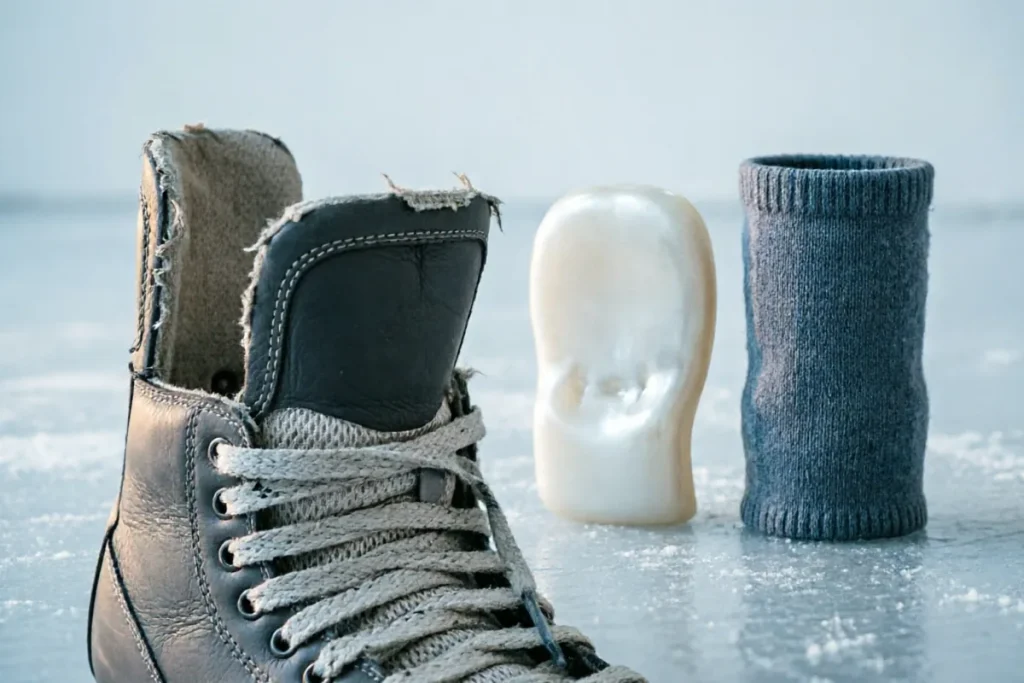
A tongue pad is the closer match when the sore spot sits directly beneath the skate tongue; a sleeve-style gel pad wraps around the ankle and adds padding between the lace area and your foot.
- Tongue pad: Choose this when pressure or rubbing is centred under the tongue. It places padding at the sore spot without wrapping around the ankle.
- Sleeve-style gel pad: Choose this when you want padding around the ankle as well as between the laces and foot. The sleeve can make the skate fit more tightly, which may help if a broken-down tongue no longer holds your foot snugly.
Check the cause, not just the sore spot
Neither accessory fixes every cause of lace bite. Poorly fitted skates can create pressure; tightly tied laces can press the skate tongue against the front of the ankle; and a broken-down tongue may no longer support the foot securely.
New skates that have not yet broken in can also contribute. If pain continues, check how the skate fits and how tightly you lace it before deciding that a different pad is the answer.
Which option fits the symptom and skate fit better?
Choose a tongue pad when pressure sits directly beneath the skate tongue and the boot otherwise holds your foot securely; choose a sleeve when the skate has loosened around your ankle and extra volume would help.
- Tongue pad: Targets pressure under the tongue without adding padding around the ankle. It suits a skate that still fits securely.
- Sleeve: Adds padding around the ankle and makes the skate fit more tightly, which can help when the boot has loosened. If the skate already feels tight, the added volume may make the fit worse.
“Lace bite” alone does not settle the choice. Both options add padding; the better fit depends on where the pressure lands and how much room the boot has.
Check the tongue before adding padding
Most hockey skates already have some lace-bite protection built into the tongue. Higher-level skates generally have tougher protection, so check the tongue’s existing padding before choosing an add-on. A sleeve may tighten a loose boot, but it cannot correct a fit that has too little room.
How do cost and fit affect the choice?
Cost favors trying a targeted pad first, while fit determines whether a broader sleeve works better under your skate. Amazon lists a 50-pack of heel and lace pads for $11.99 ($0.24/count), compared with $19.45 for the Bunga Ankle Sleeve (5″).
- Heel and lace pads: A pad protects a targeted spot, such as the area directly under the skate tongue. The 50-pack price makes this a lower-cost trial, but check how many pads you need and where they sit.
- Bunga Ankle Sleeve (5″): The listing identifies a single sleeve, so its price is not directly equivalent to a 50-pack. A sleeve covers a broader area and can make the skate fit more tightly; that may suit a skate with a broken-down tongue, but can create pressure if the fit is already snug.
Try either accessory with your skates laced as you normally wear them. Check that pressure eases over the sore spot and that the added material does not create a new pinch or make the skate uncomfortably tight.
When can padding fail, and when should you seek an assessment?
Padding may fail when a poorly fitted skate or tightly tied laces are causing the pain; extra material can make an already snug boot tighter. If changing lace tension or trying a suitable pad does not help, have a skate professional assess the fit and tongue. Ongoing or worsening pain also warrants medical advice.
- For a tender spot directly under the tongue: A small lace-bite pad can cover that area, but it will not correct a fit problem or excessive lace pressure.
- For a broken-down tongue: The tongue may no longer support the top of your foot well. A sleeve-style gel pad, including a Bunga-style sleeve, can add protection over the tendon and make the skate feel snugger; a small pad may only cover the sore spot.
A sleeve can protect the tendon, but once lace bite is established, padding alone may not resolve it. Check whether the skate still fits properly and whether the tongue holds its shape before adding material: in a boot that is already tight, a thicker layer can increase pressure rather than relieve it.
When to get help
Ask a skate professional to assess the boot’s fit and tongue if pain persists after you loosen the laces or try a suitable pad. Seek medical advice if the pain continues or gets worse.
How should you test a pad or sleeve before relying on it?
Test a tongue pad when pressure lands directly beneath the skate tongue; test a sleeve when the skate has lost snugness, especially if its tongue is breaking down.
- Tongue pad: Check whether the sore spot sits under the tongue, then see whether the pad cushions that contact without creating pressure elsewhere.
- Sleeve: Compare how securely the skate holds your foot with and without the sleeve. Sleeve padding makes the fit tighter, so it may help a skate that has become loose.
Change one thing at a time. Keep your lacing the same while testing the accessory; if you also alter lace tension, you will not know which change affected the sensation. Then assess any lacing adjustment separately.
Check the tongue and the fit
Inspect the skate tongue for compression or breakdown, and compare foot hold with the accessory in place and removed. A sleeve can add snugness, but that tighter fit is not useful if it makes the boot constricting or moves pressure to another spot.
Stop using a setup that shifts pressure or constricts the boot. If pain persists, arrange a skate-fit assessment rather than adding more padding.
Frequently asked questions
Are tongue pads or gel sleeves better for lace bite?
Will a gel sleeve make my hockey skates tighter?
Can padding fix lace bite once it hurts?
When should I get my skates assessed?
Key takeaways
- A tongue pad targets a sore spot directly beneath the skate tongue.
- A gel sleeve can tighten a skate whose tongue has broken down, but may crowd an already tight boot.
- Amazon lists a 50-pack of heel and lace pads for $11.99 ($0.24/count); the Bunga Ankle Sleeve (5") is listed for $19.45.
- Persistent pain calls for a skate-fit assessment, not simply another layer of padding.
Sources
- skatingboutique.com — “Stop Lace Bite: Gel Pads & Lacing Tricks That Work”
- skatingforums.com — “Lace bite or tongue burn? – skatingforums”
- modsquadhockey.com — “Custom skate lace bite. Superfeet the fix?”
- thehockeyshop.com — “Lace Bite in Hockey Players: Causes and Treatment”
- competeperformance.com — “Lace Bite in Hockey: What It Is, What Causes It & How to”