How to Prevent and Remove Rust on Hockey Blades
Dry hockey blades immediately after skating, then store them with a dry cloth or blade covers that let moisture escape. Remove light rust with a non-abrasive pad, and avoid skating on a corroded edge.
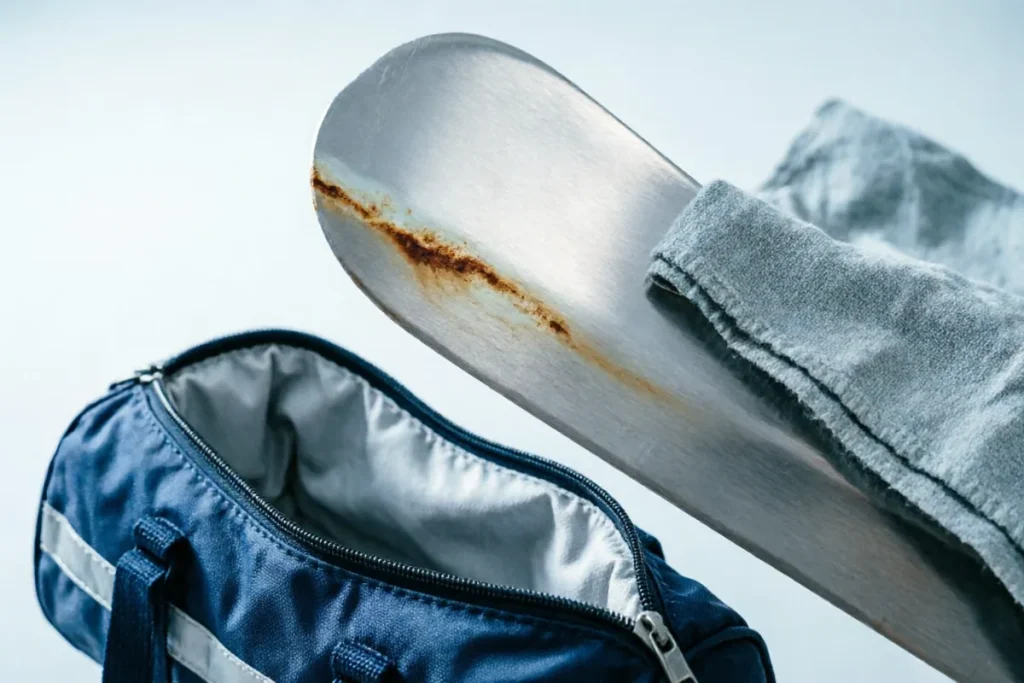
Rust forms when moisture stays on a blade, so drying matters more than treating the metal after corrosion appears. Hockey blade rust can roughen the surface and affect the edge; the right removal method depends on how much rust there is.
| Situation | Suitable protection or step | What to avoid |
|---|---|---|
| Walking | Hard guards | Leaving guards on instead of drying the blades |
| Transport | Clean, dry soakers | Packing wet skates into a closed bag |
| At home | Ventilated drying, away from direct heat | Leaving covers on or ignoring condensation |
| Flaky rust | Careful Scotch-Brite treatment | Scrubbing the blade edges |
What does rust on a hockey skate blade mean?
Rust on a hockey skate blade means moisture has begun corroding the steel, but a light discoloration is not the same as flaky rust. Inspect the blade closely before choosing a cleaning method: the surface condition matters.
Before and after skating, check the steel for moisture, visible rust, scratches and other signs of corrosion. Dry the blade after skating, and look again before putting on its covers; trapped moisture can leave the steel damp.
How to judge the blade surface
- Light discoloration: A small change in colour without loose, flaky material is different from rust that is lifting away from the steel. Check the surface rather than treating every mark as the same problem.
- Flaky rust: Scotch-Brite removal advice applies to rust that flakes from the blade. Scrub the loose rust carefully; do not assume this will correct damage to the edge.
- Scratches or questionable edges: If corrosion appears to have affected the edge, or you are unsure whether the blade is safe, have a technician inspect it before skating.
A close inspection helps you distinguish a surface mark from corrosion that needs more attention. If the edge looks damaged, leave further skating until a technician has checked it.
How do you dry skates before packing them?
Dry hockey skates before packing by removing the hard guards and wiping moisture from the blades, then letting the boots, blades and covers air-dry away from direct heat.
Skate Swipe warns against putting wet skates into a closed skate bag immediately after skating. Remove the hard guards first: they are for walking, not for storing blades while they are damp. Wipe the steel dry, including the area where moisture can sit against the blade.
Pack for transport, then dry again at home
- For transport: Fit clean, dry soakers over the blades. Do not use damp covers that keep moisture against the steel.
- At home: Remove the covers and check for condensation on the blades and inside the covers. Leave the boots, blades and covers in a ventilated place to dry, away from direct heat.
Keep the skate bag open while the equipment dries rather than sealing damp boots or covers inside it. Before putting the skates away, check that the blades are dry and that the covers have aired out; if condensation remains, leave the equipment uncovered longer.
How can you remove flaky rust without dulling the edges?
Remove flaky rust from a hockey blade with a Scotch-Brite pad, using light strokes and keeping the pad away from the blade edges. If rust remains, the edge looks damaged or you are unsure the blade is safe to skate on, stop and ask a technician to inspect it.
Choose a method for the surface you see.
- Flaky rust: Scrub the affected area with a Scotch-Brite pad, taking care not to scrape or round the edges.
- Rust that needs a lubricant: Work petroleum jelly over the rust with a Scotch-Brite scouring pad, then check the blade surface and edges.
- Another option: Apply WD-40® and use fine-grit sandpaper in gentle circular motions. Keep the pressure light and avoid the edges.
These are separate approaches, not steps to combine. Start with the method suited to the rust you can see, and use a light touch; the aim is to remove surface rust without changing the blade’s edge.
Know when to stop.
A Scotch-Brite pad, petroleum jelly or WD-40® cannot establish whether a blade is safe to skate on. If rust remains after treatment, the edge appears damaged, or you are uncertain about the blade’s condition, do not skate on it until a technician has inspected it.
When do skate covers help—and when do they fail?
Skate covers help when you choose them for the job: hard guards protect hockey blades while you walk, and clean, dry soakers protect them during transport.
Hard guards should come off as soon as you stop walking. Wipe the exposed steel dry before storing it; leaving guards on can trap moisture against the blades.
- Hard guards: Use for walking, then remove them so you can dry the blades.
- Soakers: Use clean, dry soakers for transport. Do not put wet blades into a cover or closed bag, where moisture can stay against the steel.
- VCI covers: Zerust says its hockey skate blade covers need a high-quality vapor corrosion inhibitor (VCI). The blades still need to be cleaned and dried.
A cover is not a substitute for drying. After skating, check both the blades and their covers for moisture or condensation; remove the covers and let them dry with ventilation, away from direct heat.
Frequently asked questions
Can I use a Scotch-Brite pad on rusty hockey blades?
Should I leave hard guards on after skating?
Can I pack skates while they are still wet?
When should I stop trying to remove rust myself?
Sources
- The Skater’s Companion — “Deep rust: cause and cure”
- goldenskate.com — “Help…Rusty Blades”
- skatepro.com — “Ice Skate Maintenance: 7 Simple Steps”
- skatingforums.com — “Rust removal from blades – experiments – skatingforums”
- wd40.co.uk — “How to Care for Your Ice Skates”