Hockey Gloves vs. Elbow Pads: Where Protection Meets
Hockey gloves protect your hands, wrists and lower forearms; elbow pads cover the elbow and the arm above and below it. They overlap near the wrist, but each guards a different area.
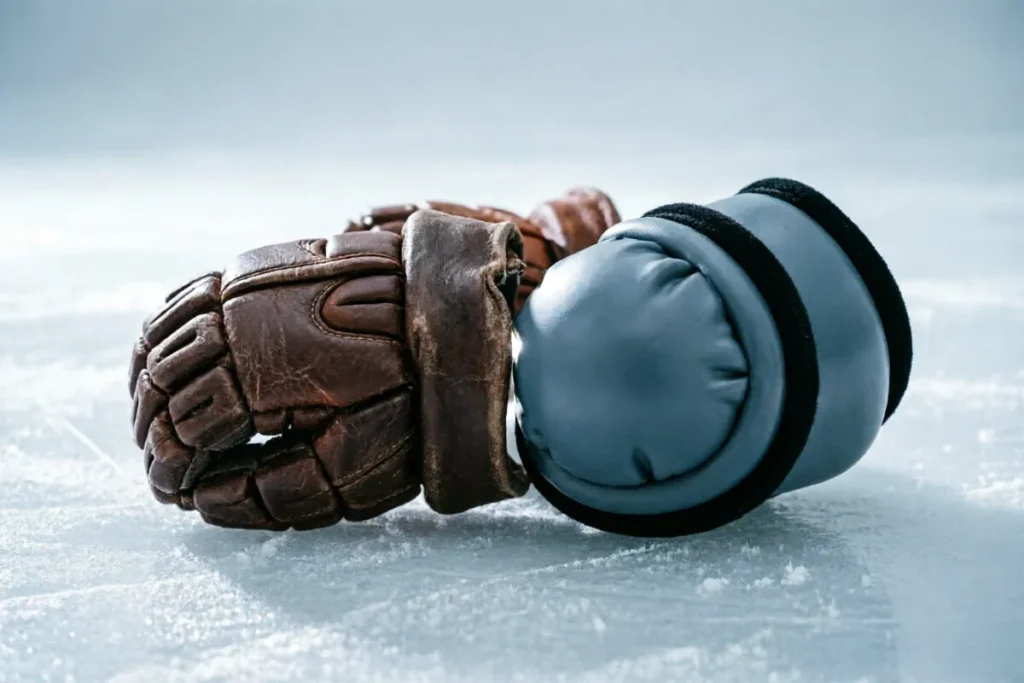
Choosing between hockey gloves and elbow pads is not a choice between substitutes: players wear both because protection must extend across the joint. A glove cuff that rides up or a pad that shifts can leave a gap, so fit and overlap matter as much as the gear’s coverage.
| Gear | Main coverage | Fit check |
|---|---|---|
| Hockey gloves | Hands and fingers | Snug fit; fingers and wrist move freely |
| Elbow pads | Elbow joint and upper forearm | Elbow sits in cap; pad stays put when bending |
| Glove cuff–elbow pad junction | Connection across the lower forearm | Cuff meets pad without a gap |
| Elbow pad–shoulder pad junction | Upper edge of the elbow pad | Elbow pad tucks underneath without a gap |
What does each piece of hockey gear protect?
Hockey gloves protect the hands and fingers, while elbow pads cover the elbow joint and upper forearm; the two pieces meet along the forearm but do not replace each other’s coverage.
- Hockey gloves: The glove covers the hand and fingers. It should fit securely while still allowing your fingers and wrist to move freely; a fit that restricts either can interfere with stick handling.
- Elbow pads: The elbow joint should sit inside the pad’s cap, with the pad extending over the upper forearm. A cap that sits off the elbow can leave the joint exposed when you bend your arm.
The glove cuff and the wrist-side edge of the elbow pad meet near the forearm. Check that the pieces sit together when your arm is relaxed and bent: a gap leaves skin or clothing uncovered, while overlap does not make either piece a substitute for the other.
Check the shoulder-pad connection
Shoulder pads sit above the elbow pads. The upper end of each elbow pad should tuck underneath the shoulder pad, with no gap between them as you move your arms. The elbow pad’s position should still keep the elbow seated in its cap.
How should gloves and elbow pads meet?
The elbow pad should meet the hockey glove cuff without exposing the forearm, while staying centred on the elbow when you bend your arm. Put on shoulder pads first and elbow pads next; the Dayton Hockey Association’s dressing sequence puts elbow pads on last, just before the jersey.
Check the overlap while moving.
- Elbow cap: Place the elbow joint inside the cap, then bend your arm. The elbow should remain seated, and the pad should not slide down or twist.
- Glove cuff: Extend the elbow pad to the glove cuff; the glove cuff should reach the bottom of the elbow pad. Check the join with your arm bent as well as straight.
- Shoulder-pad edge: The elbow pad should tuck under the shoulder pad without leaving a gap. Raise both arms overhead to confirm that the overlap does not restrict movement.
Fit the gloves and elbow pads as a connected pair: a gap at either end can leave the arm uncovered, while excess overlap can interfere with movement. If the pad shifts when you bend your arm, adjust its straps and check the fit again before putting on the jersey.
How do you choose a fit that protects without restricting movement?
Choose hockey gloves and elbow pads that stay in place while leaving your fingers, wrists and elbow free to move; check the fit together, not as separate pieces.
- Hockey gloves: A snug fit should let you flex every finger and move your wrist through its full range. Reject gloves that leave your hand loose or pinch your fingers. Leave a small space between your fingertips and the glove’s end; the glove should not press against them.
- Elbow pads: Place the elbow joint in the pad’s cap, then bend your arm. The pad should stay in position and cover the upper forearm.
Check the overlap while wearing the pieces together. The glove cuff should meet the bottom of the elbow pad, with no exposed gap between them. The elbow pad should also tuck under the shoulder pad rather than leaving a gap at the upper arm.
Make these checks in your skating stance as well as with your arm relaxed: a pad that shifts when you bend, or a cuff that pulls away from it, needs a different fit or adjustment.
What can a named elbow-pad design tell you about mobility?
The CCM Jetspeed FT8 Pro’s design tells you how its makers intend it to balance movement, impact management and airflow; it cannot tell you whether the pad will fit your arm.
The CCM Jetspeed FT8 Pro elbow pad has a 3-piece Flexmotion construction and a molded JDP elbow cap. Flexmotion is intended to let the pad move naturally with your arm, while the cap is described as helping disperse impact away from the joint. These are design aims, not a guarantee of protection or mobility for every player.
CCM’s AER-TEC thermoregulation system is designed to promote airflow and breathability. That feature describes the pad’s ventilation approach; it does not establish how cool or comfortable it will feel during your shift.
Check the fit with your other gear
Try the FT8 Pro on with your gloves and shoulder pads. Keep your elbow seated in the cap, check that the pad stays in place when you bend your arm, and make sure it tucks under the shoulder pad without a gap. The glove cuff should meet the bottom of the elbow pad; adjust the fit if the pieces leave exposed skin.
When can a low-profile elbow cap be a trade-off?
A low-profile, deep-fitting elbow cap can be a trade-off when its slimmer shape feels comfortable but the fit still needs to keep the joint covered as you move. Defense Cloud Tech (DCT) foam is described as helping absorb impacts while maintaining a comfortable fit; the foam name alone does not establish whether a pad will suit every player.
Do not choose by bulk alone
Elbow-pad fit depends on where the joint sits and whether the pad stays in place. Check it with your arm bent, not only while standing straight: a cap that appears substantial can still leave the elbow exposed if the pad shifts.
- Cap fit: Your elbow should sit inside the cap, rather than above or below it.
- Stability: Bend your arm and check that the pad stays put instead of sliding or twisting.
- Coverage: Check that the elbow pad meets the shoulder pad and the glove cuff without gaps.
- Movement: Make sure the pad does not restrict your arm as you bend it.
No named cap design makes one elbow pad best for every player. Compare the fit, the overlap with your gloves and shoulder pads, and your freedom of movement; then recheck the coverage with your arm bent.
Frequently asked questions
Should elbow pads touch hockey gloves?
How can I tell if an elbow pad fits?
Should hockey gloves feel tight?
Do more protective-looking pads always fit better?
Key takeaways
- Gloves cover hands and fingers; elbow pads cover the elbow joint and upper forearm.
- Fit the glove cuff to the elbow-pad edge and tuck the pad under the shoulder pad.
- Bend your arm and raise it overhead to check that protection stays in place without restricting movement.
- The CCM Jetspeed FT8 Pro includes 3-piece Flexmotion construction and an AER-TEC system, but product features do not replace a fit check.
Sources
- wolfehockey.com — “Youth Hockey Gear: The Ultimate Guide for Young Players”
- sports.dhgate.com — “Hockey Elbow Pads: Find the Right Category, Cap Style, and Price for How You Play”
- chickswithstickshockey.com — “Chicks with Sticks Hockey Minnesota – Hockey Gear 101”
- WHOAH — “Getting Started”
- Dayton Hockey Association — “How to dress my hockey player”