Hockey Stick Lie vs. Blade Curve: What Matters More?
Blade curve matters more for puck handling and shot release; lie matters most for how the blade sits on the ice. Your position and posture determine which one affects you more.
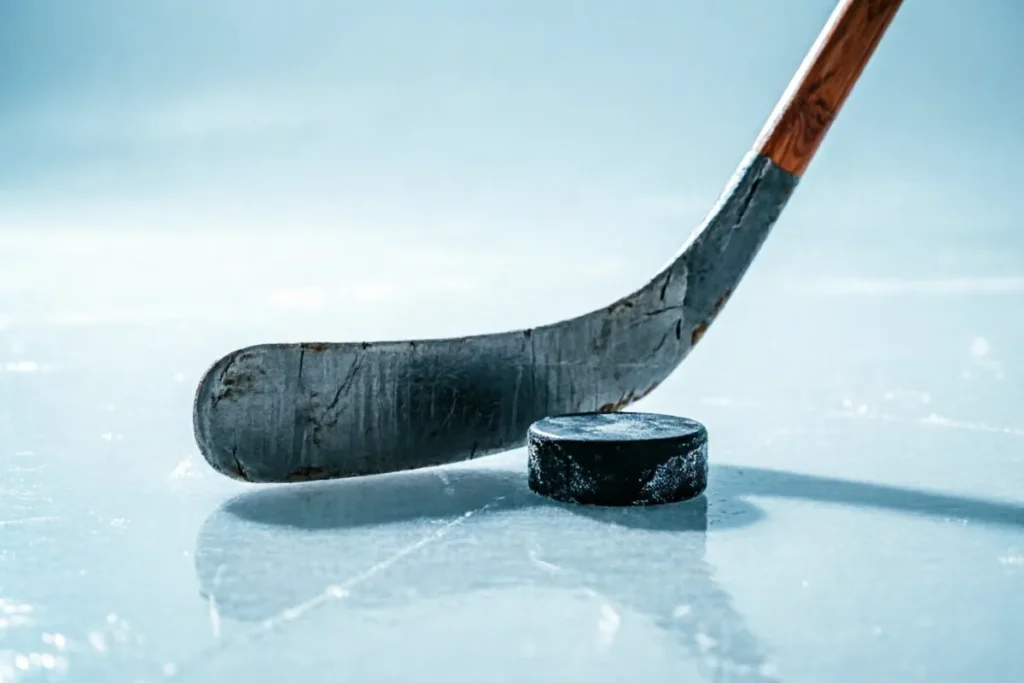
The curve shapes how the puck leaves the blade, while lie changes contact across its length as you skate and handle the puck. A stick that feels right for shooting can still sit poorly on the ice if its lie does not match your stance.
To compare hockey stick lie vs. blade curve, start with what you want to improve, then check how the blade meets the ice in your normal skating posture.
| Choice | Main effect | Practical cue |
|---|---|---|
| Higher lie | More upright shaft angle when the blade rests flat | Consider if you skate more upright |
| Lower lie | Blade-to-ice fit for a lower stance | Consider if you skate closer to the ice |
| Closed curve | Keeps the puck squarer to the blade through a shot | Expect more follow-through to lift the puck |
| Toe curve | Supports quick releases in tight spaces | Often suits forwards and goal scorers |
| More open pattern | Can change puck trajectory | Allow time to adjust after a closed pattern |
Why does choosing a curve before checking lie cause trouble?
Choosing a blade curve before checking lie can mislead you because the wrong lie may keep the blade from sitting flat in your normal puck-handling stance, changing where the puck meets it.
Lie is the angle between the shaft and blade, and it determines how the blade sits on the ice. A higher lie generally suits a more upright skating posture; a lower lie suits a lower stance. Test the stick in your usual position and check that the blade sits flat before judging its curve.
Check fit before comparing curves
- Higher lie: generally suits a more upright stance.
- Lower lie: generally suits a lower stance.
- Blade contact: in your normal puck-handling position, the blade should sit flat on the ice.
A mid-toe Bauer P92 / CCM P29 is widely regarded as one of the most commonly used curves at the professional level, but there is no official NHL-wide curve usage report. That makes popularity a poor substitute for checking how the stick fits your stance: first confirm flat blade contact, then assess whether the curve suits your handling.
How does blade curve change passing and shooting?
A blade curve changes how the puck sits against the stick, shaping stickhandling and passing control as well as the puck’s path off the blade.
A more open face can send the puck on a different trajectory than a relatively closed pattern. If you switch from a closed curve to a more open one, the same hand movement may produce a different release, so give yourself time to adjust your touch on passes and shots.
What the curve changes on a shot
- Closed curve: The puck stays squarer to the blade through the shooting motion, which can make a controlled, accurate release feel natural. Getting the puck high may require more follow-through.
- Open face: The blade angle changes the puck’s trajectory, so familiar movements can produce a different launch.
Blade curve can also help create spin on shots and passes. Spin alone does not determine accuracy or control: the result still depends on your mechanics, including how you move the blade through contact. Test a pattern in stickhandling, passing and shooting before deciding whether its release suits you.
Why can one curve feel natural for one job and awkward for another?
A blade curve feels natural when it matches the shots, passes and receptions you make; a pattern that suits one role can feel awkward for another.
Toe curves are popular with forwards and goal scorers who shoot in tight spaces and rely on quick releases. The curve can help with quick puck handling and shooting, but its reputation is not a substitute for trying it with the plays you actually make.
- Toe curve: Consider it if your game involves close-range chances and quick-release shots.
- Mid-curve: Bauer P88 / CCM P40 and Bauer P92 / CCM P29 are common starting points for beginners, but neither is a universal fit.
- Pattern reputation: A mid-toe Bauer P92 / CCM P29 is widely regarded as one of the most commonly used curves at the professional level; there is no official NHL-wide curve usage report.
Choose by testing how the blade handles your passes, receptions and shots—not by assuming that a popular pattern will suit your hands. If the puck leaves the blade on a different trajectory than you expect, give yourself time to adjust or try another curve.
Why can the same curve have different names?
The same hockey blade curve can have different names because manufacturers use their own pattern codes; compare the blade’s shape and specifications, not just its label.
The Warrior W03 and TRUE TC2 are equivalent patterns to the curve discussed here, which is widely considered the most popular pattern in North America and Europe for its balance of puck control, quick release and easy puck elevation.
MonkeySports lists P28 across four brands. Its chart describes the curve as mid-toe, with a big face, open lie and round toe:
- Bauer: P28
- CCM: P28
- Warrior: W28
- TRUE: T28
These codes are useful starting points, not a guarantee that every brand’s blade will feel identical. Before buying a replacement stick, check the manufacturer’s current pattern chart and compare the curve, face angle, lie and toe shape with your existing blade.
When should you stop trying to adapt to a curve?
Stop trying to adapt when a curve repeatedly makes passing, receiving or shooting mechanics feel unnatural. A blade curve changes how the puck meets the stick, so a pattern that feels wrong across familiar drills may be a poor fit rather than a flaw in your technique.
Before changing curves, check whether the blade sits flat on the ice in your usual stance. Lie and curve affect different parts of puck contact: lie describes the angle between the shaft and blade and influences how the blade rests on the ice, while the curve shapes the puck’s contact with the blade.
Check the change in puck response
- Blade contact: If the blade does not sit flat, compare lie as well as curve; a curve change alone may not address the problem.
- Shot trajectory: Moving from a closed blade to a highly open pattern can change the puck’s path even when your hand movement stays the same.
- Repeated mishits: Test the stick in familiar passing, receiving and shooting drills. If the same problem persists, compare another curve or lie instead of forcing the adjustment.
Frequently asked questions
Should I choose lie or curve first?
Is a higher lie better for an upright skater?
Which curve is a sensible starting point for a beginner?
Does an open curve automatically improve puck control?
How can I tell that a curve is wrong for me?
Sources
- allblackhockeysticks.com — “How Does Your Hockey Stick Blade Pattern Affect Puck Control?”
- hockeymonkey.com — “Hockey Stick Blade Curve & Pattern Chart: Which Lie is Right for You?”
- allblackhockeysticks.com — “How Hockey Stick Blade Shapes Affect Puck Control”
- sportsexcellence.com — “Hockey Stick Curves Explained: A Full Guide”
- discover.sportsengineplay.com — “How to Size a Hockey Stick”