What Size Skis Do I Need? Length by Height and Skill
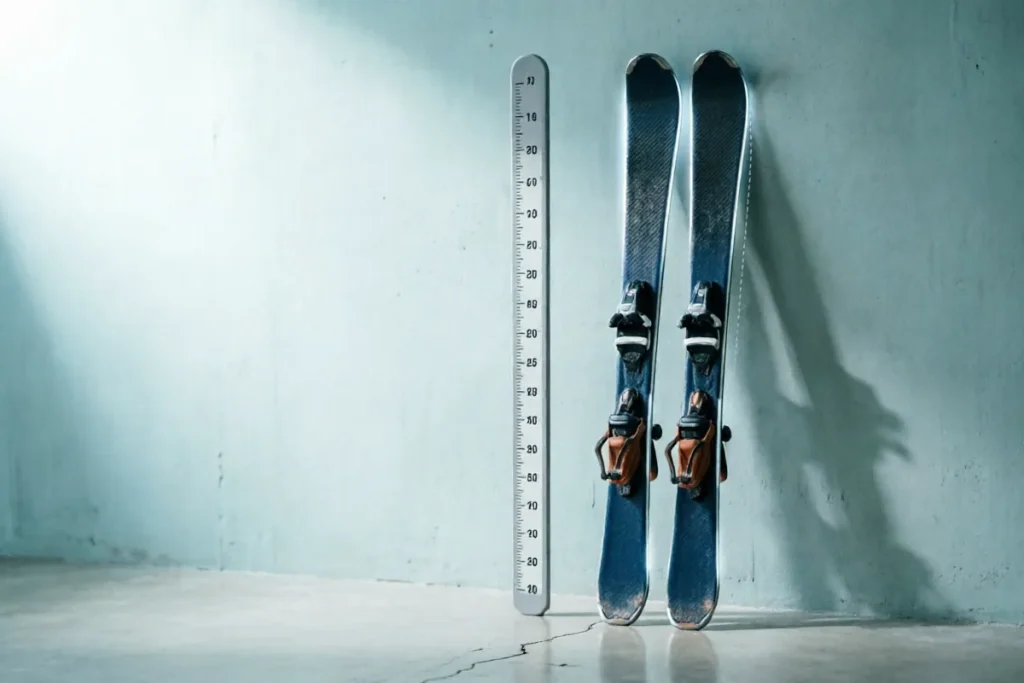
The right ski length depends on your height, ability and where you plan to ski. As a starting point, beginners often choose skis that reach somewhere between the chin and nose, while more experienced skiers may prefer a length closer to their height or longer; these are guidelines, not a substitute for the ski’s design and intended use.
Updated: October 13, 2026
For a useful first estimate, compare your height with a length chart, then adjust for skill: shorter skis are generally easier to turn and control, while longer skis can feel more stable at speed. This guide to ski length by height and skill explains how to use those starting points and what else to consider before choosing.
| Skier or ability | Ski type or context | Length guidance |
|---|---|---|
| 170 cm, 70 kg, intermediate | Example calculator result | 160–165 cm |
| 183 cm (6 ft) skier | Broad example range | 170–190 cm |
| Beginner | Carving skis | About 15 cm shorter than height |
| Advanced skier | Carving skis | 5–10 cm shorter than height |
| Beginner or park skier | General guide | Shorter end of chin-to-head range |
What ski length should I start with?
Use the range as a first filter
A practical starting point is to stand the skis upright and choose a length that reaches somewhere between your chin and the top of your head. This is a first filter, not a final prescription: shorter skis may suit beginners, while more advanced skiers may prefer a longer length.
- 170 cm skier, intermediate ability, 70 kg: one supplied calculator gives a starting range of 160–165 cm.
- 183 cm skier (6 ft): a supplied chart example recommends a broader range of 170–190 cm.
- Ability: beginner and advanced skiers may start at different points within the height-based range.
- Weight and skiing style: both can shift the choice, so height alone is not enough.
- Ski design: width, rocker profile and turn radius also affect which length is appropriate.
The 160–165 cm and 170–190 cm examples show why a height chart should not be treated as a universal formula. Use the chin-to-head guide to narrow the options, then compare the candidate skis with your ability, weight, intended style and the design of the ski.
How should ability change ski length?
Ski ability should move you toward the shorter or longer end of the chin-to-top-of-head range: beginners generally benefit from shorter skis, while advanced skiers may choose more length for stability at speed. The shorter end is also a common choice for park skiing, where easier handling matters.
- Beginner carving skis: INTERSPORT Rent recommends a length about 15 cm below the skier’s height. A shorter ski is typically easier to manage while learning.
- Advanced carving skis: INTERSPORT Rent suggests skis 5–10 cm below the skier’s height. Experienced skiers can also go longer than the basic chin-to-head guide, especially when seeking more stability at speed.
- Park skis: A shorter option is generally suggested, rather than moving toward the top of the chin-to-head range.
These figures are starting points, not a rule that overrides conditions or ski design. For example, a 170 cm intermediate skier weighing 70 kg has a 160–165 cm recommendation; ability is only one factor, alongside weight, ski width, rocker profile, turn radius and terrain.
How do height and weight affect the choice?
Height and weight help narrow ski length, but neither determines one exact size: use height to set the initial range, then account for ability and how the ski will be used. A 170 cm, 70 kg intermediate skier has a 160–165 cm recommendation, while a separate guide uses the chin and the top of the head as height landmarks rather than prescribing one universal length.
- Height: The chin-to-head range is a starting point, not a fixed measurement. A cited example gives a 183 cm skier a much broader 170–190 cm range, showing why height alone cannot identify a single correct length.
- Weight: Heavier skiers may benefit from longer skis for stability; there is no reliable formula for an adjustment from kilograms alone.
- Ability: The 170 cm skier’s 160–165 cm recommendation is for an intermediate; the general guidance favors shorter skis for beginners and longer ones for more advanced skiers.
How do ski design and terrain refine the length?
Check the ski, not just the number.
Ski design and terrain can shift the right choice within your initial length range: compare width, rocker profile and turn radius with where and how you plan to ski before choosing between two lengths. The chin-to-head check is only a starting point; it does not account for those design features, so two skis with the same measured length may suit different uses.
- Width: compare the ski’s width with the terrain you intend to ski; width is one of the listed factors that can alter the length choice.
- Rocker profile and turn radius: check both on the specific ski, since neither is captured by measuring its length against your height.
- Terrain and intended use: decide where you will ski and what the ski is designed for before picking the shorter or longer option in your range.
Keep carving-ski guidance in scope.
The INTERSPORT Rent recommendation applies specifically to carving skis, not every ski type: it suggests beginners choose about 15 cm below their height and advanced skiers 5–10 cm below. Treat those offsets as carving-ski guidance, then compare the intended use and design of the actual ski with the terrain you expect to ski; do not use the figures as a universal rule.
When can a ski-length rule mislead you?
A ski-length rule can mislead you when it treats height as the only factor: the chin-to-head range is a starting guide, not an exact formula. Skiis & Biikes explicitly says there is no exact formula, while the suitable length also depends on weight, ability and intended use.
The 160–165 cm range is an example for a 170 cm, 70 kg intermediate skier, not a recommendation for everyone who is 170 cm tall. A skier of the same height but different weight or ability may need a different length; the example cannot settle the choice on height alone.
Design and terrain change the comparison
INTERSPORT Rent’s length offsets apply to carving skis: its guide describes beginners choosing skis about 15 cm shorter than their height and advanced skiers choosing skis 5–10 cm shorter. Those figures should not be transferred automatically to park skis or other designs. Compare the ski’s width, rocker and turn radius, and consider the terrain and intended use: each affects what a height-based rule can tell you.
How can you make a final choice between two lengths?
Choose between two ski lengths by comparing both with the chin-to-head guide, then favour the option that better matches your ability and intended use. A 170 cm, 70 kg intermediate skier has a supplied example range of 160–165 cm, but that range does not guarantee that either length suits every ski model.
- For a 170 cm intermediate skier: Treat 160–165 cm as a starting range, then consider weight and how confidently you ski; a heavier skier may benefit from more length for stability.
- For a 183 cm skier: The supplied broad example is 170–190 cm. Narrow it by ability, weight and terrain rather than selecting a length from height alone.
Check the ski’s intended use before deciding: a carving ski and a park-oriented ski are not interchangeable just because they share a length. Carving-ski guidance varies with ability and use, while shorter skis are commonly suited to park skiing; compare the model’s purpose with the terrain you plan to ski. If both candidates fit the height guide, choose the one whose length and design better match your ability and where you will use it.
The short version
- Use the chin-to-head range as a starting point, not an exact formula.
- A 170 cm, 70 kg intermediate skier has a supplied example range of 160–165 cm.
- The 183 cm skier example spans 170–190 cm, showing that height alone does not settle the choice.
- For carving skis, the supplied INTERSPORT Rent guide suggests 15 cm below height for beginners and 5–10 cm below height for advanced skiers.
- Width, rocker, turn radius and terrain can change which length is suitable.
Common questions
Should ski tips reach my chin or the top of my head?
The supplied general guide places ski tips between your chin and the top of your head. Beginners are generally directed toward the shorter, chin-level end.
What length skis suit a 170 cm intermediate skier who weighs 70 kg?
The supplied calculator example recommends 160–165 cm for that specific combination of height, ability and weight.
What ski length is suggested for a 183 cm skier?
The supplied example gives a broad 170–190 cm range for a 183 cm (6 ft) skier; ability and ski design still matter.
Should beginners choose shorter skis?
Generally, yes: beginners are directed toward the shorter end of the chin-to-head range. For carving skis specifically, INTERSPORT Rent suggests about 15 cm shorter than the skier’s height.
Do heavier skiers need longer skis?
Heavier skiers may need longer skis for stability.
Sources
- dincalculator.com — “Ski Length Calculator: Find the Right Ski Size”
- evo — “Ski Size Chart & Calculator – How to Choose Skis”
- Skiis & Biikes — “Ski Size Chart: How To Choose Ski Length”
- INTERSPORT Rent — “The correct ski length: Your ski size guide”
- nordica.com — “how to choose the right ski length”