Youth Hockey Equipment: A Parent’s Starter Guide
A youth hockey starter kit should cover fit, protection and comfort before brand or price: choose properly sized, certified protective gear and skates that let your child move safely.
The numbers
Typical lower flex rating for youth sticks
Academic year in which NCAA players are encouraged to wear protection for the neck, wrist and ankle areas
NCAA rule-book range for rink-board height above the ice surface
Start with the equipment required by your child’s league, then check each item in person—especially the helmet, shoulder and shin pads, gloves and skates. Gear that is too large can shift; gear that is too small can restrict movement or leave gaps.
This parent’s guide to youth hockey equipment explains what to buy first, how to assess fit and which details to confirm with the league before your child takes the ice.
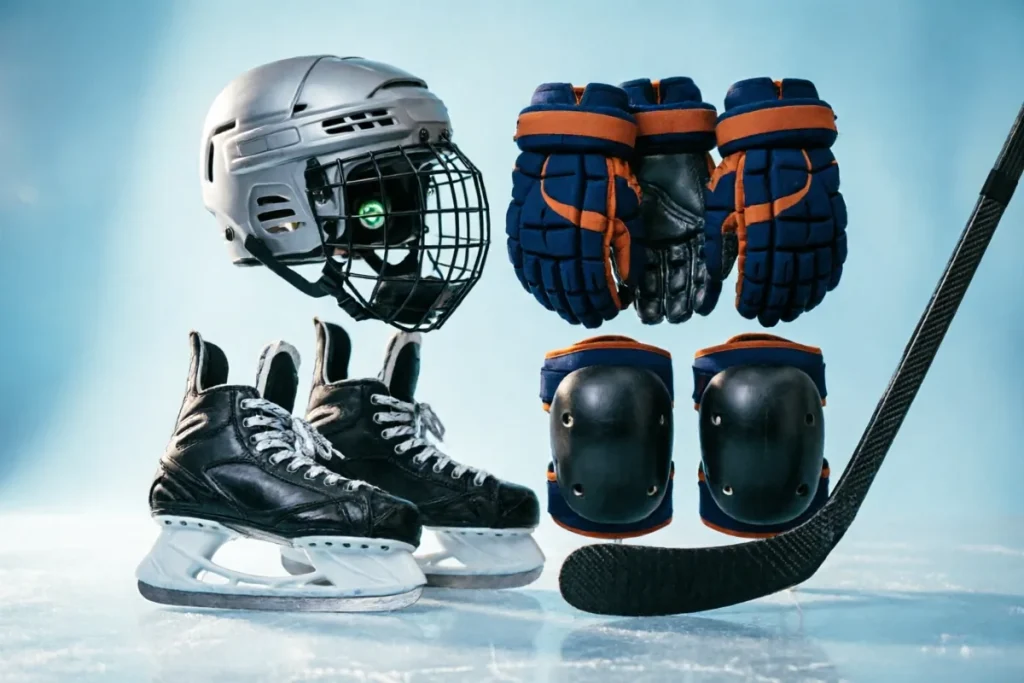
| Equipment | Role | Buying check |
|---|---|---|
| Helmet with full-face cage | Head and face protection | Hockey-specific, snug fit; check HECC or CSA certification and league rules |
| Shoulder and elbow pads | Upper-body and arm protection | Check coverage and movement with the jersey |
| Shin guards and hockey socks | Lower-leg protection and coverage | Try together to check fit and coverage |
| Gloves | Hand protection and stick grip | Check grip and wrist coverage |
| Stick | Puck control and shooting | Consider lightweight composite, youth flex 20–40 and a suitable blade |
| Jock or jill, hockey pants and neck guard | Additional protective coverage | Confirm league requirements before purchase |
What youth hockey equipment does a beginner need?
For youth league hockey, a beginner needs a helmet with a full-face cage, skates, shoulder and elbow pads, gloves, shin guards, hockey pants and socks, a jock or jill, a neck guard and a mouthguard.
League essentials
Protective equipment is the core purchase; skates and a stick alone do not make a full league setup. Before buying, check the league’s equipment list, especially its rules for neck guards and face cages.
- Head and face: a hockey helmet fitted with a full-face cage.
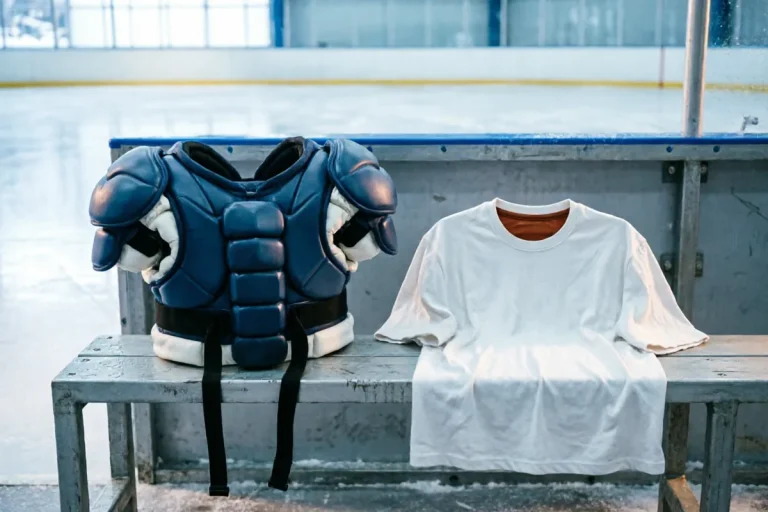
- Body and limbs: shoulder pads, elbow pads, gloves, shin guards and hockey pants, worn with hockey socks.
- Protection: a jock or jill, neck guard and mouthguard.
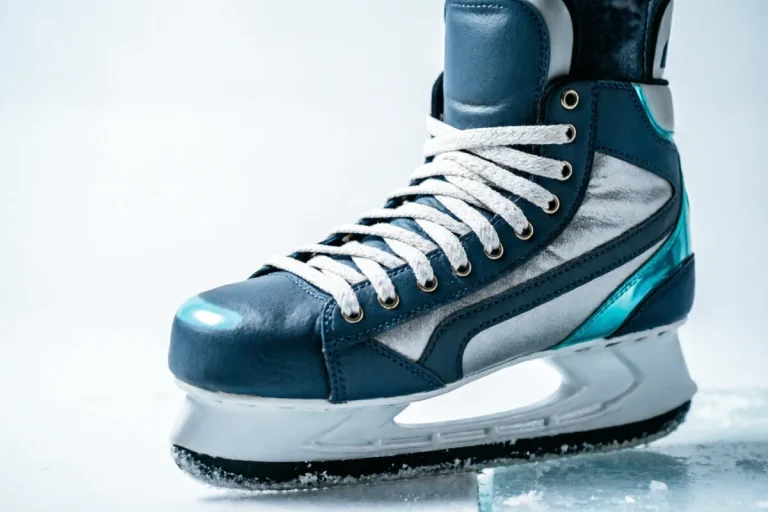
- On the ice: hockey skates.
For the 2026-27 academic year, NCAA players are encouraged to wear protective equipment intended to protect the neck, wrist and ankle areas. That guidance concerns NCAA players; for a youth league, use the league’s own equipment rules.
Skating and informal play
Outdoor hockey and public skating can have different equipment needs from league play. Use the rules for the specific activity rather than assuming that a league’s full equipment list applies; check what is required before heading out.
How should a youth hockey helmet and pads fit?
A youth hockey helmet and protective gear fit correctly when the helmet stays snug and stable, the pads cover the intended areas over game layers, and gloves and skates let the child move and grip without painful pressure.
Helmet and cage
Choose a hockey-specific helmet with a full-face cage and a certification mark such as HECC or CSA. Check the applicable league rules and the helmet label before buying; adjustable sizing does not replace a fit check.
- Helmet stability: The helmet should sit snugly and should not shift when the child moves. Have the child turn and nod their head, then check that the helmet stays in place.
- Rink boards: The NCAA’s 2024-25 and 2025-26 men’s and women’s ice hockey rules say rink boards should extend not less than 40 inches and not more than 48 inches above the ice surface.
Pads, gloves and skates
Try shoulder pads and elbow pads with the hockey jersey, and shin guards with the hockey socks. Check that each piece covers the intended area in the layers the child will wear on the ice, without leaving gaps when they bend their knees or arms.
Hockey gloves should cover the wrist while still allowing the child to grip the stick securely. Hockey skates should feel secure around the foot and ankle, but should not cause painful pressure. Have the child stand and bend their knees in the skates before deciding the fit is right.
Which hockey stick suits a young beginner?
A lightweight composite hockey stick with a youth flex that the child can bend comfortably is a practical starting point; choose its length and blade position by having the player hold it in skating posture before you buy.
Flex and handling
A lighter stick is often easier for a beginner to control than a heavier one. Youth sticks commonly have a flex rating of 20–40. Flex describes how much the shaft bends when the player leans into a shot, so the child should be able to load the shaft without struggling.
- Weight: Compare how easily the child can move and control a lightweight composite stick against a heavier option.
- Flex: Use the youth range of 20–40 as a starting point, then check whether the child can bend the shaft when leaning into a shot.
- Length and blade position: Have the child hold the stick in skating posture. Check that its length and where the blade sits work for that player.
Blade choice
For the youngest beginners, a straight blade with no curve keeps the choice simple. If you choose a curved blade instead, match its orientation to the child’s shooting side.
What protection is encouraged beyond the basic set?
NCAA guidance for the 2026-27 academic year encourages players to wear protective equipment for the neck, wrist and ankle areas, in addition to the standard hockey kit.
Neck, wrist and ankle protection
- Neck: A neck guard is a separate piece of protective equipment. Do not assume a jersey or shoulder pads cover the neck-guard requirement.
- Wrist and ankle: The NCAA guidance also encourages protection for these areas. Check your league’s current equipment rules for the specific items it requires.
The NCAA’s 2024-25 and 2025-26 men’s and women’s ice hockey rules specify rink-board height: the boards must be at least 40 inches and no more than 48 inches above the ice. That is venue context, not protection for a player; it does not replace protective gear.
Equipment requirements vary by league and activity. Before treating a neck guard or any other item as optional, check the current rules for the player’s league and the activity they will take part in.
Where can families avoid unnecessary first-season costs?
Families can avoid unnecessary first-season costs by buying only the league-required equipment first, prioritising correct fit and safety, and postponing extras the child’s activity does not require.
Spend on fit before upgrades.
A hockey helmet with a snug, stable fit and the required certification matters more than a premium finish. Complete protective coverage should come before nonessential accessories: check the league’s list for items such as a full-face cage, neck guard, shoulder and elbow pads, gloves, shin guards, hockey pants, and a jock or jill. Requirements vary by activity, so confirm the list before shopping.
- Helmet: Choose a properly fitting, certified helmet; do not trade secure fit or required protection for cosmetic upgrades.
- Stick: Look for youth flex that the child can load and control, and a blade they can manage. For the youngest beginners, a straight blade is one option; a more expensive model is not automatically a better fit.
- Extras: Defer accessories that are not on the league’s required list and are not needed for the child’s activity.
Oversized pads are not a reliable way to save money as a child grows: they can leave gaps or shift during play. Before choosing larger gear, ask the league or equipment provider to check the fit and explain replacement options. Bring the child along so the helmet and pads can be tried on before you buy.
Frequently asked questions
Is a helmet the only essential youth hockey purchase?
What does a youth stick’s flex rating mean?
Should a beginner choose a curved stick blade?
Can children use skates and a stick without full pads?
Sources
- ChalkTalk Sports — “Choosing the Best Hockey Gear for Youth Leagues: A Parent's Guide”
- admkids.com — “Parents’ Guide to Buying Equipment”
- newtohockey.com — “Hockey Equipment Buying Guide – For Parents / Kids – New To Hockey”
- minnesotahockey.org — “Parent Guide to Buying Hockey Gear”
- Brookline Youth Hockey — “Hockey Equipment”