How to Spot Loose Hockey Skate Rivets and Holders
Check for rivets that sit proud, spin, or shift, and for a holder that moves against the skate boot. Any movement or visible separation can indicate a loose attachment.
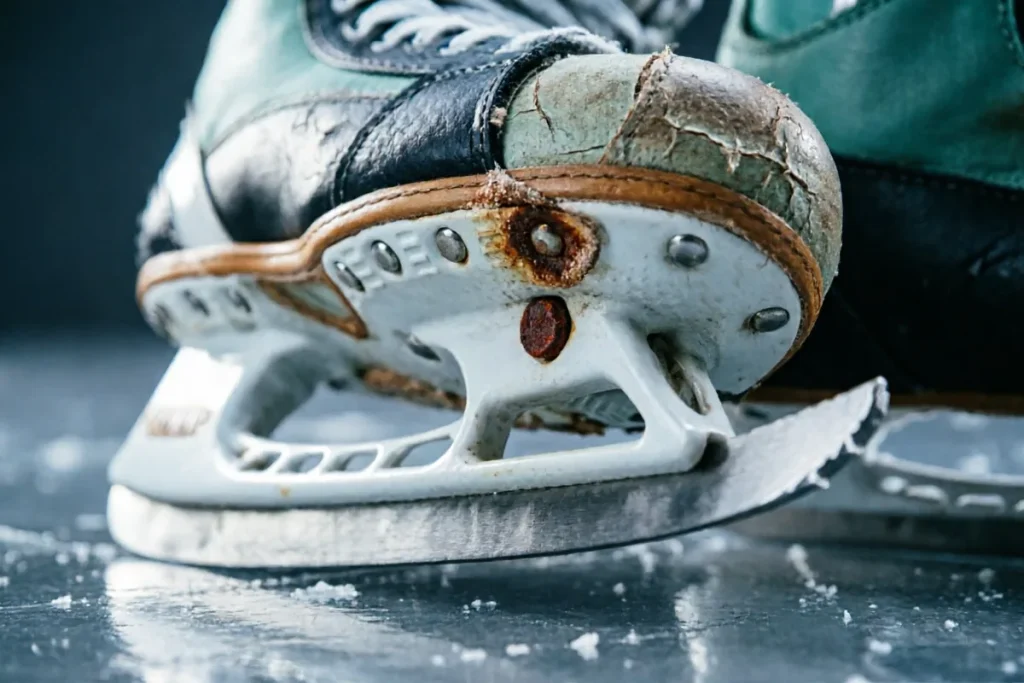
To spot loose hockey skate rivets and holders, inspect both skates closely, especially where the holder meets the boot. A rivet may look raised or corroded, while a loose holder can rock under gentle hand pressure. Don’t skate in a boot-and-holder setup that visibly shifts; have the attachment checked before returning to the ice.
| Inspection sign | What it may indicate | Next step |
|---|---|---|
| Rust, corrosion or a missing rivet | Rivet damage or loss | Have the attachment inspected |
| Rivet pulling through the boot or broken tooth | Rivet may need replacement | Ask a repair shop to assess it |
| Rattling or movement between boot and holder | Possible loose attachment | Do not skate until checked |
| Cracked holder or wobbly blade | Holder damage or insecure runner | Have the holder inspected |
| Runner will not lock into holder | Possible holder or runner damage | Do not force it; seek repair |
- $139.99 Listed price of Step Steel Stainless for the True Nut and Bolt goalie holder
How can you check hockey skate rivets?
Check hockey skate rivets by inspecting each fastener where the blade holder meets the boot, then comparing both skates for rust, damage or missing rivets.
Look closely at the rivets around each holder. A fastener that appears to be pulling through the boot, or has a broken rivet tooth, is a warning sign. Also check whether the holder is cracked or damaged, and whether the blade moves or rattles against the boot.
- Rust or corrosion: visible on a rivet.
- Missing or damaged fastener: compare matching areas on the left and right skates for an obvious difference.
- Pull-through or broken tooth: the rivet appears to be lifting through the boot or has a broken tooth.
A visual inspection can reveal warning signs, but it cannot determine whether a damaged rivet is safe to reuse. Have a skate technician assess it before skating.
What signs point to movement between the boot and holder?
Rattling or visible movement where the hockey skate boot meets the blade holder points to a loose attachment and calls for an inspection.
Check the holder along its contact with the boot, not just the rivet heads. A head can look intact while the holder still shifts; appearance alone cannot confirm that the fastener is secure.
If you can see the holder move or feel the blade wobble, stop skating and have the attachment inspected. Do not assume the runner itself is the problem: movement at the boot-holder joint is the sign to investigate.
How do you inspect the blade holder and runner lock?
Inspect the blade holder for visible cracks or other damage, then check that the runner sits securely in it and locks into place.
With the skate stationary, feel for looseness or wobble in the blade. Notice whether changing the runner has become difficult; either problem can point to damage in the holder or its locking mechanism.
If damage stops the runner from locking in place, have the holder assessed before skating. A runner that cannot lock securely is not ready for use.
How can blade alignment affect what you notice?
Blade alignment can reveal an obvious lean or a mismatch between the hockey skate runner and holder, but a visual check cannot measure alignment precisely.
View each skate from the front and rear, looking along the runner and holder. Then place both skates on a level surface and compare them. This can help flag a visible difference; it is only a screening check, not a measurement.
If a runner looks misaligned or the blade shifts in its holder, stop treating it as a visual adjustment issue. Have a repair shop assess the holder and its attachment, especially if you also notice movement between the holder and boot.
When should a repair shop handle the fix?
Take a hockey skate to a repair shop if a rivet is missing, visibly damaged, pulling through the boot, or accompanied by movement or rattling.
A broken rivet tooth may let the rivet pull through the boot and can mean the rivet needs replacement. Tightening it is not a confirmed repair; have the rivet inspected.
- Cracked holder: Ask a shop to inspect it before skating.
- Wobbly blade or runner that will not lock into the holder: Have the holder and runner checked professionally.
- Unclear movement: If you cannot tell whether the rivet, holder or runner is moving, leave the diagnosis to the repair shop.
When can a visual check mislead you?
A visual check can mislead you because rust, a missing rivet, rattling or movement are warning signs, not proof that the entire holder needs replacing. A quick glance may also miss damage that matters: a holder can be compromised even when the blade does not visibly move.
Check whether the runner locks securely into the holder. If it will not lock, or changing the blade has become difficult, do not force the runner into place; these problems can indicate holder damage.
If the blade feels loose or wobbly, do not skate while you work out whether the rivets, holder or another component needs repair. Have the affected parts assessed before using the skate again.
How can a replacement runner fit affect the check?
A replacement runner can affect the check if it does not fit the holder: a runner that fails to lock in place can leave the blade loose or wobbly. Check compatibility with the exact holder before buying.
Elevate Sporting lists Step Steel Stainless for the True Nut and Bolt goalie holder as 4mm wide, at $139.99. That is a specific product listing, not a general specification for other holders or skates.
A listing for the True Nut and Bolt goalie holder does not establish that the runner fits another holder. Match the replacement runner to your holder’s model, and check that it locks securely before skating.
Sources
- binnieshockey.com — “How to Identify Common Hockey Skate Issues and Repair”
- Ice Warehouse — “How to Size a Hockey Skate Blade and Holder”
- modsquadhockey.com — “True skate owners – how often do your rivets loosen?”
- willies.co.uk — “Ice Skate Eyelet & Rivet Replacement”
- sports2k.com — “True/VH Hockey skates – Hockey Gear – Pro Stock Hockey – Sports2k.com”