How to Choose Figure Skating Practice Layers
Choose figure skating practice layers that keep you warm before training and let heat and sweat escape as you move. Start with a close-fitting base layer, then add or remove light layers to suit the rink and your effort.
The numbers
Wednesday practice time in Ice Factory Skating School’s teen and adult class schedule
Wednesday instruction time in Ice Factory Skating School’s teen and adult class schedule
Ice Factory Skating School annual registration fee, including Learn to Skate USA membership
Practice clothing needs to work through warm-ups, repeated jumps and quieter instruction, when your body temperature can change quickly. Avoid bulky layers that restrict movement or loose fabric that gets in the way; make sure you can bend, extend and skate comfortably.
This guide explains how to choose figure skating practice layers by fit, fabric and rink conditions, and what to check before you step onto the ice.
| Layer or choice | Useful feature | Potential snag |
|---|---|---|
| Fitted synthetic or merino base layer | Moves with the body | A loose top may ride up |
| Stretch leggings or skating pants | Flex at the knees and hips | Loose hems can interfere |
| Light fleece or insulated mid-layer | Adds warmth over the base | Too much bulk can restrict movement |
| Wind-resistant shell or zip-up jacket | Can be removed as you warm up | Dangling details may catch |
| Thin socks | Avoid unwanted bumps inside boots | Thick socks can limit movement |
How do you build a practice outfit from the base layer out?
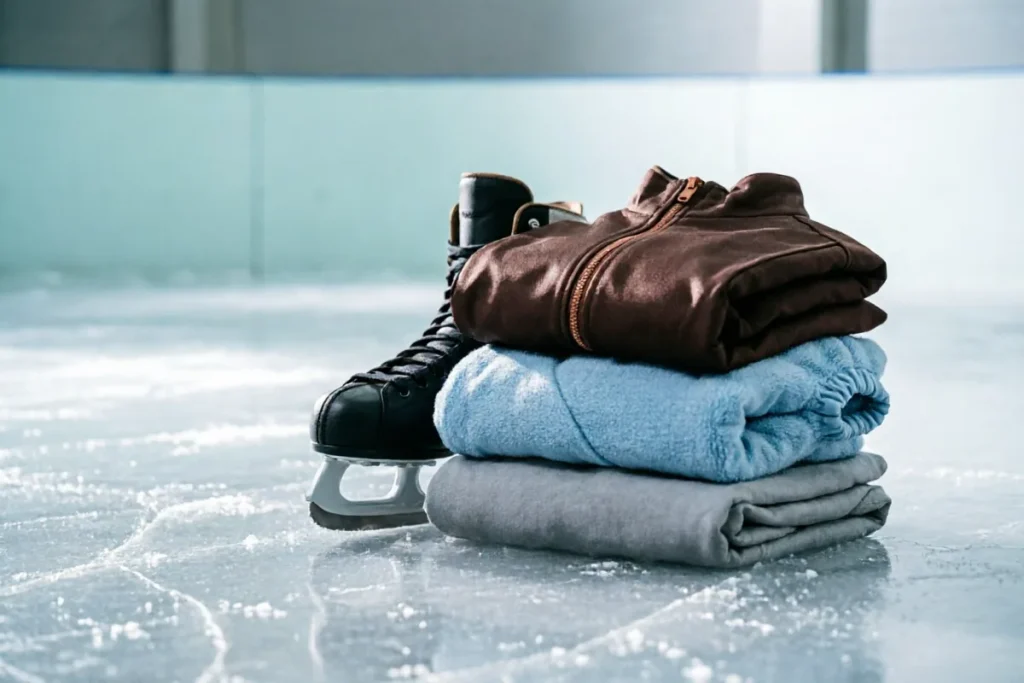
Build a figure-skating practice outfit with fitted synthetic or merino layers next to the body, a light fleece or insulated mid-layer, and a removable wind-resistant shell or zip-up jacket.
Base layer
A fitted synthetic or merino top and leggings should stretch with your body. Check the top during bends, extensions and spins: it should stay tucked or in place, since a loose hem can ride up.
- Synthetic or merino top: Choose a close fit that stays put as you move.
- Leggings: Look for stretch that allows free movement.
Removable warmth
A light fleece or insulated layer adds warmth without the bulk of a coat. Wear a wind-resistant shell or zip-up jacket over it, ready to remove as you warm up.
Ice Factory Skating School’s teen and adult classes on Wednesdays include 15 minutes of practice time followed by 30 minutes of instruction. The schedule lists practice from 6:00pm-6:15pm and instruction from 6:15pm- 6:45pm. Dress so you can move freely during both parts of class.
Which fabrics and fits allow skating movement?
High-stretch leggings or skating pants, a snug base layer and light outerwear let you bend your knees and hips and move your arms without fabric pulling tight.
- Bottoms: Choose leggings or skating pants with enough stretch to move freely through knee and hip bends. A skating skirt or practice dress can go over leggings if you prefer that outfit.
- Base layer: A snug synthetic or merino layer is a practical choice for moving sweat away from your skin.
- Outerwear: Avoid heavy, bulky jackets and coats that restrict arm movement or make it harder to change position.
Ice Factory Skating School’s teen and adult classes include 15 minutes of practice time followed by 30 minutes of instruction on Saturdays. That practice-to-instruction format makes easy movement useful from warm-up through the lesson.
How should you check seams, hems and loose details?
Check your figure-skating layers with a squat, forward bend and arm reach before leaving for the rink; the fabric should not bind or shift out of place.
- Hems and loose details: Inspect each hem, drawcord, zipper pull and tab. Tuck away or remove anything that dangles and could catch on a blade or equipment.
- Seams: Choose flat, unobtrusive seams where fitted fabric crosses your knees, hips or shoulders, so they are less likely to press or rub as you move.
Wear the outer layer zipped and fitted when you test your movements. If it restricts a squat, bend or reach, remove it rather than skating in clothing that interferes with movement.
How do you adjust layers as you warm up?
Adjust figure skating layers by removing outerwear as movement warms you, while keeping your base layer and flexible bottoms on for practice.
Before stepping on the ice
- Start with a removable outer layer. Wear a jacket or shell over your practice clothes so you can take it off once you begin moving.
- Keep your base layer and bottoms. When you remove a mid-layer, leave your base layer and flexible bottoms on; you should still feel warm enough to practise.
- Choose easy changes. For a class that starts with practice and then moves into instruction, pick layers you can take off and put back on quickly.
Ice Factory Skating School’s teen and adult classes on Wednesdays begin with 15 minutes of practice, followed by 30 minutes of instruction. A removable jacket makes it easier to adjust between those parts of class without changing your base layer or bottoms.
When do common layering choices stop working?
Common figure-skating layers stop working when they restrict movement, bunch against your body, or create loose fabric near blades and equipment.
A thick coat can feel warm while you wait, then limit your arms and torso once you start skating. Choose a light jacket you can remove as you warm up.
- Pants and sleeves: Loose pants, hanging cords, and oversized sleeves can catch on blades or equipment. Choose close-fitting clothing that lets you move freely.
- Socks: Thick socks can form bumps inside figure-skating boots and limit movement. Wear thin socks instead.
- Fit at the joints: If fabric gathers behind your knees or under your arms, change the fit. Don’t count on it loosening during practice.
When does the outfit need to work for a beginner class?
For a beginner class, choose comfortable layers that let you move freely; specialized figure-skating clothes are not necessary for a first lesson.
Flexible leggings or sweatpants and a fitted top are practical starting points. Bring a light jacket you can remove as you warm up, and avoid bulky outerwear that restricts movement.
Ice Factory Skating School describes its teen and adult curriculum as suitable for beginning and experienced skaters who want to improve their skills. Its annual registration fee is $45, which includes Learn to Skate USA membership.
Before attending, check the class provider’s current clothing guidance, especially if the lesson has equipment requirements.
Frequently asked questions
Should figure skating practice clothes be tight?
Are thick socks better for skating?
What should you wear over leggings?
Should you wear a jacket on the ice?
Sources
- Brilliance & Melrose — “What Do Figure Skaters Wear? Full Guide | B&M”
- Chique Sport — “What to Wear Figure Skating”
- themadspinner.com — “Figure Skating Gear for Beginners: What You Actually Need to Get Started – The Mad Spinner”
- adrian.edu — “Parent Handbook”
- Kent, WA — “Ice Skating Classes, Learn to Skate”