Learning to Skate on Public Sessions: Find Space
To learn to skate during public sessions, use the quieter edges of the rink, keep moving predictably and leave space around other skaters.
The numbers
Regulation-size rink dimensions listed by Arlington Recreation
Group ice rental fee listed by Arlington Recreation
Group ice rental fee listed by Arlington Recreation
Public sessions bring beginners and experienced skaters onto the ice together, so open space can change from one moment to the next. Choose a clear patch, practise basic balance and gliding, and look around before changing direction.
If the ice feels crowded, pause near the perimeter only where it is safe to do so, or wait for a less busy session. The goal is to practise without blocking the flow of skaters.
| Situation | Safer choice | Avoid |
|---|---|---|
| Learning to glide | Stay with the rink’s traffic flow | Cutting across the lane |
| Practising a stop | Move toward the barrier | Stopping suddenly in the traffic lane |
| Need a pause | Look around and leave the flow before stopping | Standing where skaters pass |
| Crowded ice | Take a break or wait for space | Attempting a new trick in the public flow |
How do you read the rink’s traffic flow?
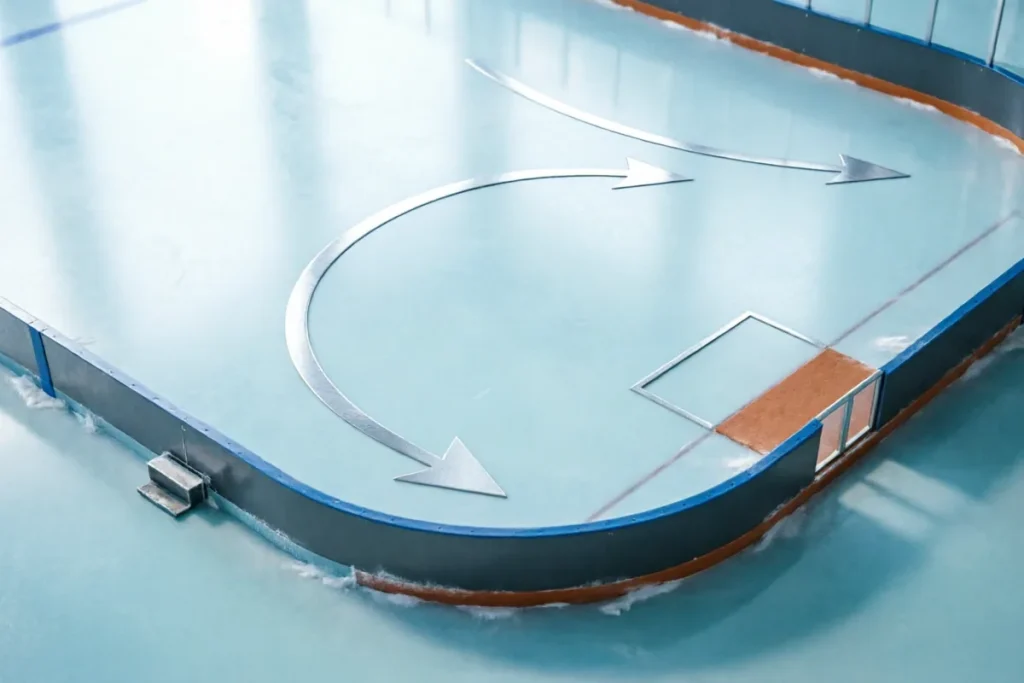
Read a public rink’s traffic flow by following the usual counterclockwise direction, keeping your head up and checking where other skaters are moving before choosing a practice spot.
Most rinks use a counterclockwise flow. Glide with the moving crowd rather than cutting across its path: a crossing skater can surprise someone approaching from behind or beside you.
Keep your eyes on the ice ahead and scan beside you, not down at your feet. This helps you notice skaters changing speed or direction and leave room rather than making a sudden turn.
Before practising, watch how faster and slower skaters use the ice. Choose a space that does not put you in the path of skaters travelling at a different speed, and avoid stopping where others are passing.
If you need support while practising a stop, move toward the barrier without crossing through traffic. Check rink notices or ask staff if the skating direction or any designated areas are unclear; follow the rink’s instructions before joining the flow.
How should you choose a practice area?
Choose an open patch of ice near the barrier, just outside the main traffic line, so you can practise without cutting across other skaters. Leave room around you, and follow the session’s marked areas rather than assuming every rink is laid out the same way.
A space to stop, not a place to block
The barrier can give you support while you work on a controlled stop. Practise beside it, with enough space to move clear; do not stop suddenly in the lane, where approaching skaters may have little room to avoid you.
- For stopping practice: Choose open ice near the barrier, outside the main flow.
- When you need more room: Move with the traffic instead of crossing the lane unexpectedly, and keep space between yourself and other skaters.
- For rink layout: Check the local session’s marked areas. Arlington Recreation lists a regulation-size rink measuring 85′ x 197′, with spectator seating for 1,000 people at the facility; other rinks may arrange their ice differently.
On a public session, scan ahead and beside you as you move. If your practice needs more space, join the flow and choose an open area without cutting across it; return to the edge before working on a stop.
How can you pause or leave without disrupting skaters?
Pause or leave the ice by first checking behind and beside you, then moving out of the traffic lane or following the rink’s marked exit route.
Before turning toward the barrier, look over your shoulder and check the space beside you. Other skaters may be approaching from behind or changing speed, so keep gliding with the session’s flow until you have a clear path to the edge.
When you need to stop, glide out of the main lane before pausing. Do not stand where skaters are passing or likely to turn; if you need the barrier for support, reach it only after checking that the route is clear.
If you fall or need to leave
After a fall, move clear of the flow as soon as it is safe. Check for approaching skaters before getting up or moving toward the barrier, and use the barrier for support if you need it. If you cannot move safely, avoid rushing into the traffic lane.
To leave the ice, use the rink’s marked route. Cutting across the session can put you in the path of skaters following the usual flow; keep to the designated exit instead.
When is a public session the wrong setting?
A public session is the wrong setting when crowding leaves you unable to practise or recover while keeping a safe distance from other skaters.
Crowding changes the decision.
A crowded lane gives you less room to practise stopping and less space to regain balance after a wobble. Keep moving with the session’s flow; if you cannot maintain a safe gap, wait until the ice opens up or take a break rather than forcing a practice attempt.
- Stopping: Practise only when there is enough clear ice to slow down without cutting across another skater’s path.
- A wobble: If you cannot recover without entering someone else’s space, move out of the flow or pause at the barrier.
- A new trick or movement: Do not introduce a skill that needs a different speed or travel pattern into public-session traffic. Use only an area the rink designates for that activity.
Arlington Recreation lists group ice rentals at $280 per 50-minute block and $300 per 60 minute block. A group rental is a separate option for ice time, not a rule that changes how a public session works; check the rink’s current rental details if you are considering one.
Wear protective gear, especially a helmet, and skate within your current ability. A helmet can help protect your head in a fall, but it does not make a crowded lane safe or give you room to practise a stop.
What should you check before stepping onto the ice?
Before stepping onto the ice, check the rink’s posted traffic direction and activity rules, then locate the barrier, the exit and a place where you can pause safely.
- Traffic direction: Follow the direction shown by the rink; many rinks use a counterclockwise flow. Don’t cut across moving skaters unexpectedly.
- Activity areas: Check whether the rink assigns particular areas to different activities. Practise only where the posted rules allow.
- Barrier and exit: Note where you can reach the barrier for support and where you can leave the ice. Choose a nearby spot to pause that is out of the skating flow.
Once you step on, keep your head up and scan ahead and beside you. If you need to stop or regain your balance, move toward the barrier rather than stopping in the path of other skaters.
If you are unsure how to stop, or where beginners should practise, ask rink staff or a more experienced skater before joining the flow. Check the posted rules again if the rink’s activity areas are unclear.
Frequently asked questions
Which way should beginners skate on a public session?
Where should I practise stopping?
Can I stop in the middle of the ice if I lose confidence?
What should I do if the public session feels too crowded?
Sources
- thestjames.com — “The St. James: Sports, Wellness and Entertainment Complex”
- allsports-physicaltherapy.com — “Common Ice Skating Injuries (and How to Avoid Them)”
- iepurgentcare.com — “Simple Safety Guide for Public Skateparks: Keeping Yourself and Others out of Harm's Way”
- krakencommunityiceplex.com — “Freestyle & Classes – Kraken Community Iceplex”
- healthychildren.org — “Skateboarding and In-Line Skating – HealthyChildren.org”