Basic Skateboard Tricks for Beginners: Step by Step
Beginner skateboard tricks are easiest to learn in a safe, open area, starting with a steady stance, pushing, and turning before practising an ollie. Build each step slowly, focusing on balance and control rather than height or speed.
The numbers
Width range of standard skateboards
Usual length of standard skateboards
Common skateboard length for teens and adults
These basic skateboard tricks for beginners make a useful progression: first get comfortable riding, then learn to lift the board and guide it beneath your feet. Practise one skill at a time, wear protective gear, and move on when each step feels consistent.
| Skill | Board movement | Control focus | Useful cue |
|---|---|---|---|
| Shuvit | Board spins 180 degrees without flipping | Scoop and centred landing | Keep shoulders aligned |
| Pop shove-it | Board spins with a pop | Scoop and lift | Use a light pop |
| Manual | Nose lifts while rolling | Balance on rear wheels | Begin with a brief lift |
| Tail stop | Tail pressure slows or stops the board | Speed control | Practise only at a controllable speed |
| Fakie 180 pivot | Board and body rotate together while riding fakie | Turning control | Keep the movement deliberate |
- 28-inch Deck length that may suit a smaller 8-year-old
What should you learn before trying a skateboard trick?
Before trying a skateboard trick, learn to ride, steer and stop on a smooth, open patch of flat ground, away from traffic and obstacles. Find a stance that feels balanced: regular means your left foot leads, while goofy means your right foot leads. Practise pushing, coasting and stopping until you can control the board without focusing on your feet.
Build balance and steering first
Keep your knees bent and your body low as you roll, with your shoulders aligned over the deck rather than turned across it. This position helps you stay balanced and lets your body move with the board.
Then practise tic-tacs: keep the rear wheels on the ground and make small, alternating turns by shifting your weight. The board responds to those shifts, giving you a chance to practise steering and balance before adding a trick that lifts or spins it.
How do you choose a board before learning tricks?
Choose a skateboard by matching its deck length and width to the rider’s size and skating style, then check that the rider can stand comfortably and control it. Standard skateboards are between 7.5 to 9.5” wide and usually about 31” long; smaller versions are available for children.
- Teens and adults: Skateboards are almost always between 32″-33″ long and typically between 8″ and 9″ wide. Choose width with both the rider’s size and preferred skating style in mind.
- Children: Prioritise deck length when sizing a board. A smaller 8-year-old may be better served by a 28-inch deck.
Check the fit before practising tricks
These measurements are starting points, not a substitute for trying the board. The rider should be able to stand comfortably with their feet positioned on the deck and maintain control while rolling; if the board feels awkward to manage, consider a different size before practising shuvits or other tricks.
How do you do a shuvit without flipping the board?
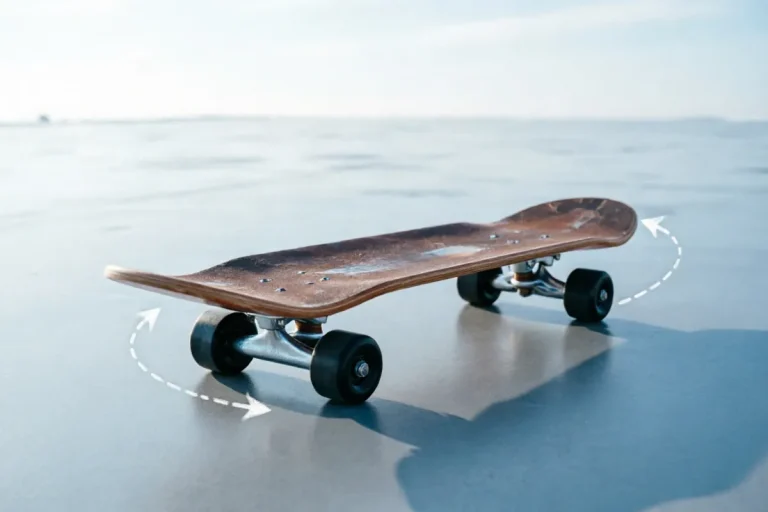
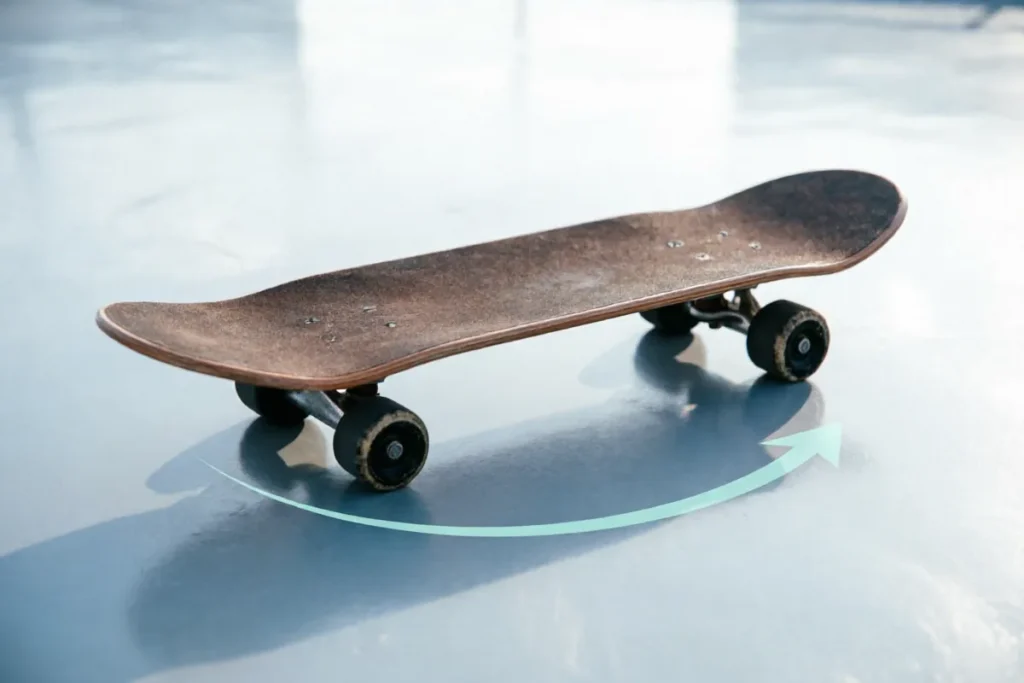
A shuvit spins the skateboard 180 degrees beneath you without flipping it: scoop the tail sideways with your back foot while keeping your chest and shoulders facing the direction of travel.
Practise the scoop before the catch.
Set your front foot near the middle of the deck and your back foot on the tail. Press and sweep the tail sideways with your back foot to start the rotation; keep the board level rather than popping it into a flip.
As the deck turns, keep your weight centred above it instead of rotating your whole body with the board. Watch the deck complete its turn, then bring both feet over the bolts and land with your knees bent to absorb the impact.
What changes when you add a pop shove-it?
A pop shove-it adds a tail pop to the shuvit’s scooped, 180-degree deck spin, lifting the board off the ground while it turns beneath you. The board rotates without flipping, so the key change is getting it airborne—not adding a kickflip-style rotation.
For a pop shove-it, use a smooth scoop and a light pop rather than stamping hard on the tail. Keep your shoulders aligned with the board as it spins, then aim to land with both feet over the deck. A forceful stomp can send the board away instead of keeping it beneath you.
If the board shoots away, reduce the force of your scoop and return to stationary foot-placement practice. Rehearse where each foot sits and how the scoop begins before adding the pop again; regain control of the board’s movement before trying to catch it in the air.
Which beginner tricks build control before a shove-it?
A manual, tail stop and fakie 180 pivot build the balance, speed control and turning skills that help prepare a beginner for a shove-it. Practise each as its own exercise, focusing on steady rolling and a clean stop rather than linking tricks together.
- Manual: While rolling, briefly lift the nose and balance over the rear wheels. Start with a small, controlled lift; the aim is to keep the board moving steadily, not to hold the position for as long as possible.
- Tail stop: Press the tail against the ground to slow down or stop. Practise this only after you can control your speed, so the stop is deliberate rather than a response to losing balance.
- Fakie 180 pivot: Ride fakie, then turn your body and board together through a 180-degree pivot. This develops control of your direction while moving fakie, without adding the shove-it’s board spin beneath you.
Keep the three skills separate until each feels controlled: a stable manual, a purposeful tail stop and a coordinated fakie pivot are better preparation than rushing into a sequence. Once rolling and stopping feel reliable, you can approach the shove-it with a stronger sense of balance and board control.
What mistakes make beginner tricks harder or less safe?
Beginner shuvits become harder and less safe when you attempt them before you can push and stop reliably, lose your centred stance, or let your shoulders twist away from the board. These basics help you control your speed and stay balanced while the deck spins.
When to step back
- Unreliable pushing or stopping: Practise pushing and stopping before trying a shuvit. Without those skills, you have less control over your speed as you approach or leave the trick.
- Leaning over the nose or tail: Stay centred over the deck as it spins. Leaning toward either end can send the board away from your body instead of keeping it beneath you.
- Shoulders turning with the deck: Keep your shoulders aligned with the board. Twisting them during the shuvit can pull your body off balance.
- Forcing a pop shove-it: A pop shove-it adds lift; it is not just a harder scoop. Too much pressure on the tail can make the board rise unpredictably, so return to a shuvit if the motion is inconsistent.
A controlled shuvit is the better step when the board’s spin or your landing feels unreliable. Build consistency with the board staying beneath you before adding the pop of a pop shove-it.
Frequently asked questions
What is the easiest skateboard trick to learn first?
A shuvit is a practical first trick after basic pushing and stopping: the board spins 180 degrees beneath you without flipping.
Should I learn a shuvit while standing still or rolling?
First practise the foot placement and scoop at a standstill. Once you can control the board, try the movement while rolling slowly.
What is the difference between a shuvit and a pop shove-it?
A shuvit spins the board without a flip; a pop shove-it adds a light pop to lift the deck.
Which beginner skills help before trying tricks?
Practise stance, pushing, stopping, tic-tacs and a short manual. These develop board control before you add a shuvit or fakie 180 pivot.
Key takeaways
- Master stance, pushing and stopping before attempting a shuvit.
- A shuvit spins the board 180 degrees without flipping; a pop shove-it adds lift.
- Use manuals, tail stops and fakie 180 pivots to develop distinct kinds of board control.
- Choose a deck by rider size and control, especially for children, where length matters.
Sources
- Skate IQ — “How to Shuvit on a Skateboard: Step-by-Step Guide for Beginners”
- howtoskate.com.au — “Skateboard Trick Roadmap – The best skateboarding tricks for beginners to learn — How To Skate Professional Skateboard Coaching in Sydney”
- safeskateboard.com — “How To Pop Shove It: Step-by-Step Guide For Beginners!”
- pinterest.ca — “Step-by-step Guide for Beginners”
- pinterest.dk — “Step-by-step Guide for Beginners”