How to Edit Figure Skating Music for Competition
Edit figure skating music by trimming it to the program’s required time, shaping clean transitions, and checking that every cut fits the choreography. Keep the original recording intact and export a copy in the format your competition requires.
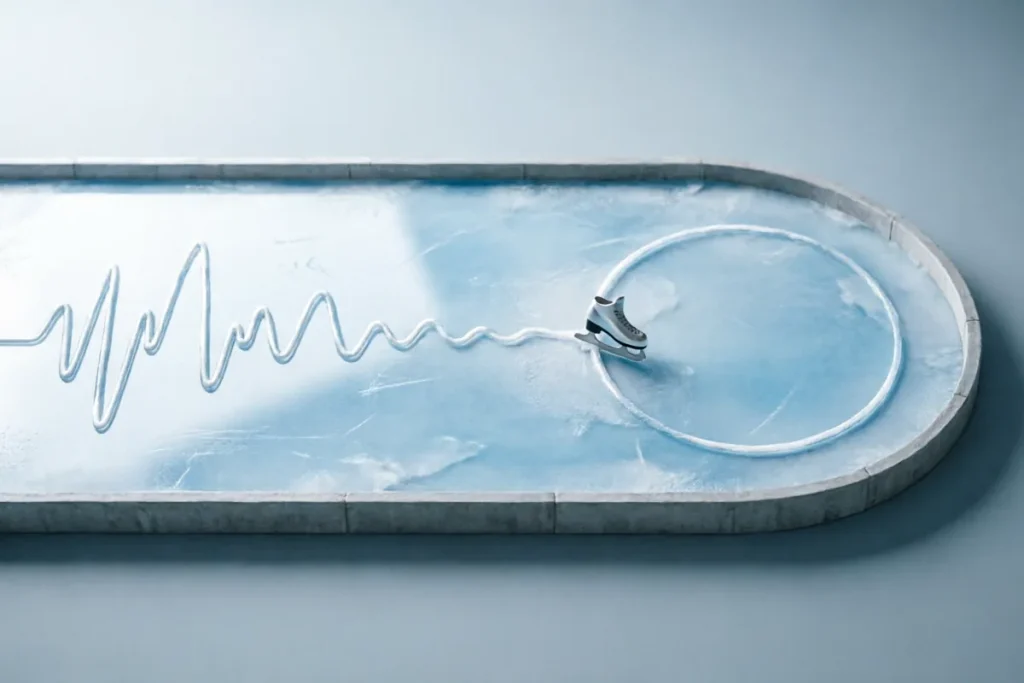
Good editing is more than shortening a track: abrupt cuts, mismatched tempo or a late finish can disrupt timing on the ice. This guide explains how to plan the edit, make transitions sound natural and check the finished file before you submit it.
| Option | Useful for | What to check |
|---|---|---|
| Self-edit with coach | Keeping cut points aligned with planned choreography | Event length, transitions and the final file |
| IceCutmusic | A professional edit built from a program brief | Required length, music, existing edits and revision terms |
| Sk8Mix | Editing with attention to musicality and transitions | Fit with the program and delivery details |
| Unisons | A cut intended to account for training-facility acoustics | How the result sounds in the actual practice environment |
- 2 min 40 s ± 10 s Short-program video duration proposed as input to a video-recognition model in figure-skating research
How do you confirm the event’s music requirements?
Confirm the event’s music requirements in its current announcement or rulebook, then check any unclear details with the organiser rather than relying on a time limit you remember.
Ask the organiser to verify the requirements for your category, including the permitted program length, accepted music format and submission procedure. These details determine what the editor must deliver and how you need to send it.
Before editing begins, give the editor the required length, your chosen music and any edits already made. IceCutmusic specifically requests those details before building a cut, so gather them first.
Ask your coach to review whether the chosen music fits the program’s planned content before the editor starts. That check can help you avoid commissioning a cut around music that does not suit the elements or structure you intend to skate.
How do you choose music that supports the program?
Choose music with clear changes in tempo, phrasing or texture, then check with your coach how those changes can support planned elements and transitions. A track’s opening may catch your ear, but the rest of the usable section needs to fit the program.
Match phrasing to planned movement
Map musical phrases against the elements and transitions you intend to skate. A change in tempo or texture can help distinguish one part of the program from another; your coach can assess whether the timing works with the planned movement.
- Tempo and phrasing: Look for audible changes that can support different program sections.
- Repetition: Charleston Figure Skating Club’s cutting tips recommend minimising repeated passages, which can make an edit feel mechanically looped.
- Beginning and ending: Choose a section with usable musical endpoints, rather than one that requires a sudden cut in the middle of a phrase.
Listen through the full proposed section before settling on it. A strong opening is not enough if the remaining music offers no clear phrasing for the planned elements or leaves the edit ending abruptly.
How should you handle copyright before editing?
Before editing figure skating music, identify who controls the sound recording and who controls the underlying composition; permission for one does not automatically cover the other.
Check the competition’s current music-submission requirements with the organiser, including whether you must provide rights documentation. Requirements can differ by event, so confirm them before choosing a track or sending it for editing.
A professional editor can tell you what audio source file and rights information they need to make the cut. IceCutmusic, for example, asks skaters to provide their music and program requirements. That service helps prepare an edit; it does not establish that you have permission to use the recording or composition.
Keep the track title, artist or composer details, and permission records with the final audio file. If the organiser asks about the music later, you can identify the track and locate the relevant records without relying on the editor to supply proof.
How do you brief an editor and shape the cut?
Brief the editor with the event-required duration, the music file and any edits you have already made; then describe the program’s musical arc and the moments that must stay intact. Ask for clean transitions, not simply a shorter track.
- IceCutmusic: Its stated workflow asks for the required length, music and anything already known about the cut before it builds an edit.
- Sk8Mix: Skate VIDA recommends Sk8Mix for editing that considers musicality, transitions and overall program impact.
- Your edit criteria: Identify essential musical phrases and tempo changes, and flag repeated or silent passages you are willing to cut.
Review the draft with the coach.
Compare the editor’s draft with the planned choreography. Check whether each cut preserves the intended musical phrase and whether the transition into the next section is practical to skate. If a cut breaks a phrase or makes a transition difficult, describe the problem and request a revision. Listen to the revised version against the choreography before treating the edit as finished.
How do you check the edit against the program?
Test it on the ice
Check the finished audio against the event’s stated time limit, then skate to it and confirm that its opening and ending match the choreography. The file should start where the program begins and finish where the choreography expects, without requiring an on-ice adjustment.
Charleston Figure Skating Club recommends eliminating silent portions when cutting music. Listen through the entire file for abrupt edits, unintended silence and repeated passages; a cut that sounds smooth in a player still needs to work with the skating.
- Time limit: Compare the complete audio duration with the limit stated for the event.
- Choreography: Check that the first and last sounds align with the planned opening and finish.
- Continuity: Listen for abrupt edits, silent portions and repetitions.
Researchers have proposed using a short-program video lasting 2 min 40 s ± 10 s as input to a video-recognition model to predict technical elements, program components and the final total score. That is a proposed analysis method, not a substitute for checking your music cut against the event requirements.
U.S. Figure Skating describes both IJS and CJS as systems in which skaters are evaluated against a standard. The music edit does not replace the event’s rules or judging criteria, so check the event requirements before finalising the file.
When can a polished edit still fail?
A polished edit can still fail if it sounds clear in headphones but loses definition in a training facility, disrupts a planned skating change, or misses the event’s submission requirements.
Check sound, timing and submission separately.
Unisons says its editing is calibrated for the unpredictable acoustics of training facilities. Test the finished cut where you skate if possible; a transition that blends on headphones may be harder to follow in the room.
Keep a tempo change when it supports a planned change in your skating. Removing it just to make the edit easier can weaken the connection between the music and the program.
- Sound: Check whether transitions and musical phrasing remain clear in the facility, not only through headphones.
- Editing terms: IceCutmusic lists revisions as included and a starting price of $45; do not assume another editor offers the same terms. Confirm revisions and price directly before ordering.
- Submission: Follow the event’s latest notice if instructions change. It takes precedence over an earlier export or a coach’s recollection.
Frequently asked questions
What should I send a music editor?
Should I remove silent sections from competition music?
Does hiring an editor clear the music copyright?
Where should I test the finished cut?
Sources
- Icecutmusic — “Figure Skating Music Edits”
- skate-vida.com — “Song Selection — Skate VIDA – Figure Skating Lessons in Austin, TX”
- unisons.pro — “Figure Skating music services – Editing, Mixing and”
- theskatingmusicguy.com — “The Skating Music Guy”
- charlestonfsc.com — “Cutting Music – Charleston Figure”