Skate Socks vs. Thin Liners: Blister Control
Neither skate socks nor thin liners prevent blisters on their own; the better choice is the one that fits smoothly inside your boot without bunching or slipping.
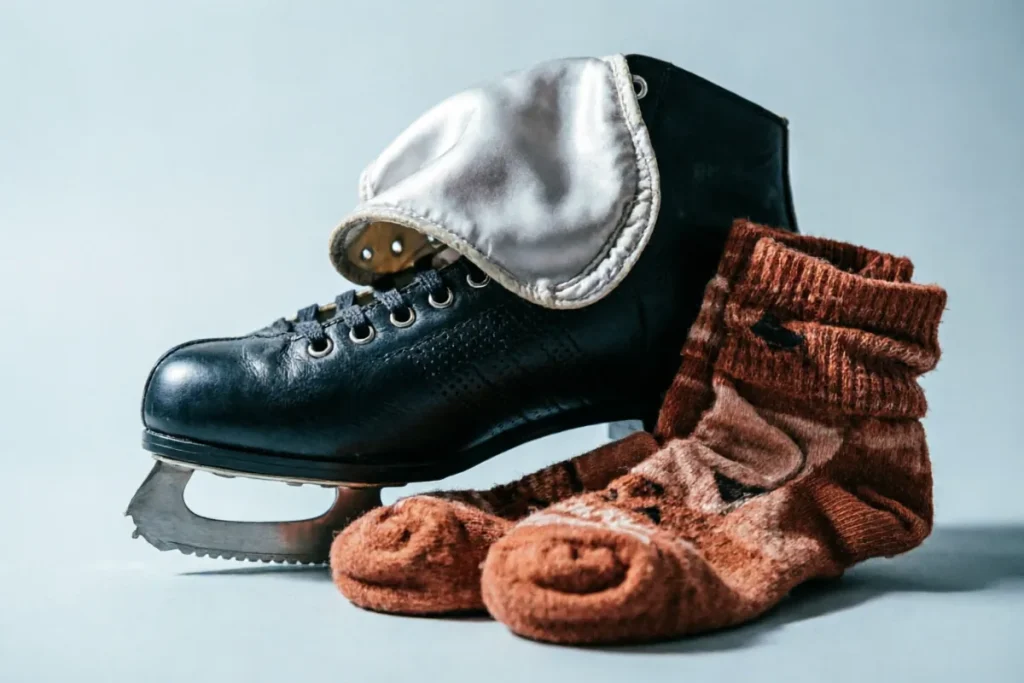
Skate socks add a layer between your foot and the boot, while thin liners take up less space. If a boot already feels tight, thicker fabric can increase pressure; if fabric shifts or folds, it can rub. This guide compares skate socks vs. thin liners and explains what to check when choosing for blister control.
| Setup | Friction and moisture | Boot-fit trade-off | Best use |
|---|---|---|---|
| One thin moisture-wicking sock | Keeps the layer count simple; moisture management depends on the sock | Least added bulk | When the foot feels secure and no hot spot develops |
| Thin liner plus moisture-wicking outer sock | Adds a smooth layer and a quick-drying change option | May crowd a close-fitting boot | When a single sock causes recurring hot spots and the fit remains comfortable |
| Thick sock or bulky double layer | May add fabric but can increase pressure | Can restrict circulation or make the boot feel cramped | Avoid if the boot tightens or the foot shifts |
How do skate socks and thin liners differ inside a boot?
A skate sock is the layer worn against your foot; a thin liner is a separate layer worn beneath that sock, closer to the skin. The liner is optional, not a replacement for a well-fitting boot.
A smooth liner can move some rubbing from bare skin to the fabric layers. It may help if you are prone to hot spots, but it cannot fix a boot that pinches your foot or shifts while you skate.
- Skate sock alone: The sock sits against your foot and provides the main fabric layer inside the boot.
- Thin liner plus skate sock: The liner adds a close-fitting layer under the main sock; check that it stays smooth rather than bunching.
- Either combination: The boot should hold your foot securely without feeling cramped. If adding a liner makes the fit tight, remove it; if your foot still moves, reassess the boot fit.
The practical test is the fit with both layers on: your foot should feel secure, and the boot should not feel cramped. A liner is useful only if it meets both conditions.
Which fabric, seams and fit preserve boot feel?
A thin, moisture-wicking liner that fits snugly like a second skin best preserves boot feel: it limits loose fabric without adding bulk, while the sock combination must still prevent your foot from sliding.
- Fabric: Choose a quick-drying liner so you can change into a dry pair when the first becomes damp. Moisture, heat and pressure can all contribute to blisters.
- Seams: Check the toe and heel seams against your foot. If a seam ridge sits on a familiar hot spot, choose a liner with a different seam position or construction.
- Fit: Avoid folds or slack fabric, which can wrinkle and create another rubbing point. A liner should lie smoothly against the skin.
Test the exact sock combination you plan to skate in while checking boot closure and foot movement. Thick socks can restrict circulation; a layer that is too thin may let your foot slide and develop hot spots. The useful fit is close and secure, not simply the thinnest option.
When can two sock layers help—and when might they not?
Two sock layers may help when one sock repeatedly causes hot spots, but they are not a guaranteed fix; in a skate boot, keep them only if the fit still feels right.
UKHillwalking forum participants report different outcomes. One wrote, “I get blisters with only one pair….no problems with two.” Another wrote, “I’ve never had blisters ever since I’ve started wearing double socks.” These are individual experiences, not proof that double socks work for everyone.
- Try a thin liner first: A close-fitting liner under a moisture-wicking outer sock adds a layer without starting with extra bulk. Thin liners can also dry quickly, so you can change into a dry pair.
- Check the skate-boot fit: If the second layer makes the boot tight or changes how your foot sits, remove it and reassess. A sock combination that alters the fit is not worth keeping just because it reduces friction elsewhere.
- Judge by the hot spot: If one sock keeps producing friction in the same area, test the liner-and-outer-sock combination. If the hot spot remains, double socks have not solved that problem.
For skate boots, room is the deciding condition: start with a thin liner and moisture-wicking outer sock, then keep the added layer only if your foot still sits comfortably and securely.
What can you try if a sock change does not stop a hot spot?
If a sock change does not stop a hot spot, stop skating and inspect the exact contact point instead of letting friction worsen.
Check the liner and outer sock for a wrinkle or seam, then look for a spot where the boot presses against your foot. A sock adjustment may not help if pressure from the boot is the cause.
- Bodyglide Original Anti-Chafe Balm: SEALgrinderPT names Bodyglide Original Anti-Chafe Balm as a product used on feet to reduce blisters. Consider it as a friction-reduction option, not a substitute for checking boot fit.
- Fox River X-Static Liner socks: SEALgrinderPT names this liner, but it is not established here as a skate-specific choice.
- FITS Liner OTC: AlwaysReadyHQ describes this as an over-the-calf liner; it is not established here as a skate-specific choice either.
Try one adjustment at a time: change the liner, change the outer sock, or apply friction balm. That makes it easier to judge whether comfort improves without changing how the boot feels around your foot.
What are the trade-offs of adding a liner?
A thin liner can reduce direct rubbing between your skin and your main sock, but it also uses space inside the skate boot and may make a close fit feel cramped.
Two layers are not automatically better. The result depends on how the boot fits, whether the socks manage moisture, where their seams sit, and whether your foot stays in place. A snug liner can act as a smooth layer; a thick combination can restrict circulation, while a setup that lets the foot slide may create new hot spots.
- Fit: Check whether the liner makes the boot feel too tight or presses on your foot.
- Seams and bunching: Make sure the liner lies flat rather than gathering inside the boot.
- Moisture: Choose a liner that feels comfortable when damp, and change it if it becomes wet.
- Foot movement: If your foot shifts in the boot, the sock combination is not working, even if the fabric is marketed for blister prevention.
The best setup is individual. Try the combination during a short skate and pay attention to pressure, rubbing and any change in circulation; if discomfort appears, stop and adjust the layers before skating longer.
Frequently asked questions
Should I wear a liner under my skate socks?
Are two pairs of socks better for preventing blisters?
Can thick skate socks cause problems?
What should I do if a hot spot persists?
Key takeaways
- Start with a snug, thin, moisture-wicking liner rather than a bulky extra sock.
- Check toe and heel seams for contact with known hot spots.
- Two layers help some people, but can crowd a skate boot.
- Change one factor at a time and reassess foot movement and pressure.
Sources
- snowfeetstore.com — “How to Prevent Blisters When Skiing (Boot Fit and Sock”
- fitfortrips.com — “The Best Blister Prevention SOCKS for Hiking and Walking – Fit For Trips”
- alpenglowgear.com — “The Complete Guide to Choosing Hiking Socks: Materials, Cushioning, and Fit for Blister-Free Miles – Alpenglow Adventure Sports”
- How Double Socks Prevent Blisters — “Double Layer Socks”
- REI Expert Advice — “How to Prevent & Treat Blisters”