Hockey Skate Bearings: Spot Wear Before It Slows You
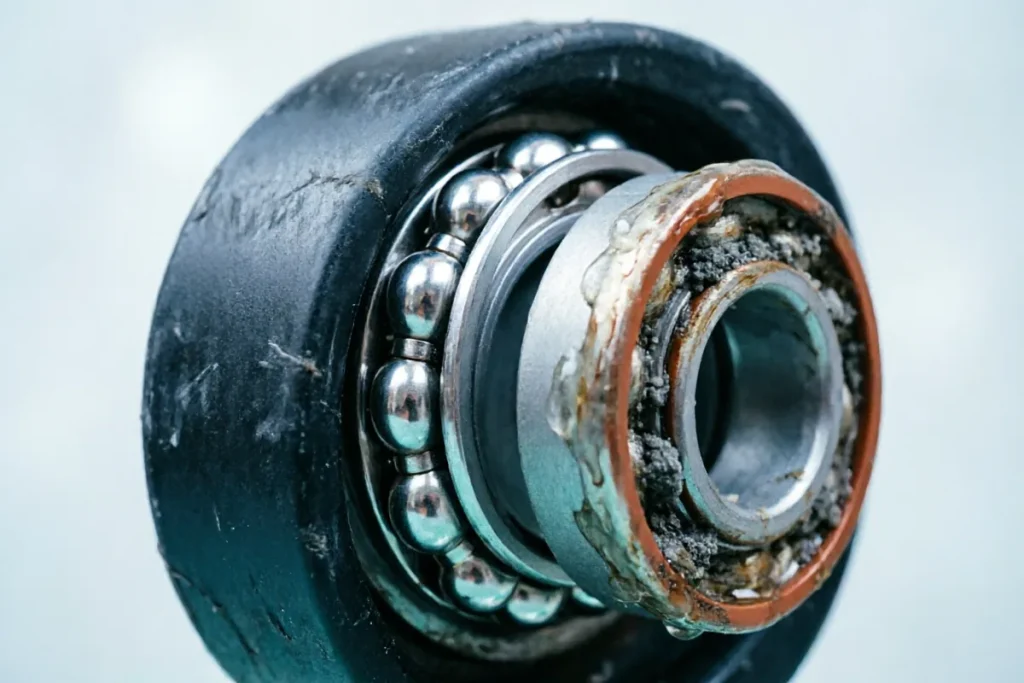
Check hockey skate bearings for slower wheel spin, roughness, noise, rust, or side-to-side play. These signs can point to wear or contamination before the wheels lose speed on the ice.
The numbers
Dimensions of the standard 608 bearing
Skating interval for rotating wheels
Speed range where ABEC 9 benefits may be realized
Spin each wheel and listen for scraping or grinding; then check whether it turns smoothly and sits securely. A wheel that feels rough may need cleaning, while persistent noise or looseness can signal a bearing that should be replaced.
Hockey skate bearings are easy to overlook because wear can build gradually. The key is to compare how the wheels feel and sound, and to check them again if performance changes after cleaning.
| What you notice | Likely next step | Check before skating |
|---|---|---|
| Slow spin or hesitation | Clean and re-lubricate | Use an inline-specific bearing cleaning kit |
| Grinding or gritty feel | Clean; replace if still gritty | Spin the wheel again after treatment |
| Uneven wheel wear | Rotate the wheels | Check the bearing separately |
| Bearing needs replacement | Verify 608 dimensions | 8mm inner diameter, 22mm outer diameter, 7mm width |
How can you spot a worn hockey skate bearing?
A worn hockey skate bearing may spin slowly, hesitate or grind when you remove its wheel from the inline chassis and turn it by hand. Compare wheels on the same skate: a clear difference in free spin is an early maintenance clue, before sluggishness changes your stride.
Spin test
Take a wheel out of the inline chassis, hold it by the edges and spin it. Check whether it turns freely and smoothly, or slows quickly, catches or makes a grinding sound. Repeat the same check on the other wheels; comparing them gives you a practical baseline without relying on how fast the wheel spins in isolation.
- Smooth, similar free spin: no obvious difference between the wheels in this hand check.
- One wheel slows or hesitates: inspect that wheel’s bearing and consider cleaning and re-lubricating it before replacing it.
- Gritty or grinding rotation: treat it as a sign that the bearing needs attention; a hand spin alone does not confirm that the bearing is the only cause of reduced speed.
What the feel tells you
Listen and feel as the wheel turns. Rough, gritty rotation is a reason to inspect and maintain the bearing, but poor spin does not automatically mean it must be replaced. Dirt or a lack of lubrication can also affect how it turns.
A slow wheel is a maintenance signal, not a diagnosis. Check the wheel and bearing before assuming the bearing alone is reducing your speed.
How do dirt and moisture affect bearings?
Dirt can collect inside inline skate bearings and make a wheel feel rough or slow, while moisture can interfere with the bearing’s smooth rotation. Inspect bearings after skating in wet or dirty conditions instead of waiting for a problem in your stride.
A wheel that hesitates or feels gritty when spun needs attention before it goes back into regular use. Remove the wheel from the inline chassis and spin it to check how the bearing turns; if it remains gritty after cleaning, clean and re-lubricate it or replace it.
Separate wheel wear from bearing trouble
Uneven wear on the wheel points to a wheel issue, not a bearing diagnosis. A wheel that wears unevenly may also make skating feel less smooth, so check the wheel and bearing separately rather than assuming the bearing is at fault.
- Uneven wheel wear: inspect the wheel and consider rotating or replacing it.
- Grinding at the hub: inspect the bearing, clean and re-lubricate it, or replace it if it remains gritty.
Before reinstalling a wheel, make sure the bearing spins smoothly. If the hub still grinds after cleaning and lubrication, replace the bearing rather than returning it to regular use.
When should you clean, lubricate or replace a bearing?
Clean and re-lubricate a hockey skate bearing when its wheel spins slowly or hesitates; replace the bearing if cleaning leaves it gritty or dirty.
Clean and relubricate
An inline-specific bearing cleaning kit is the right tool for removing dirt from skate bearings. First check whether the bearing is serviceable before trying to open it: not every bearing is designed to be opened. Follow the kit’s instructions for removing dirt, then apply lubricant as directed.
A dirty bearing that turns freely after treatment may only need cleaning and fresh lubricant. Slow spinning or hesitation calls for cleaning and re-lubrication before you decide the bearing has worn out.
Replace when cleaning fails
- Clean and lubricate: The bearing appears dirty but turns freely after treatment.
- Replace: The bearing still feels gritty or does not come clean after using the kit.
Rotate the wheels every 10–15 hours of skating, or sooner if uneven wear appears. Regular rotation helps extend the life of both the bearings and the chassis; check the wheels again when you notice a change in their wear.
What bearing size should you check before replacing one?
Check the bearing’s dimensions and the skate’s wheel-and-axle setup before ordering a replacement. Most roller hockey skate bearings follow the standard 608 size: 8mm inner diameter, 22mm outer diameter and 7mm width, making them interchangeable across brands.
A 608 bearing’s standard dimensions do not guarantee that every bearing will fit every skate. Confirm that the replacement matches the bearing removed from your wheel and suits the axle setup; a matching brand or ABEC rating alone is not a fit check.
How to confirm the fit
- Check the existing bearing: Verify its inner diameter, outer diameter and width against the replacement before buying.
- Match the skate setup: Make sure the bearing works with the wheel and axle, rather than relying on its brand or ABEC rating.
- Keep a reference: If you do not have the skate specifications, retain the removed bearing and use it to compare dimensions when choosing a replacement.
When are higher ABEC ratings worth considering?
ABEC 7 or higher is worth considering when performance is your priority, but choose ABEC 9 only for skating where its high-speed design fits the use—not simply because its rating is higher.
The rating is not a wear test.
An ABEC number describes a precision rating; it does not tell you whether a bearing is clean, lubricated or suited to your skate. A gritty or damaged bearing needs attention regardless of its rating.
- ABEC 7 or higher: Consider it when you want a performance-oriented bearing, but inspect its condition separately.
- ABEC 9: These bearings are suited to speeds exceeding 30-40 MPH, such as downhill skating. They may be overkill for roller hockey, where a typical game may not let you realize their benefits.
- Gritty or damaged bearings: Clean and lubricate a bearing that can be restored; replace one that remains gritty or is damaged. A higher ABEC rating will not fix wear or contamination.
ABEC 9 bearings are designed for very high rotational speeds, beyond what most roller hockey play requires. Their premium price—often $70-$100+ for a set—may be difficult to justify if your use is a typical game rather than downhill skating.
Before choosing a higher rating, spin each wheel and listen or feel for hesitation, grinding or roughness; check the bearing’s condition before paying for an upgrade.
Frequently asked questions
How do I know if my hockey skate bearings need cleaning?
When should I replace a bearing instead of cleaning it?
What does 608 bearing size mean?
Are ABEC 9 bearings necessary for roller hockey?
Key takeaways
- Use a hand-spin test to catch slowness, hesitation or grinding.
- Clean and re-lubricate before replacing a dirty bearing; replace it if it stays gritty.
- Check 608 dimensions—8mm by 22mm by 7mm—before ordering.
- Rotate wheels every 10–15 hours of skating or when uneven wear appears.
- Do not treat ABEC 9 as an automatic upgrade for typical roller hockey.
Sources
- Binnie's Skate Sharpening — “Pro's Corner: Inline Skate Maintenance”
- The Dangl Tool — “How to Change Roller Hockey Wheels Like a Pro (Step-by-Step Guide)”
- HockeySkatesDB — “Hockey Skate Fit Guide: How to Know If Your Skates Fit Right”
- inlinewarehouse.com — “Roller Hockey Skate Bearings – Inline Warehouse”
- Chirp Sticks — “Inline Skate Maintenance: How to Clean and Rotate Wheels”